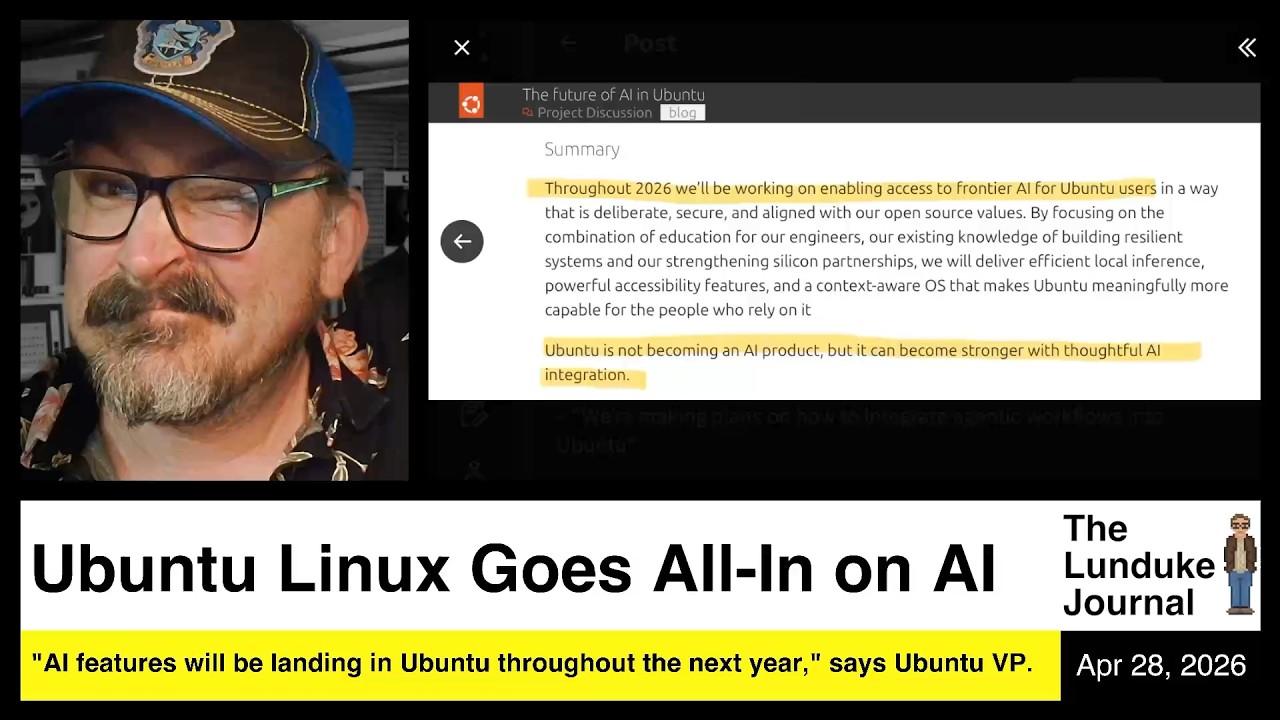
Ubuntu Linux is integrating AI features throughout its system with a focus on privacy, local inference, and open-source models, aiming for thoughtful adoption rather than aggressive embedding like seen in Windows 11. However, skepticism remains due to Canonical’s controversial past decisions and ongoing risky engineering changes, raising concerns about the stability and security of Ubuntu as it embraces AI alongside broader Linux ecosystem trends.
Ubuntu Linux is making a significant push into artificial intelligence (AI) integration, as outlined in a recent detailed blog post by Canonical’s vice president of engineering. The company plans to embed AI features throughout Ubuntu over the coming year, focusing on local inference and open-weight models that align with their open-source values. They aim to introduce agentic workflows and enable access to Frontier AI for users, emphasizing a thoughtful and privacy-respecting approach rather than turning Ubuntu into an AI-centric product.
This move comes amid mixed reactions to AI integration in other operating systems, notably Microsoft’s Windows 11, which has faced backlash for aggressively embedding AI into many applications, sometimes to user dissatisfaction. The Ubuntu team acknowledges these challenges and stresses a measured, principled adoption of AI tools, leveraging their snap packaging system to safely deliver these new features. They also highlight that AI will enhance accessibility features like text-to-speech and screen reading, making Linux’s power more accessible to a broader audience.
However, there is some skepticism about Canonical’s approach, given their history of bold and sometimes controversial decisions, such as the past inclusion of Amazon links in the Unity dash, which was widely criticized and eventually removed. The concern is that Ubuntu might follow a similar path by overloading the system with AI features that users may not want or need, potentially complicating the user experience and introducing unproven technology into a stable operating system.
Further doubts arise from Canonical’s ongoing engineering choices, including rewriting core utilities from GPL-licensed code into MIT-licensed Rust versions that are currently incomplete and vulnerable. Critics argue that these sweeping changes, combined with the rapid AI integration, suggest a management strategy driven more by hype than by cautious, experienced engineering judgment. This raises questions about the long-term stability and security of Ubuntu as it embraces AI.
Despite these concerns, Ubuntu is not alone in this AI adoption trend; other major Linux distributions like Fedora and Red Hat are also incorporating AI into their development processes and features. The broader Linux ecosystem is clearly moving toward AI-enhanced tools, reflecting industry-wide shifts. While the full impact of these changes remains to be seen, Ubuntu’s prominent position in the Linux world makes its AI strategy particularly noteworthy and a subject of close attention and debate among users and developers alike.