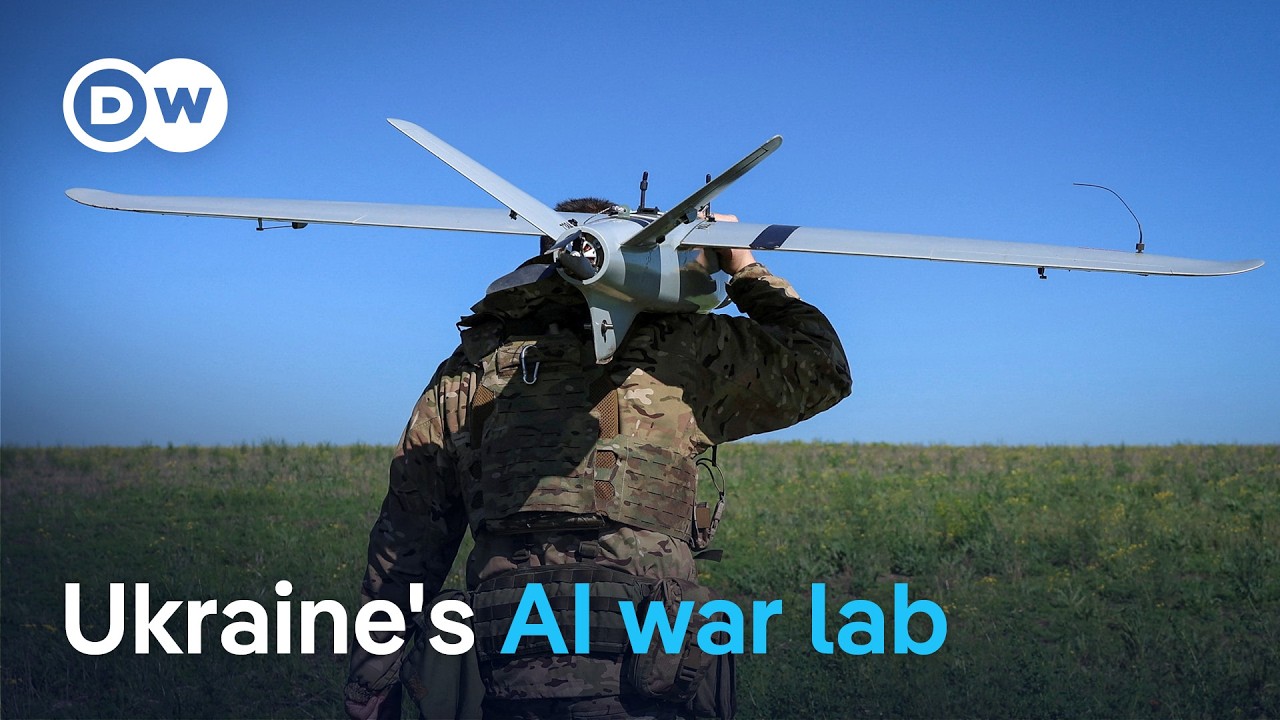
Ukraine has become a global hub for AI-driven military innovation by sharing extensive combat drone data and rapidly expanding its drone industry, which now integrates advanced AI technologies to enhance battlefield effectiveness while maintaining human control over lethal decisions. This expertise is in high demand internationally, prompting collaborations and data-sharing agreements, as Ukrainian officials warn of an emerging AI arms race that requires urgent global regulation.
In March 2026, Ukraine launched an unprecedented online portal granting allied governments and defense companies access to over 2 million hours of combat drone footage, equivalent to 228 years of data, with more than 5 terabytes added daily. This vast repository aims to help allies develop better autonomous weapons while enabling Ukraine to enhance its own AI-driven defense tools against Russia. This portal represents just a fraction of Ukraine’s four years of intense battlefield experience, which has transformed its homegrown military technology into a valuable global export.
A key innovation emerging from Ukraine’s tech sector is the Cortiseps OS, a software system integrated into compact black boxes attached to combat drones. These boxes consolidate multiple functionalities—such as night vision and AI capabilities—into a single unit, overcoming previous limitations related to drone size and weight. This innovation was driven by necessity, particularly to counteract Russian electronic warfare tactics that disrupt drone signals, a major challenge early in the conflict when Ukraine had limited drone manufacturers.
Ukraine’s drone industry has rapidly expanded from just seven manufacturers to over 500, making it a significant part of the country’s defense sector, now valued at nearly $7 billion. The sector thrives on a horizontal, startup-driven model that encourages rapid innovation and close feedback loops with frontline soldiers. Platforms like Brave One connect government funds, startups, and military units, ensuring that drone technology evolves quickly based on real battlefield needs, keeping Ukrainian drones ahead of potential copycats abroad.
AI plays a crucial role in enhancing drone effectiveness, from navigating electronic warfare zones to improving target identification and strike precision. Ukrainian engineers have developed AI-driven software that analyzes surveillance data to identify Russian targets faster and more accurately, significantly reducing the time between detection and engagement. Despite these advances, Ukraine maintains human control over lethal decisions, emphasizing that AI provides recommendations while humans retain the authority to execute strikes—a stance that contrasts with some other countries’ use of autonomous weapons.
Ukraine’s expertise is now in global demand, especially after recent conflicts in the Gulf involving Iranian attacks using Russian-made drones. President Zelensky has deployed Ukrainian specialists to assist Gulf allies with air defense and is negotiating sales of advanced Ukrainian interceptor drones. Germany has formalized a bilateral data-sharing agreement with Ukraine, marking the first government-to-government exchange as part of a €4 billion defense package. Ukrainian officials warn that AI-driven military technology represents a new arms race, with the potential to become as consequential as nuclear weapons, underscoring the urgent need for international regulation to prevent future wars.