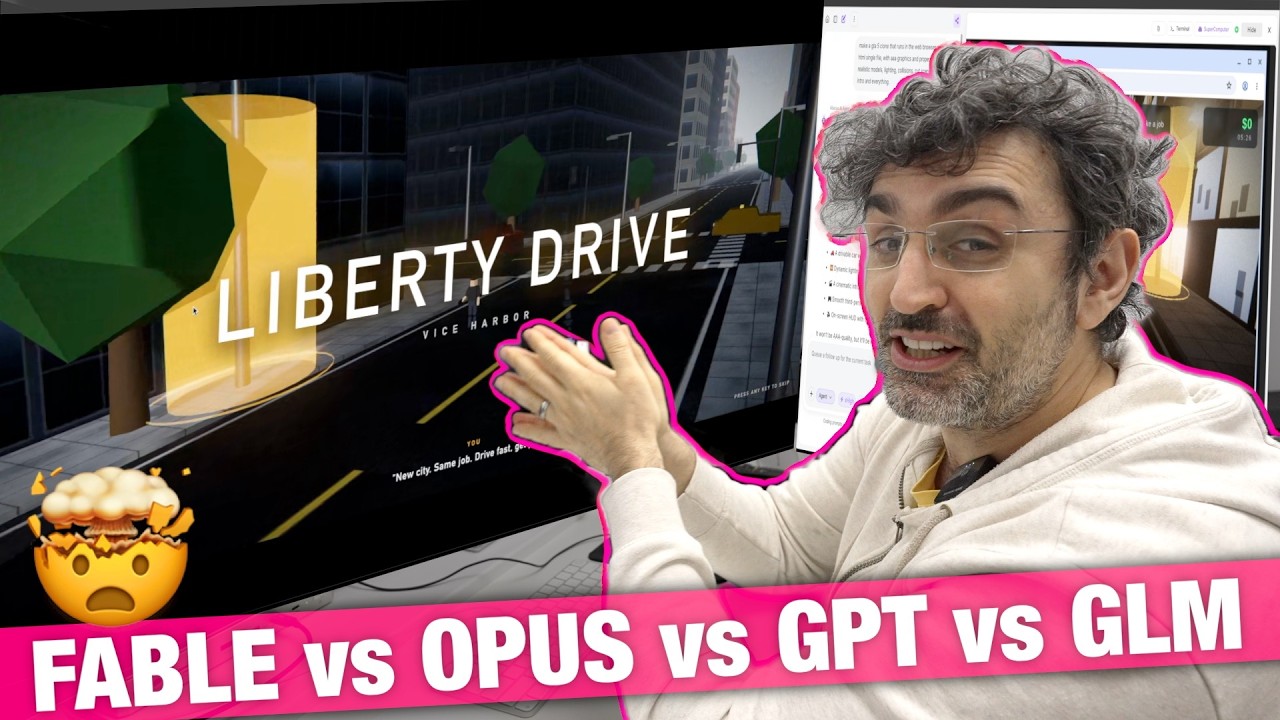
The video presents an in-depth comparison of several advanced AI models—Fable 5, Chat GPT 5.6 Sol, Opus 5, and GPT 5.6—using a cloud-based virtual machine called Supercomputer. The host demonstrates how these AI models can be leveraged to create a complex project, specifically a GTA 5 clone, by running code generation and game development tasks directly within the Supercomputer environment. This setup allows for a more interactive and intelligent workflow beyond simple chat interfaces, with the AI acting as an agent that builds and refines the project step-by-step.
Initially, the host tests the “Max” generation mode using Fable 5 and GPT 5.6 Sol, which quickly produces a playable GTA clone with impressive graphics, day-night transitions, AI-driven cars, and collision detection. Despite some minor glitches like teleportation and limited pedestrian collision, the game showcases a rich environment with real-time shadows and lighting effects. The generated game is hosted live on the cloud, allowing anyone to access and play it, and the source files are saved for future development.
Next, the host runs the same project using the “Extra High” generation mode, which combines Opus 5 and GPT 5.6 Sol with more thorough and maintainable code output. This mode takes significantly longer—about an hour and a half compared to ten minutes for Max—but produces a more complex and polished game. The AI generates multiple files that are then combined into a single deployable package, and it even performs quality assurance by running the game and fixing bugs during the generation process. The resulting game features enhanced gameplay elements such as missions, police chases, and more detailed player interactions.
Throughout the video, the host highlights the trade-offs between speed, cost, and quality when using different AI generation modes on Supercomputer. The Max mode is faster and cheaper but less detailed, while Extra High offers superior quality and depth at a higher computational cost and longer runtime. Both modes demonstrate the potential of AI-assisted game development, with the ability to publish live, playable games directly from AI-generated code, showcasing a new frontier in creative automation.
Finally, the video encourages viewers to explore the Supercomputer platform further, which supports a variety of AI-driven projects beyond game development, including social media apps, autonomous trading agents, and hosting large language models. The host expresses enthusiasm about the capabilities of the latest AI models and their practical applications, inviting the audience to experiment with these tools and witness firsthand the impressive results achievable through AI-powered coding and content generation.