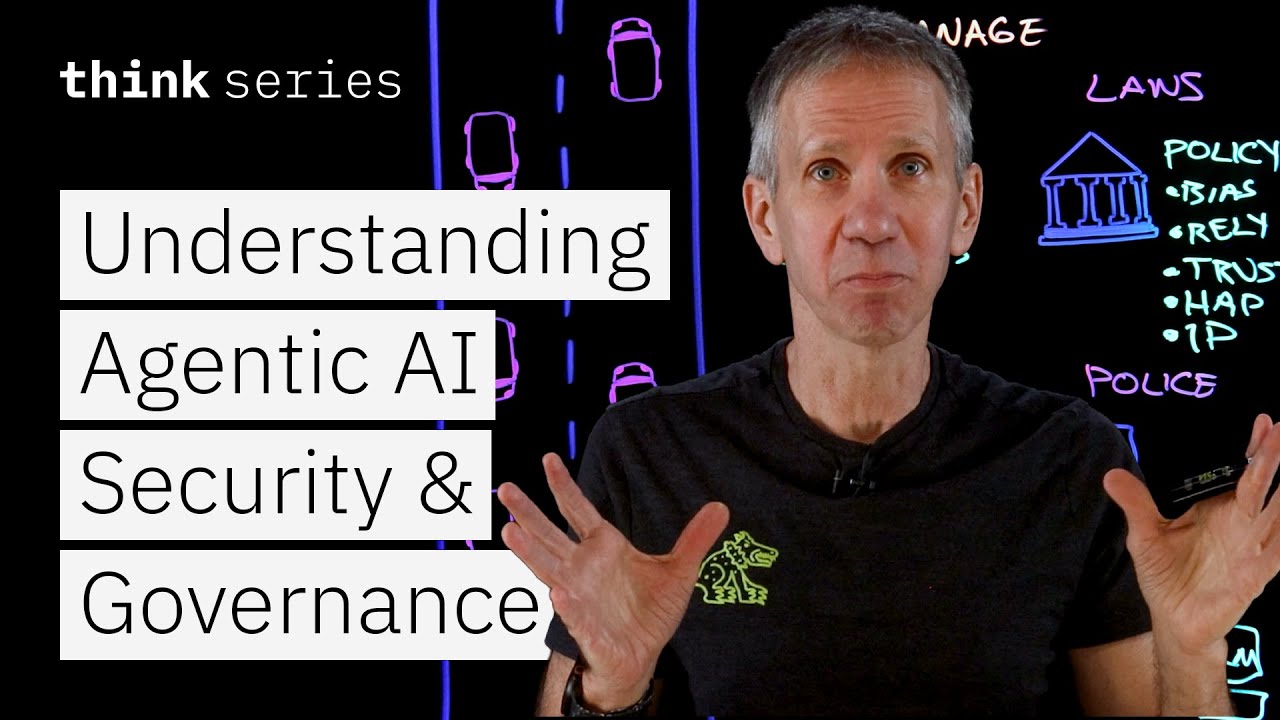
The video uses the analogy of driving a car to explain the importance of security and governance for AI agents, particularly those powered by large language models (LLMs). Just as driving is a privilege regulated by infrastructure, rules, and enforcement to keep society safe, AI agents require similar structures to prevent them from causing harm or being misused. The speaker emphasizes that, as with cars, we need to establish clear policies and tools to ensure AI agents operate safely and within defined boundaries.
The process begins with building the AI agents, much like acquiring a car. Most people don’t build cars from scratch, and similarly, there are now many tools available to help create AI agents without starting from zero. Once these agents are built, the next step is to manage their identities and credentials, akin to how a Department of Motor Vehicles (DMV) issues driver’s licenses. AI agents need nonhuman identities (NHIs) and credentials to authenticate themselves and perform authorized actions, and there must be systems in place to manage these credentials securely.
The analogy continues with the concept of keys. While car keys are often kept in a safe place at home, AI agents require digital keys or credentials that must be securely stored and managed, especially as the number of agents grows. This necessitates the use of secure vaults or storage solutions to prevent unauthorized access and ensure that only the right agents can access sensitive systems or data.
Governance is another critical aspect, represented by the laws that govern driving. For AI agents, this means establishing policies that define what agents are allowed and not allowed to do. These policies should address issues such as bias, reliability, explainability, and trustworthiness. The speaker highlights the need to detect model drift, prevent harmful behaviors like hate or abuse, and protect intellectual property. Since AI agents can operate autonomously and at high speed, robust governance is essential to prevent widespread mistakes or misuse.
Finally, enforcement mechanisms are necessary to ensure that policies are followed, just as traffic laws are enforced by police. This can involve setting up gateways or checkpoints that monitor and control agent actions, verifying permissions before allowing access to LLMs or other resources, and checking outputs for compliance before returning results. The video concludes by reassuring viewers that tools already exist for building, managing, securing, and governing AI agents, and encourages further exploration of these solutions to keep AI systems safe and under control.