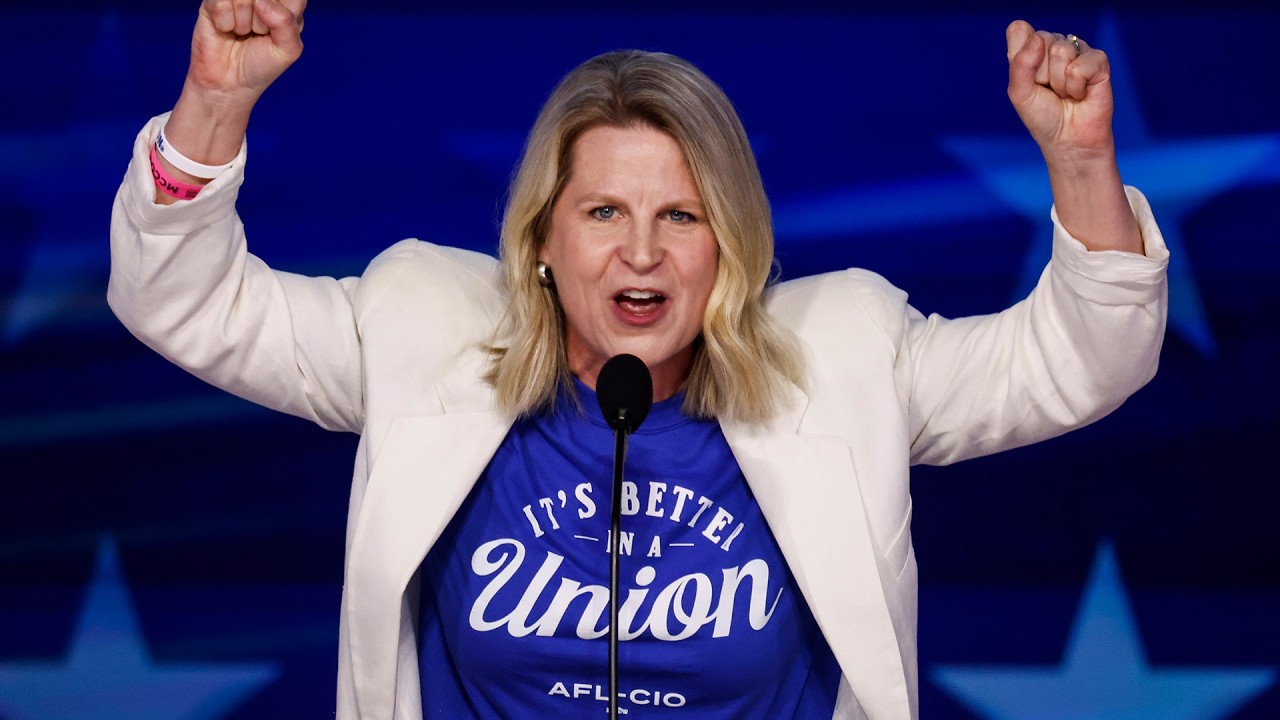
Support for labor unions in the U.S. has reached a 16-year high, driven by workers seeking a stronger voice amid AI-driven workforce changes and economic inequality, with unions advocating for fair wages, responsible AI regulation, and bipartisan political engagement. AFL-CIO president Liz Shuler emphasizes unions’ collaborative approach with employers, transparency in finances, and active involvement in upcoming elections to protect workers’ rights and influence policy.
Support for labor unions in the United States is at a 16-year high, with 71% of Americans approving of unions according to a recent Gallup poll. This includes a majority of Republicans, signaling a broadening base of support. Liz Shuler, president of the AFL-CIO, highlights that union membership increased by 500,000 last year, driven by workers organizing despite challenging labor laws and employer resistance. She emphasizes that as AI and technology reshape the workforce, workers increasingly see unions as essential for gaining a voice and power in the workplace.
Shuler explains that while unions have traditionally been associated with the Democratic Party, the AFL-CIO supports any candidate who champions workers’ economic interests, regardless of party affiliation. The union focuses on issues like raising the minimum wage and fair tax policies, and actively mobilizes voters by educating them on candidates’ stances on labor issues. This pragmatic approach aims to ensure that working people’s concerns are represented in elections and policy decisions.
A major concern for union members is the growing disparity between CEO pay and worker wages. The CEO-to-worker pay ratio has ballooned from about 20-to-1 in the 1970s to over 300-to-1 today, fueling worker frustration over economic inequality. Shuler urges companies to view unions not as adversaries but as partners who can help develop workforce training and ensure employees receive living wages. She stresses that unions seek to collaborate with employers to create sustainable business success that benefits all workers.
In response to Republican-led investigations into alleged misuse of union dues for political purposes, Shuler firmly denies any wrongdoing. She characterizes these probes as politically motivated distractions aimed at weakening unions. The AFL-CIO maintains transparency in its financial practices and uses dues solely to represent and advocate for working people. Shuler argues that unions are vital voices for workers in policy debates, including those around regulating AI and protecting jobs.
Shuler is also a prominent voice on AI’s impact on the workforce, advocating for responsible regulation to prevent job losses and economic inequality. She warns that without worker input and safeguards, AI could exacerbate wealth concentration and harm workers, especially in administrative roles. Looking ahead to the midterm elections, the AFL-CIO is actively endorsing candidates who support labor, training election protectors to safeguard voting rights, and mobilizing workers to ensure their voices are heard in what is expected to be a closely contested political landscape.