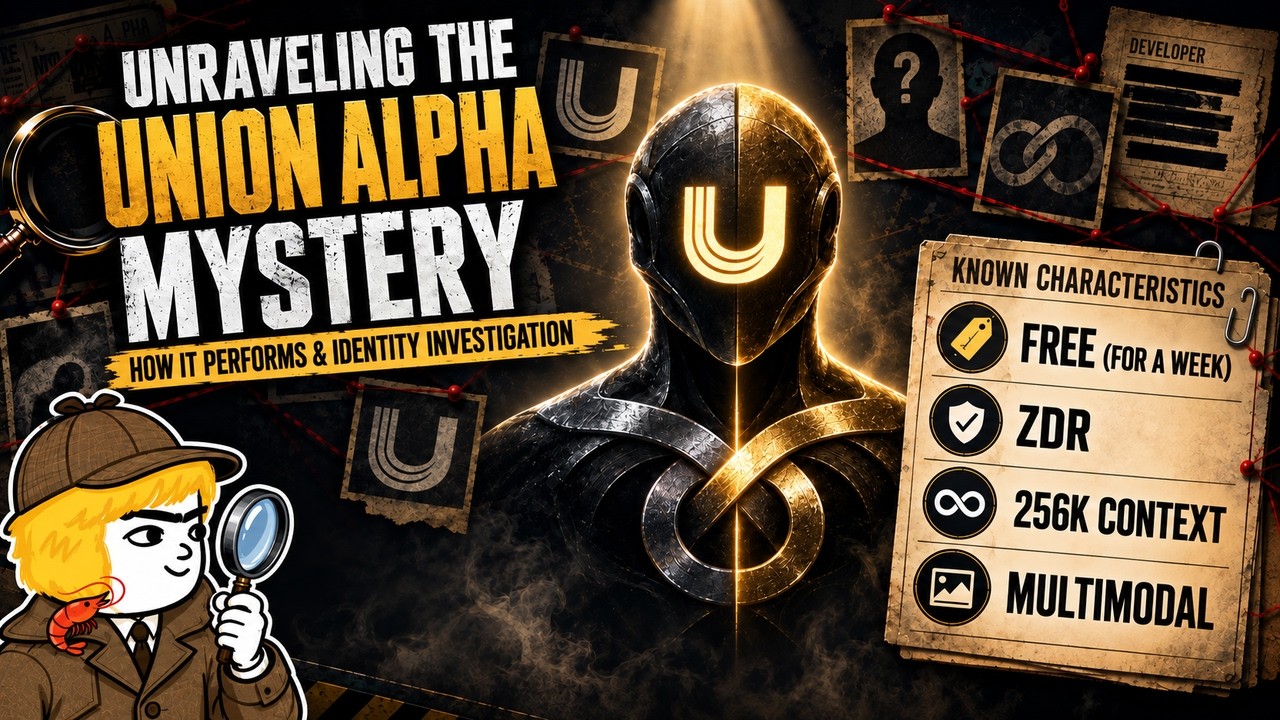
The video discusses the recent launch of a new stealth multimodal AI model called Union Alpha, designed for research, coding, and agentic workflows. It boasts an impressive 256k context window and claims not to train on user prompts. Early benchmark results show Union Alpha performing on par with top models like Claude Fable 5.1 but at a significantly lower cost, making it an intriguing option for developers. The presenter compares Union Alpha to previous mystery models like Ox Alpha, which was later identified as a GLM 5.3 Flash model, and sets out to test Union Alpha with various coding and multimedia tasks to evaluate its capabilities and identify its origins.
Several practical tests are conducted using Union Alpha, including a browser-based mini-game, a Lord of the Rings cinematic multimedia integration, and interactive landing pages with complex 3D and shader effects. The model performs well across these tasks, producing visually appealing and technically sound outputs, though sometimes with minor lag or less creativity compared to leading models like Fable 5.1 or Astra. The presenter notes that Union Alpha handles tool use smoothly and maintains good coding discipline, such as writing files to the correct directories, which is often a challenge for AI models.
The investigation into Union Alpha’s identity involves analyzing its behavior, coding style, and technical fingerprints using an assistant called Hermes. Unlike previous stealth models quickly identified as belonging to a single known family, Union Alpha’s origins are less clear. The analysis suggests that it is not a single model from one lab but rather a composite inference service that runs multiple language models in parallel and synthesizes their outputs. Tokenizer analysis points to a dominant use of the LLaMA 3 family vocabulary, which differs from GLM or other Chinese lab models, adding weight to the theory of a blended service.
Further behavioral analysis shows that Union Alpha’s coding style resembles GPT models, while its general behavior aligns more closely with GLM models. External API fingerprinting and repeated measurements reinforce the idea that Union Alpha is a multi-model service rather than a standalone model. The presenter finds this conclusion surprising but plausible, noting that Union Alpha’s separate Twitter account and free availability might indicate it is an aggregation of various free or low-cost models with no data retention, rather than a traditional single-model release.
In conclusion, the video presents Union Alpha as a highly capable and cost-effective AI model with performance close to top-tier models but with a mysterious and complex identity. The strongest evidence points to it being a composite service leveraging multiple models, primarily from the LLaMA 3 family, with some GPT and GLM behavioral traits. The presenter invites viewers to share their thoughts and theories, acknowledging that the full truth will likely emerge after the model’s free trial period ends in a week. Overall, Union Alpha represents an intriguing development in the AI landscape, blending multiple technologies to deliver strong performance at low cost.
Useful Links