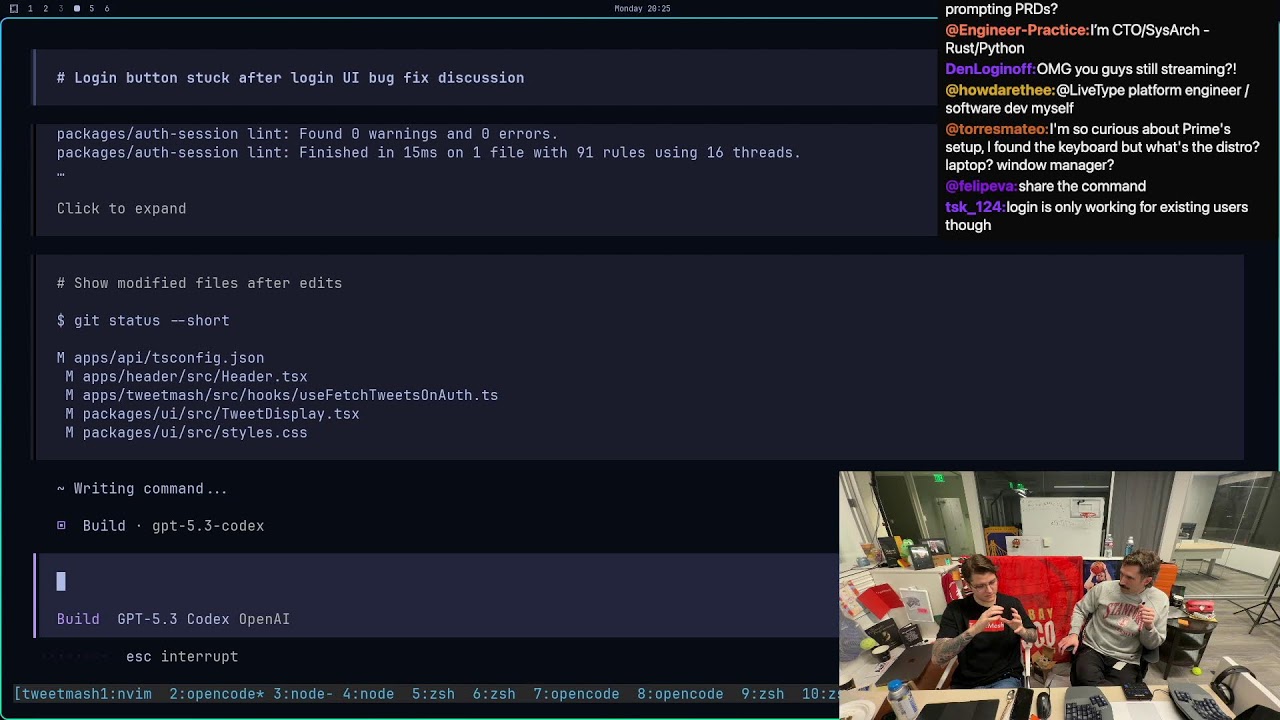
The video documents the first day of building a social network called Tweet Mash, a project inspired by the idea of objectively ranking tweets using an ELO system, similar to how chess players are rated. The streamers, led by Prime and joined by collaborators like Teach and Dylan, set out to create a web app where users can log in with Twitter, fetch their tweets, and have them anonymously pitted against others’ tweets for voting. The project is built using modern JavaScript tools, Zephr Cloud for deployment, and Cloudflare for backend infrastructure. The team’s approach is highly iterative and collaborative, with heavy use of AI coding assistants (like Kimmy K and OpenCode) to generate, refactor, and debug code in real time.
Throughout the day, the team encounters and overcomes a variety of technical challenges. They struggle with environment variable management, CORS issues, and the intricacies of deploying micro frontends. There are frequent moments of confusion and humor as they navigate GitHub outages, broken builds, and the quirks of their development stack. The team also experiments with different methods for fetching and displaying tweets, ensuring that the voting system is fair (e.g., not showing tweets from the same user against each other) and that the UI is responsive and modern-looking. They seed the database with tweets from well-known tech personalities to ensure there’s enough data for initial testing.
A significant portion of the video is devoted to designing the ELO-based ranking system. The team discusses how to randomly select tweets for comparison, how to store and update ELO scores, and how to prevent users from voting on their own tweets. They also debate the best database schema for tracking battles, votes, and user statistics, ultimately settling on a system that balances performance with flexibility. The team uses Drizzle and Cloudflare D1 for database migrations and storage, and they frequently consult AI models for advice on SQL performance and schema design.
As the project progresses, the team adds features like user profiles, leaderboards for both tweet quality and voting activity, and admin tools for seeding the database and banning users. They encounter and fix several bugs, including a critical one where a poorly implemented ban feature accidentally locks out all users. The team also deals with the challenges of live deployment, including DNS configuration, Cloudflare worker setup, and ensuring that environment variables and secrets are correctly managed across environments. Despite occasional setbacks—such as accidentally deleting large portions of the codebase due to a botched Git rebase—the team manages to recover and keep moving forward.
The video is characterized by a playful, high-energy atmosphere, with frequent jokes, music breaks, and banter among the team members. There are moments of genuine technical insight, as well as self-deprecating humor about the pitfalls of “vibe coding” (coding with minimal planning and heavy reliance on AI). By the end of the day, the team has a working prototype of Tweet Mash deployed at tweetmash.com, complete with login, tweet voting, ELO leaderboards, and a lively user base already competing for the top spot. The stream closes with the team reflecting on the day’s chaos, celebrating their progress, and teasing future features and improvements for the rest of the build week.