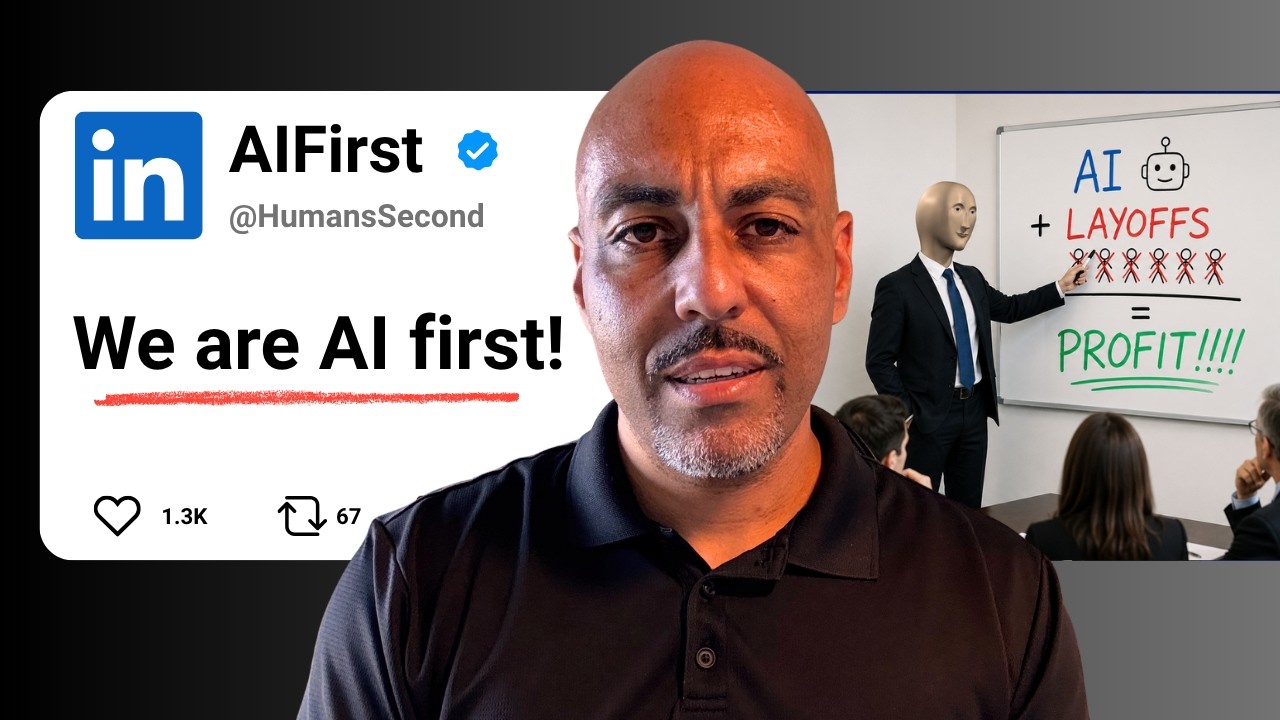
The speaker recounts their frustrating experience joining an AI-first startup in early 2025, where the leadership—non-technical CEOs—prioritized speed above all else. The company’s mantra was to produce twice as much work in half the time with fewer people, relying heavily on AI tools to “vibe code” products rapidly without proper planning, architecture, or documentation. This approach led to a chaotic environment where demos were churned out quickly but built on unstable, poorly understood codebases. The emphasis on speed resulted in massive technical debt, tightly coupled code that was nearly impossible to maintain, and frequent breakdowns that required firefighting rather than thoughtful development.
The startup’s leadership, despite their enthusiasm for AI, lacked software engineering experience and often made misguided technical decisions based on generic AI-generated advice. This created additional work for the engineering team, who had to explain why these AI-suggested solutions were impractical or irrelevant. The culture discouraged slowing down to plan or consider trade-offs, instead pushing for rapid delivery at the expense of quality. The speaker highlights the absurdity of non-engineers dictating technical direction, comparing it to a marketer or lawyer being told how to do their jobs by someone with no expertise, fueled by overconfidence in AI-generated answers.
After leaving the startup, the speaker joined a larger, more experienced engineering team at a bigger company where AI tools were also heavily used, but in a fundamentally different way. Here, engineers engaged deeply with the problems before coding, writing detailed documents, discussing designs, and emphasizing testing and code reviews. AI was used as a powerful assistant rather than a shortcut, enabling faster, more reliable development. The team built their own internal tools to provide AI with context about their codebase and processes, ensuring that AI-generated code was reviewed and integrated thoughtfully, resulting in stable, maintainable products.
The key lesson the speaker draws is that AI itself is not the problem; rather, it is how organizations choose to use AI that determines success or failure. When non-technical leaders or consultants impose unrealistic expectations and prioritize speed over quality, the result is technical debt and unstable products. Conversely, when skilled engineers drive AI adoption with proper planning, testing, and human judgment, AI can significantly enhance productivity without sacrificing reliability. The speaker stresses that speed should be a byproduct of doing things right, not the sole goal, and that customers ultimately care about working products, not how fast they were built.
In closing, the speaker encourages those stuck in “vibe coding hell” to push back with common sense by advocating for planning, documentation, shared tools, and standards. They emphasize the importance of slowing down to speed up and invite viewers to learn more about building AI systems properly through resources like parcide.io/ai. The overall message is a call for responsible AI use in software engineering, balancing speed with quality to create products that truly work and serve customers well.