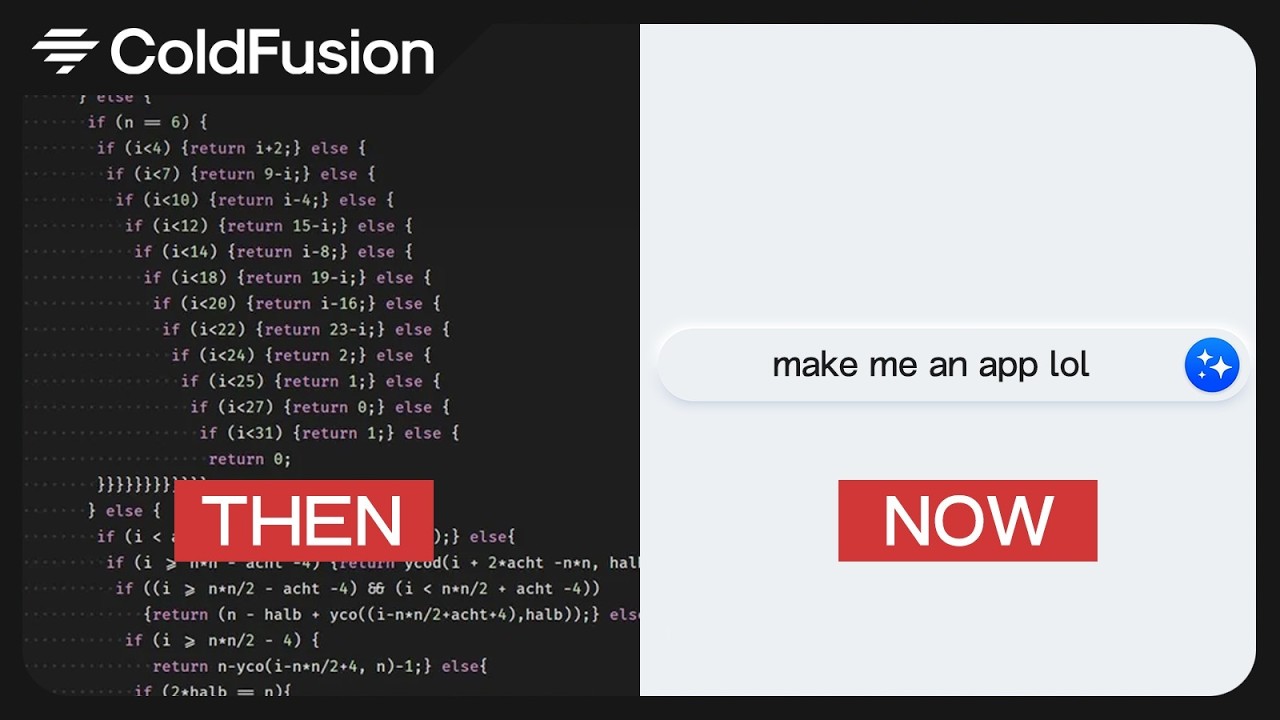
The video explores the emerging trend of “Vibe Coding,” a method of software development where users describe what they want, and AI generates the code, eliminating the need to write code manually. This approach gained traction around 2023 and was popularized by Andrej Karpathy in 2025, who described it as embracing the “vibes” of coding without focusing on the actual code. Vibe coding leverages advanced AI models based on Transformer architectures, such as ChatGPT and Gemini, enabling rapid prototyping and app development by non-technical users. This innovation has lowered barriers to software creation, allowing designers, students, and non-coders to build functional applications quickly.
One standout example of vibe coding’s potential is the company Lovable, which launched in Sweden in late 2023. Lovable offers a platform where users can create fully functional software simply by describing their needs in natural language. The company experienced explosive growth, reaching $100 million in annualized revenue within eight months and securing a $200 million Series A funding round at a $1.8 billion valuation. Lovable’s success signals a shift in the software industry, expanding who can build software and emphasizing creativity over coding literacy. However, questions remain about the sustainability of this model, especially regarding costs and the reliability of AI-generated code as applications grow more complex.
Despite the excitement, the video highlights significant challenges and criticisms of vibe coding. Many developers express frustration with the unpredictability and inconsistency of AI-generated code, which can produce different results for the same prompt and often requires extensive debugging. The emotional toll on programmers is notable, as some miss the satisfaction of solving problems manually and feel reduced to mere “prompters.” Additionally, AI-generated code can be verbose, mix coding paradigms, and sometimes hallucinate, inventing non-existent APIs or insecure code, which poses serious risks in production environments.
Security and quality concerns are prominent, with examples of apps built using vibe coding suffering from vulnerabilities and data leaks due to poor coding practices. Experts warn that vibe coding encourages a copy-paste culture where users may not fully understand the code running on their servers. Educators worry that beginners might skip essential programming fundamentals, relying too heavily on AI. While prompt engineering has emerged as a skill to improve AI outputs, it is seen by some as a temporary fix rather than a robust discipline. Nonetheless, many acknowledge that vibe coding, when combined with human oversight, can significantly boost productivity and creativity.
In conclusion, vibe coding represents a powerful but imperfect tool in the software development landscape. It democratizes app creation and accelerates innovation but comes with limitations, risks, and a steep learning curve for effective use. For simple projects, vibe coding platforms like Lovable can be highly effective, but complex applications still require skilled developers to ensure quality and security. The technology is here to stay, and its success depends largely on how it is integrated with human expertise. The video encourages a balanced view, recognizing both the promise and the pitfalls of vibe coding in 2025.