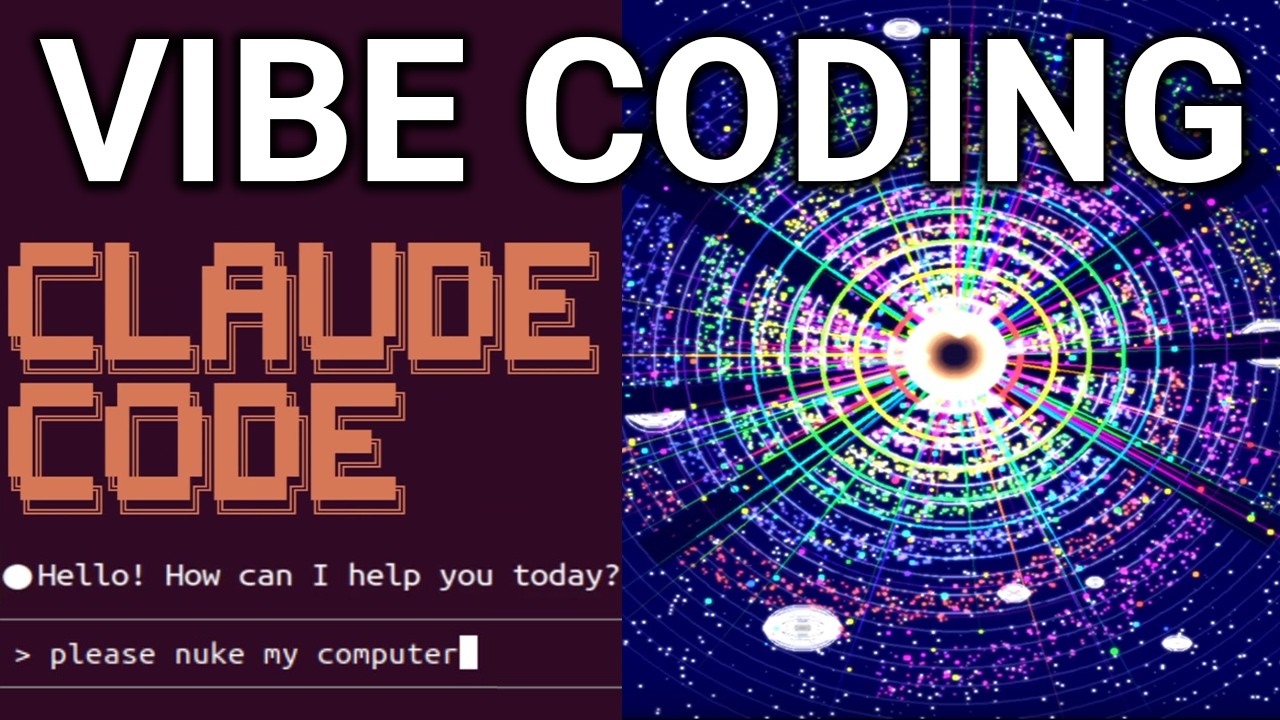
The video explores the concept of “vibe coding,” a process where AI tools autonomously generate and modify code, often with minimal human intervention. The creator demonstrates using AI agents like Claude and Gemini to develop a simple web-based simulation of LinkedIn’s Ant, a classic cellular automaton. The AI is tasked with writing code, debugging, and adding features such as interactivity and customization, highlighting how AI can accelerate the coding process and enable rapid prototyping. Despite the ease and speed, the creator emphasizes that vibe coding often results in sloppy, buggy, and unpolished code, which still requires human oversight and understanding.
Throughout the video, the creator emphasizes the strengths and limitations of AI-assisted coding. AI excels at generating boilerplate code, handling basic logic, and suggesting incremental improvements, especially in familiar environments like vanilla JavaScript. However, it struggles with complex debugging, code organization, and understanding nuanced logic, often producing verbose or incorrect code snippets. The creator advocates for a balanced approach: leveraging AI for initial development and idea generation while relying on human expertise to understand, refine, and ensure the code’s correctness and security.
The demonstration includes building a customizable, multi-ant simulation where AI generates rules, manages multiple agents, and enhances visual features. The creator showcases how AI can help optimize performance, such as speeding up the simulation loop by reasoning about code structure at a high level. Nonetheless, he notes that AI cannot yet automate real-time UI testing or security-critical tasks, which still require human intervention. The process involves iterative prompting, debugging, and refining, illustrating that vibe coding is more about rapid experimentation than producing production-ready software.
The video also delves into the security and ethical risks associated with AI agents that have direct access to a computer’s environment. The creator demonstrates how easily AI can generate destructive commands, such as deleting files or creating self-replicating malware, highlighting the Pandora’s box nature of such tools. While some AI agents like Claude refuse to run harmful commands, others like Codex can execute potentially dangerous code, raising concerns about security vulnerabilities and malicious use. The creator warns that these tools, if misused, could cause significant damage or compromise systems.
In conclusion, the creator advocates for cautious optimism about vibe coding. He finds it a fun, fast, and useful way to prototype ideas and explore creative projects, but warns against relying on it for critical or high-stakes software. He emphasizes that human understanding, problem-solving, and security awareness remain essential, as AI is currently a powerful but imperfect assistant. Ultimately, he encourages viewers to learn coding themselves, viewing it as a valuable skill for thinking logically and solving problems, even as AI tools become more capable.