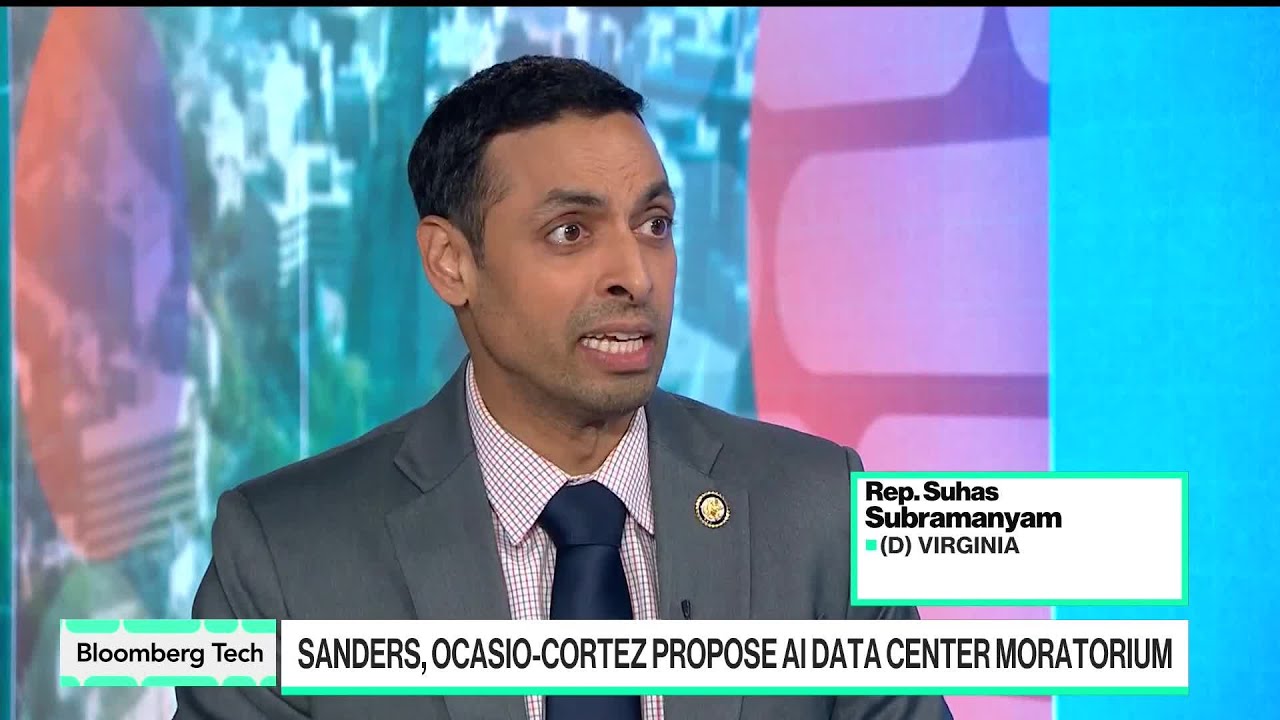
The Virginia representative calls for a nationwide, balanced approach to data center development that addresses community concerns about infrastructure strain, energy costs, and environmental impact, while promoting responsible industry growth. He emphasizes the importance of community involvement, transparent communication, and collaboration between government and industry to ensure sustainable AI and data center expansion without overburdening specific regions.
The Virginia representative expresses concern over the concentration of data centers in certain communities, particularly in his district, which hosts a significant portion of the world’s internet traffic. While he does not support a complete moratorium on data center construction, he acknowledges the frustrations of local communities facing power issues and infrastructure strain caused by these facilities. He advocates for a comprehensive, nationwide strategy to site data centers in a way that balances industry needs with community well-being, emphasizing the importance of spreading data centers across the country to avoid overburdening specific areas.
Local governments often favor data center projects because they generate substantial revenue without creating many jobs, which means less demand for additional public services like schools and roads. However, this short-term financial benefit can lead to long-term problems, including increased energy demands and declining property values, which understandably provoke community backlash. The representative stresses the need for community buy-in and involvement at all levels of government to ensure that constituents’ voices are heard and that data center development proceeds responsibly and sustainably.
The discussion also touches on innovative approaches to data center infrastructure, such as the use of small modular reactors (SMRs) for power generation. While these technologies could potentially address energy concerns, there is skepticism about their acceptance by local residents due to safety and environmental worries. The representative highlights the complexity of balancing technological innovation with community acceptance and the need for transparent communication about the implications of such solutions.
Energy costs are a significant issue, with evidence suggesting that electricity prices have risen in areas with high concentrations of data centers. The representative notes that local residents often bear the upfront costs of necessary energy infrastructure upgrades, which can lead to higher utility bills. He advocates for policies that prevent communities from subsidizing data center energy needs and supports initiatives where companies voluntarily invest in their own energy infrastructure to alleviate the financial burden on local populations.
Finally, the representative addresses the broader public perception of AI, acknowledging its current PR challenges due to concerns about job displacement and the negative impacts associated with data center expansion. He emphasizes the need for collaborative efforts between government and industry to improve safety, national security, and community relations. By fostering open dialogue and responsible development, he believes it is possible to harness the benefits of AI and data center growth while addressing the legitimate concerns of affected communities.