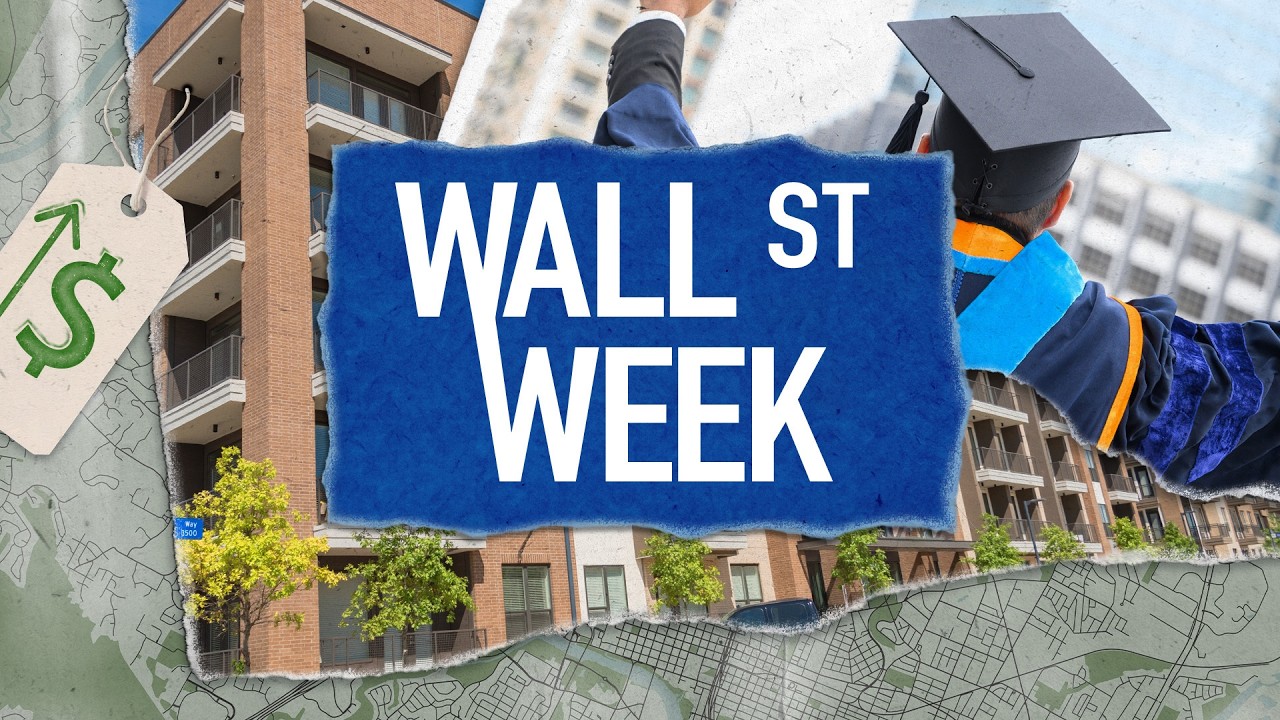
In this episode of “Wall Street Week,” David Westin and guests discuss key economic issues including the uncertain impact of AI development amid rising tech debt, Austin’s innovative housing affordability reforms, the end of the federal Grad PLUS loan program affecting graduate education funding, and escalating U.S.-Canada trade tensions over tariffs. They also analyze the limited success of President Trump’s tariff policies, highlighting the complex interplay of inflation, investment decisions, and international relations shaping the current economic landscape.
In this episode of “Wall Street Week,” David Westin explores several pressing economic and policy issues shaping the United States and its relations with the world. The discussion begins with artificial intelligence, where Steven Rattner highlights the uncertainty surrounding AI’s future impact despite its undeniable significance. He notes the market’s cautious stance on the increasing debt taken on by tech giants to fund AI development and points out the competitive dynamics between U.S. and Chinese AI models, emphasizing China’s cost-effective but slightly less advanced alternatives. The conversation also touches on rising U.S. borrowing costs driven by inflation and high federal deficits, with Rattner explaining how these factors influence investment decisions and the broader economy.
The program then shifts focus to the housing affordability crisis, spotlighting Austin, Texas, as a rare example of progress. Mayor Kirk Watson describes how Austin tackled soaring housing costs by reforming zoning laws to increase density and reduce regulatory red tape, resulting in a significant increase in rental units and a subsequent drop in rents. Experts like Tom Shapiro and local real estate professionals discuss the cyclical nature of housing markets and the challenges of balancing supply and demand. The episode contrasts Austin’s supply-driven approach with New York City’s rent control policies, highlighting the complexities and competing interests involved in addressing housing affordability nationwide.
Next, the show examines the end of the federal Grad PLUS loan program, which had allowed graduate students to borrow unlimited amounts for their education. The program’s termination introduces new borrowing caps, forcing students and universities to seek alternative financing options, often through private lenders with higher interest rates and fewer protections. University leaders express concern about the impact on essential professional programs like teaching and social work, warning of potential shortages in critical fields. The segment underscores the broader implications of rising graduate education costs and the need for a societal approach to funding education as vital infrastructure.
The episode also covers the resurgence of U.S. tariffs on Canadian goods, with former Canadian Deputy Prime Minister Chrystia Freeland discussing the political and economic tensions underlying the new 50% tariffs on select imports. She critiques the rationale behind the tariffs, particularly the retaliatory measures linked to provincial boycotts of U.S. alcohol, and highlights the importance of Canadian exports like potash to American agriculture. Freeland emphasizes the need for Canada to stand firm in negotiations while avoiding escalation, noting the shifting public perception of the U.S. in Canada amid these trade disputes.
Finally, Steven Rattner provides an assessment of President Trump’s tariff policies, noting their limited effectiveness in achieving stated goals like reindustrializing the U.S. economy or reducing the federal deficit. He observes that while tariffs create uncertainty, markets have largely adapted, and the broader impact on U.S.-China relations has been unfavorable, with China maintaining leverage due to its self-sufficiency. Rattner explains how tariffs factor into investment considerations but are just one of many variables influencing economic decisions. The episode concludes with a reflection on the complexities of trade policy and its far-reaching consequences for domestic and international economic landscapes.