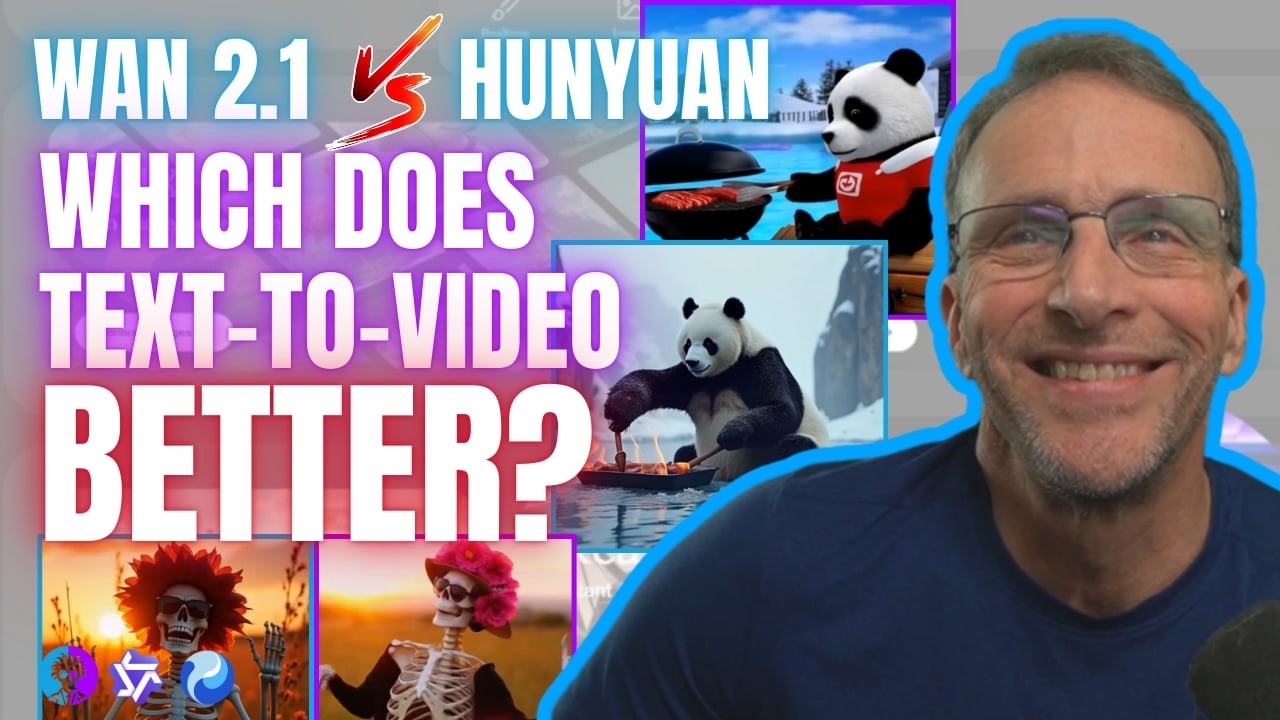
The video features a side-by-side comparison of two text-to-video AI models, Wan 2.1 and Hunyuan, using the Kore.ai platform to evaluate their performance in generating videos based on the same prompts. While both models produce impressive results, the host allows viewers to draw their own conclusions about their strengths and weaknesses without declaring a clear winner.
In the video, the host conducts a side-by-side comparison of two text-to-video AI models: Wan 2.1 and Hunyuan, using the Kore.ai platform. The host emphasizes the advantages of Kore.ai, such as its fast and high-resolution video generation capabilities, as well as its user-friendly interface for comparing different AI models. The video aims to showcase the performance of both models in generating videos based on the same prompts, highlighting their strengths and weaknesses.
The host begins by explaining the generative AI landscape and the significance of the Crea platform, which offers a variety of cutting-edge tools for creators. They mention that both Wan 2.1 and Hunyuan are open-source models that can be run locally, although Wan 2.1 is noted to be less GPU-intensive than previously thought. The host shares their personal experience running the models on a high-end GPU, emphasizing the ease of generating videos with specific prompts.
As the comparison progresses, the host inputs various prompts into both models, such as a cat jumping onto a table in an Italian restaurant where Bigfoot is eating spaghetti. The results from Hunyuan and Wan 2.1 are displayed, with the host noting that while Hunyuan failed to include Bigfoot in its output, Wan 2.1 successfully adhered to the prompt. This pattern continues as the host tests multiple prompts, showcasing the differences in adherence to the prompts and the overall quality of the generated videos.
Throughout the video, the host refrains from making definitive judgments about which model is superior, instead allowing viewers to draw their own conclusions based on the outputs. They present a variety of prompts, including whimsical scenarios and detailed descriptions, and display the results from both models. The host highlights that both models produce impressive results, with no clear winner emerging from the comparisons.
In conclusion, the video serves as an informative exploration of the capabilities of the Wan 2.1 and Hunyuan models in generating text-to-video content. The host encourages viewers to subscribe for more insights into generative AI and emphasizes the potential of these open-source models to rival professional solutions in terms of output quality and prompt adherence. The engaging presentation and side-by-side comparisons provide valuable insights for creators interested in leveraging AI for video generation.