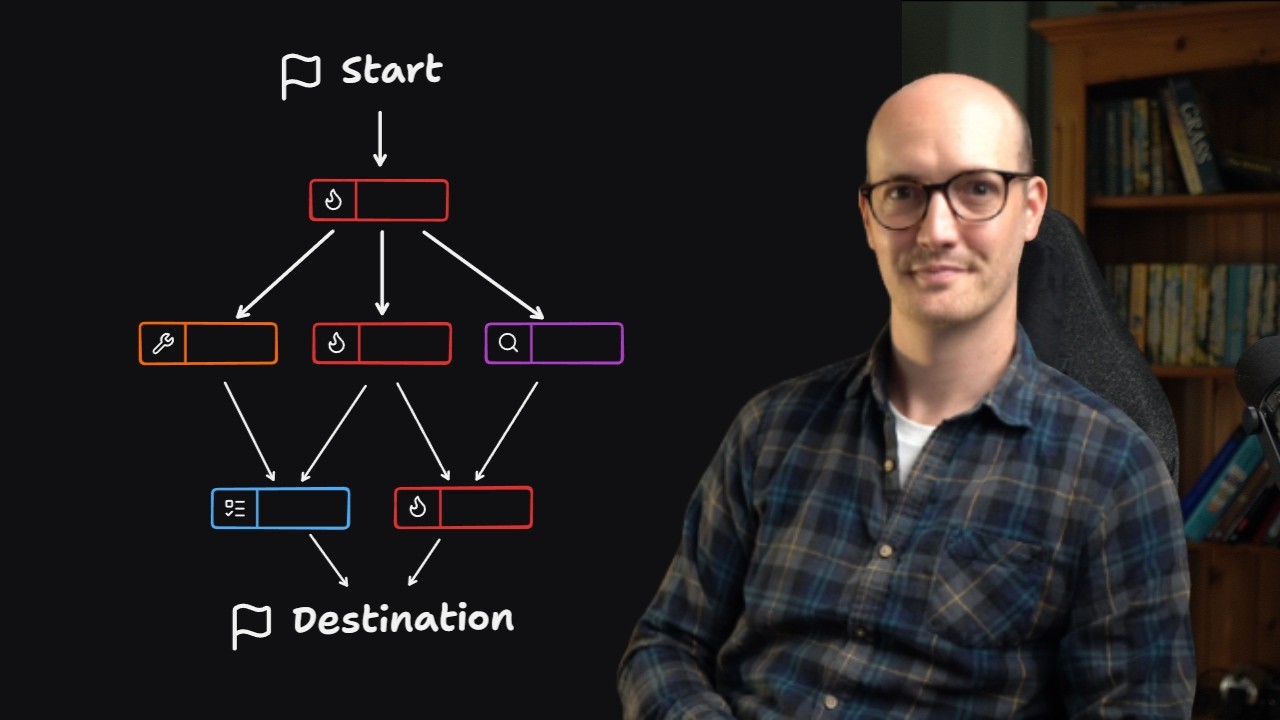
The video introduces Wayfinder, a new AI planning skill designed to handle large and complex projects that exceed the limitations of single-session AI planning tools. Traditional AI planning often feels constrained by session limits and token budgets, forcing users to break down work into small chunks and manage context windows carefully. Wayfinder overcomes these issues by orchestrating planning across multiple sessions, managing dependencies, parallel tasks, and the “fog of war”—the uncertainty and unknowns in a project. It is built on solid software development fundamentals and is available as a skill in the creator’s skills repository.
Wayfinder works by creating a dynamic map of the project, where each node or “ticket” represents a decision point or task that requires its own AI session. These tickets can be of four types: research, prototype, grilling (discussion), and task (real-world actions). The system tracks which tickets are ready to be tackled and which remain in the fog, gradually resolving uncertainties through iterative sessions. This approach allows users to plan ambitious projects with clarity, breaking down complex work into manageable, interconnected pieces while maintaining a clear overview of progress and dependencies.
The tool integrates with issue trackers like GitHub, Jira, or Linear, storing the project map and tickets as issues. This integration allows Wayfinder to keep a detailed record of decisions, prototypes, and completed tasks, with resolutions written back to the parent map for easy reference. Users start by defining a destination or goal for the project, then Wayfinder helps generate and manage the necessary subtasks. The user can then work through each ticket individually, invoking Wayfinder on specific tickets to continue planning or implementation, making the process highly flexible and scalable.
Wayfinder also supports creating detailed specifications from the project map, which serve as a comprehensive summary of all decisions and plans made during the multi-session process. Unlike traditional spec-driven development, these specs are treated as transient documents that guide implementation but are often discarded once the work is integrated into the codebase. This approach emphasizes practical progress over maintaining persistent documentation, while still ensuring traceability by linking specs back to original decision tickets.
The video concludes by addressing common questions about Wayfinder, emphasizing that it is best suited for projects too large or uncertain to plan in a single session. It is not intended to replace simpler workflows for straightforward tasks. The creator highlights the versatility of Wayfinder, noting its use beyond coding, such as planning a garden office. Overall, Wayfinder empowers users to confidently navigate complex projects by managing uncertainty, dependencies, and diverse task types, making ambitious planning more accessible and effective.