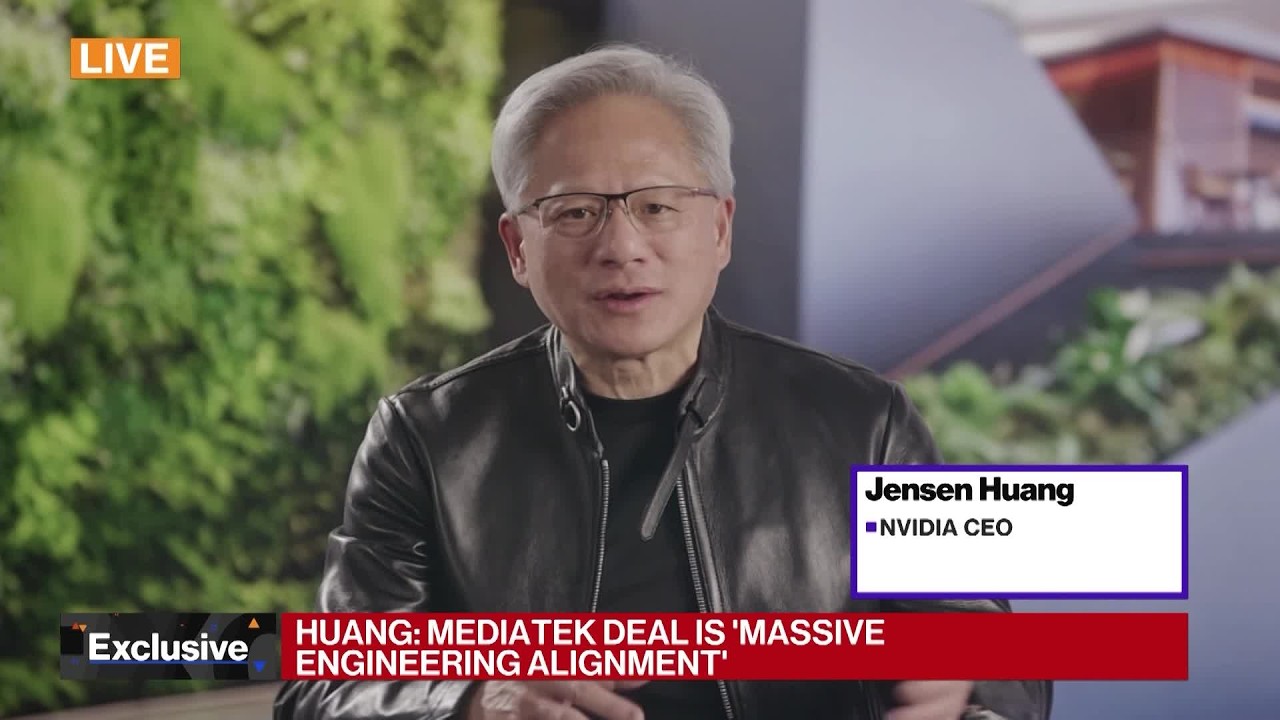
Jensen Huang emphasized Nvidia’s GPU-based architecture as the most versatile and comprehensive solution for accelerating all AI models worldwide, highlighting its broad applicability across various domains and deployment environments. He also expressed Nvidia’s openness to integrating specialized XPUs into its platform, reinforcing the company’s commitment to collaboration and maintaining leadership in the evolving AI compute market.
In the recent earnings call, Jensen Huang confidently emphasized the superior economics of Nvidia’s GPU-based architecture, particularly in the context of frontier AI labs. He highlighted that Nvidia’s NVLink fusion technology simplifies the integration of specialized chips, or XPUs, into data centers. Huang clarified that XPUs are already present in the market, distinguishing them from Nvidia’s GPUs, which serve as general-purpose accelerators.
Huang elaborated on Nvidia’s comprehensive role in accelerating the entire AI lifecycle, from data processing and pre-training to post-training and generative AI inference. He stressed that Nvidia’s GPUs support every AI model globally, including closed and open models across diverse domains such as video, language, biology, physics, and robotics. This broad applicability underpins Nvidia’s position as the most versatile, durable, and rentable compute infrastructure worldwide.
The company’s extensive presence spans cloud environments, on-premises setups, and edge computing, enabling Nvidia to address markets that competitors cannot. Huang attributed this capability to Nvidia’s unique architecture and its full-stack AI factory platform, which integrates hardware and software seamlessly. This comprehensive ecosystem strengthens Nvidia’s market leadership and adaptability in the evolving AI landscape.
Acknowledging the importance of customers and partners who may prefer specialized XPUs in their data centers, Huang expressed Nvidia’s openness to facilitating their integration. By making it easier to connect these specialized chips to Nvidia’s infrastructure, the company aims to foster collaboration and mutual benefit. This approach reflects Nvidia’s strategy to support a diverse range of hardware while maintaining its dominant platform.
Ultimately, Huang conveyed that Nvidia is not threatened by the presence of XPUs but rather welcomes them. The company is actively opening its platform to accommodate these specialized processors, reinforcing its commitment to growth across all AI opportunities. Nvidia continues to expand its share in both closed and open AI models, solidifying its leadership in the AI compute market.