Certainly! Here’s a five-paragraph summary of the video, with spelling and grammar corrected:
A groundbreaking new open-source AI model, GLM 4.7, has just been released by a Chinese team, quickly establishing itself as the top open-source model available. The presenter highlights that GLM 4.7 not only surpasses previous open models like DeepSeek and Kimiku K2, but also rivals leading closed models such as Gemini 3 Pro and GPT-5.2. The model is freely accessible via an online chat platform, and its open weights are available for download, making it especially valuable for organizations needing on-premise solutions for sensitive data.
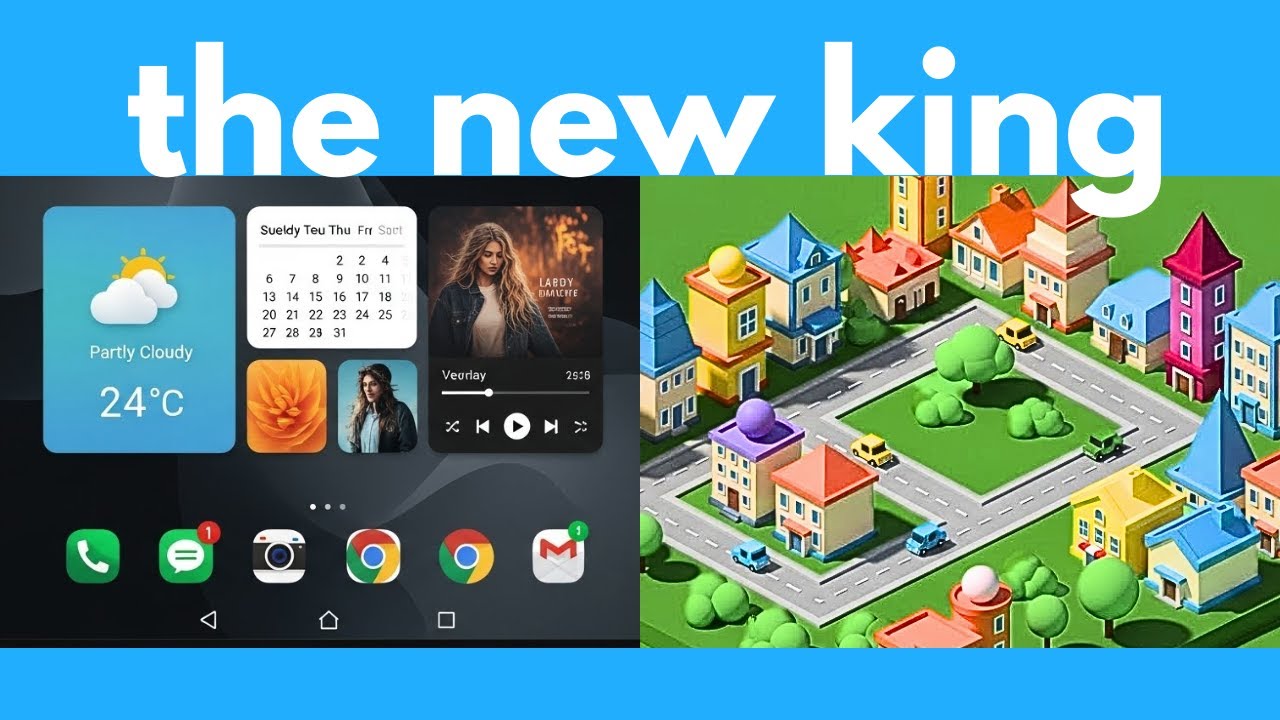
The video demonstrates GLM 4.7’s impressive capabilities through a series of challenging coding and reasoning tasks. The model successfully builds complex applications such as an Android OS simulation, a webcam-enabled Fruit Ninja game, a Sim City-style city builder, a multi-track video editor, and a 3D racing game—all with minimal prompting and few errors. The presenter emphasizes how GLM 4.7 consistently produces functional, polished results, often outperforming other top models in terms of reliability and code quality.
Beyond coding, GLM 4.7 excels at creating productivity tools and handling multimodal inputs. It can generate a Trello-like kanban board with timeline and calendar views, a Figma-style drag-and-drop UI builder, and even transform images or spreadsheets into interactive visualizations and comprehensive reports. The model’s multimodal abilities allow it to process images and complex data, turning them into interactive graphs or well-formatted financial summaries with ease.
GLM 4.7 also demonstrates strong research and reasoning skills. When given a complex medical research prompt, it produces a thorough, well-cited report complete with tables, flowcharts, and comparative analyses—similar to what specialized research assistants like Perplexity might generate. The model’s architecture introduces advanced thinking mechanisms, such as “interleaved thinking” (separating thought from action), “preserved thinking” (enhanced long-term memory), and “tunable thinking” (adjusting depth of reasoning based on task complexity), which contribute to its accuracy and versatility.
In terms of benchmarks, GLM 4.7 achieves top scores on several industry-standard tests, sometimes even outperforming closed models like GPT-5.2 and Gemini 3 Pro in areas such as competitive math and scientific reasoning. While its context window and hardware requirements are substantial (358 billion parameters, 200,000 tokens, and over 700GB in size), the open-source release is a major contribution to the AI community. The presenter concludes by encouraging viewers to try GLM 4.7 themselves, praising its reliability and power, and inviting them to stay updated on AI news through his newsletter.