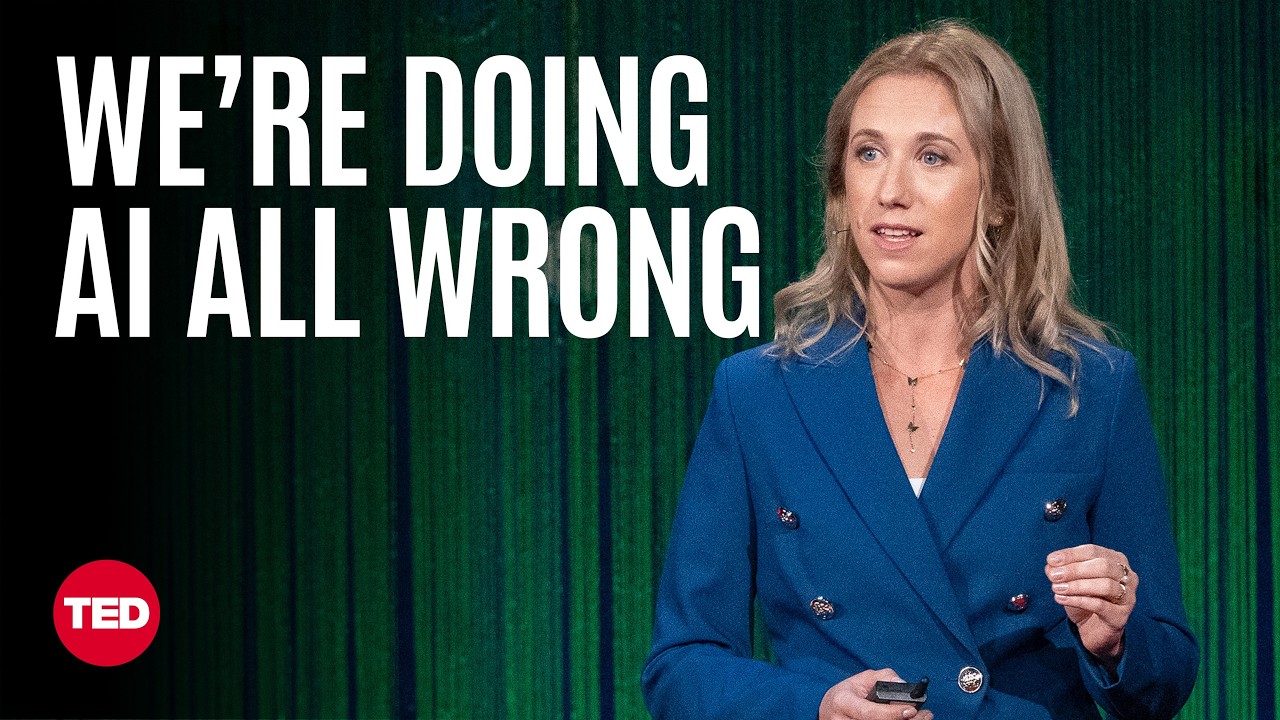
In her TED talk, Sasha Luccioni addresses the current trajectory of artificial intelligence (AI) development, highlighting that the prevailing approach prioritizes large language models (LLMs) built by a few major tech companies. These companies invest massive capital into creating ever-larger data centers to power these models, which consume enormous amounts of energy and contribute significantly to carbon emissions. For example, Meta plans to build a data center the size of Manhattan, and OpenAI’s Stargate data center in Texas is expected to emit as much CO2 annually as the entire country of Iceland. This unsustainable growth mirrors the environmental and social harms caused by Big Oil, disproportionately affecting vulnerable communities.
Luccioni critiques the dominant “bigger is better” mentality in AI, where larger models with more parameters and greater computational demands are assumed to deliver superior performance. While LLMs like ChatGPT can perform a wide range of tasks, this versatility comes at a steep environmental cost. Her research shows that using large general-purpose models to answer simple questions can consume up to 30 times more energy than smaller, task-specific models. This trend limits AI development to a handful of wealthy corporations, leaving startups, academics, and nonprofits behind, and concentrates control over AI’s future in the hands of a few.
However, Luccioni points to a quiet revolution driven by smaller language models that are significantly more energy-efficient yet still powerful. These models, some 5,000 times smaller than the largest LLMs, use carefully curated, high-quality datasets and can run on personal devices like smartphones or web browsers without relying on massive data centers. This approach not only reduces environmental impact but also enhances data privacy and cybersecurity, empowering users and smaller AI developers to innovate and compete more fairly.
Beyond language models, Luccioni emphasizes the importance of diverse AI methods that consume less energy and have practical applications in combating climate change. She highlights projects like NASA-funded Galileo models for crop mapping and flood detection, Rainforest Connection’s AI-powered acoustic monitoring of rainforests, and Open Climate Fix’s use of AI to optimize renewable energy output. These examples demonstrate how AI can be both sustainable and impactful when designed with environmental and social considerations in mind.
Finally, Luccioni calls for greater transparency and accountability in AI’s environmental footprint. She launched the AI Energy Score project to evaluate the energy efficiency of over 100 open-source AI models, revealing stark differences in their carbon emissions. Despite resistance from major AI companies, she advocates for regulations that require disclosure of AI’s energy use and environmental impact. Ultimately, she envisions a future where AI is sustainable, accessible, and serves humanity as a whole, rather than just a few profit-driven corporations, urging collective action to reshape AI’s development for the better.