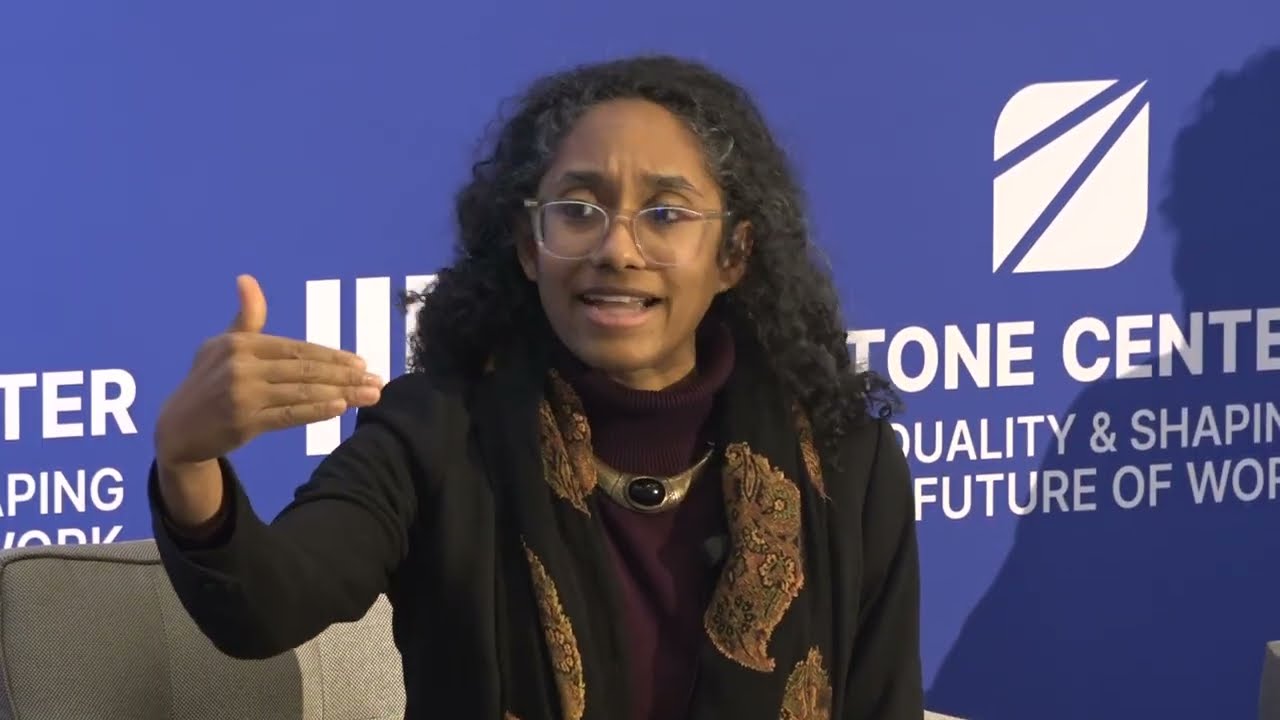
The panel on wealth inequality in the US, chaired by Gary Gensler, brought together experts from economics, sociology, and economic history to discuss the complexities of wealth distribution. Gensler introduced the panelists and set the stage by highlighting the concentration of wealth in the US, noting that the top 10 companies account for 43% of the $70 trillion equity market, and that the US is home to a significant share of the world’s billionaires. He emphasized that the discussion would focus not just on the ultra-wealthy, but on broader patterns of wealth inequality and its implications for society.
Wojciech Kopczuk, an economist from Columbia University, began by questioning why we care about wealth inequality, suggesting two main reasons: it serves as a metric for disparities and has externalities that affect society at large. He argued that wealth is a complicated measure because it reflects not just resources, but also decisions about saving and consumption, life-cycle effects, and institutional factors like homeownership rates and the strength of social safety nets. Kopczuk pointed out that wealth is not always a straightforward indicator of well-being, using the example of Greece and Germany, where higher homeownership in Greece does not translate to greater prosperity. He also highlighted the role of inheritances in perpetuating inequality and stressed the importance of focusing on equality of opportunity rather than just outcomes.
Laura, an economic historian from Princeton, focused on racial wealth inequality in the US, tracing its evolution from the Civil War to the present. She explained that the racial wealth gap, currently about 6:1 in favor of white Americans, has remained largely unchanged for nearly 70 years. The largest reduction in the gap occurred immediately after emancipation, but since the mid-20th century, progress has stagnated. Laura attributed this persistence to both the legacy of slavery and ongoing differences in opportunities for wealth accumulation, such as lower savings rates and less exposure to capital gains among Black Americans. She argued that closing the racial wealth gap would require bold policies, potentially on the scale of reparations, given the magnitude of the historical disparity.
Sasha, a sociologist from the University of Michigan, emphasized the intergenerational transmission of wealth and its role in perpetuating inequality. She noted that wealth is unique among socioeconomic indicators because it can be directly inherited, making it especially “sticky” across generations. Sasha’s research showed that about half of the racial wealth gap can be explained by differences in parental resources, while the other half is due to new inequalities created in each generation, such as disparities in education, income, and homeownership. She argued that addressing wealth inequality requires both reckoning with historical injustices and preventing the recreation of disparities in the present.
The panel concluded with a discussion on the relative importance of wealth versus income inequality, the impact of technology on inequality, and policy challenges such as homeownership and taxation. The panelists agreed that both wealth and income matter, but in different ways and for different segments of the population. They also discussed the political economy of wealth, noting that concentrated wealth influences policy and taxation. Audience questions touched on the role of racism in opposing redistributive policies, the measurement of wealth’s externalities, and the risks and benefits of promoting homeownership among disadvantaged groups. The panelists highlighted the need for nuanced measurement, historical context, and institutional reform to address the multifaceted problem of wealth inequality in the US.