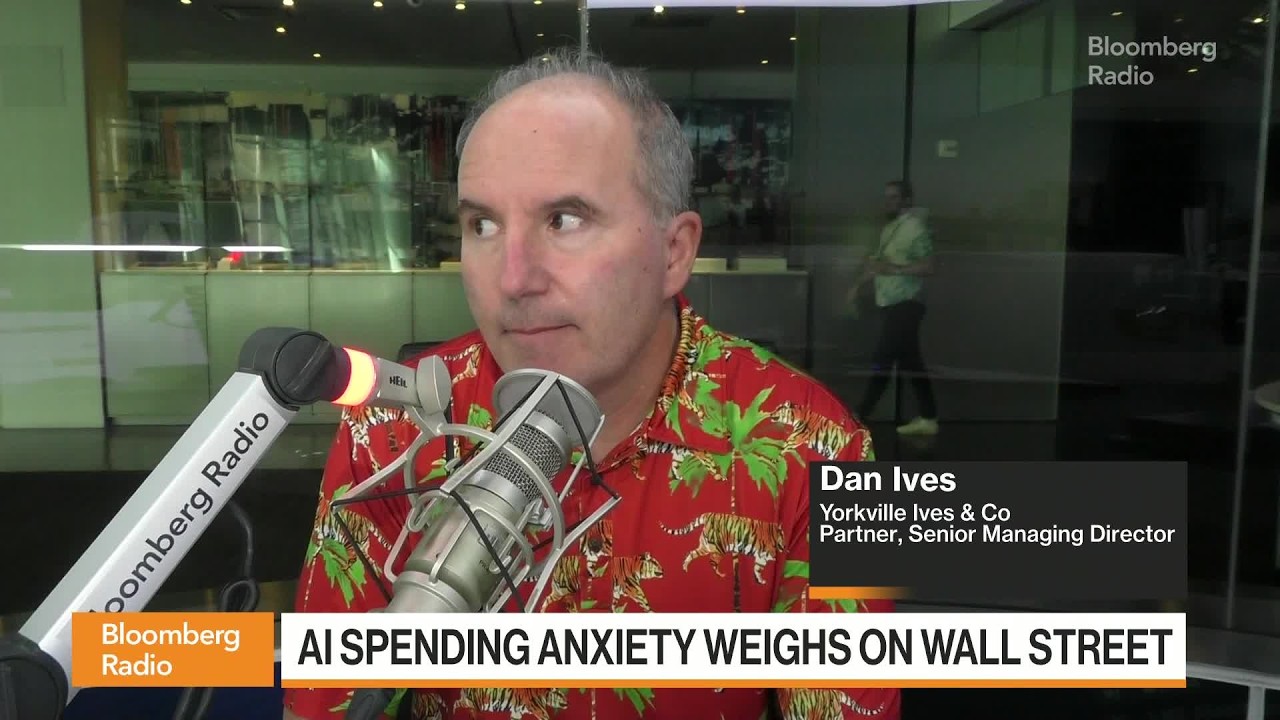
The AI revolution is described as being in its early “third inning,” with major tech companies like Intel, Alphabet, and Apple making significant investments in AI infrastructure and modernization despite volatile investor sentiment. While hyperscalers continue heavy spending to stay competitive, Apple is poised to leverage its vast iOS user base with concrete AI deployments, signaling a critical phase of long-term enterprise adoption and innovation beyond short-term market reactions.
The speaker discusses the current phase of the AI revolution, describing it as being in the “third inning,” emphasizing that while some investor reactions to recent tech earnings may seem impulsive, the underlying fundamentals remain strong. Intel is highlighted as a key indicator of the sector’s health, having made a significant comeback with support from the U.S. government. The upcoming earnings reports from major hyperscalers like Alphabet, Meta, Microsoft, and Amazon are expected to provide further insight into enterprise demand and capital expenditure (CapEx) trends, which are crucial for understanding the trajectory of AI and cloud investments.
Investor sentiment is described as fickle, with high expectations making it challenging for companies to satisfy the market. The speaker notes that despite Alphabet’s recent stock sell-off following its earnings report, the company’s cloud growth and increased CapEx indicate ongoing commitment to the AI arms race. This arms race compels hyperscalers to continuously invest heavily in infrastructure to maintain competitive positioning, likened to building prime real estate on the “Vegas Strip.” Companies face a dilemma: either spend aggressively to keep pace or risk falling behind, which underscores the necessity of sustained investment despite market volatility.
The discussion also touches on the financial strategies of these tech giants, noting that many have been raising capital through bond markets and may increasingly tap into equity markets to fund their expansion. This trend is expected to intensify over the next 6 to 18 months as companies prioritize modernization and capacity building. The speaker highlights that while each company’s approach and investor reception may vary, the overall shift from mere CapEx to modernization investments marks an early but critical phase in the AI revolution’s development.
Apple is singled out as a unique player in this landscape, distinct from the hyperscalers. The company is anticipated to reveal a more concrete AI strategy in its upcoming earnings, moving beyond talk to actual deployment. With a massive installed base of iOS devices, Apple’s focus is on integrating AI into its product lineup, particularly the iPhone 17, which has seen an unexpectedly strong upgrade cycle. The speaker suggests that Apple is positioning itself as a key gatekeeper in the consumer AI ecosystem, leveraging its vast user base to capitalize on AI-driven innovation.
Finally, the speaker speculates on future product innovations from Apple, such as the potential introduction of a foldable iPhone. This innovation is expected to be practical and pocket-friendly rather than purely experimental. The overall message is that the AI revolution is still in its early stages, with significant investments and strategic moves underway across the tech sector. Investors should focus on the long-term modernization trends and enterprise adoption rather than short-term stock price fluctuations, as these developments will shape the future of technology and AI integration.