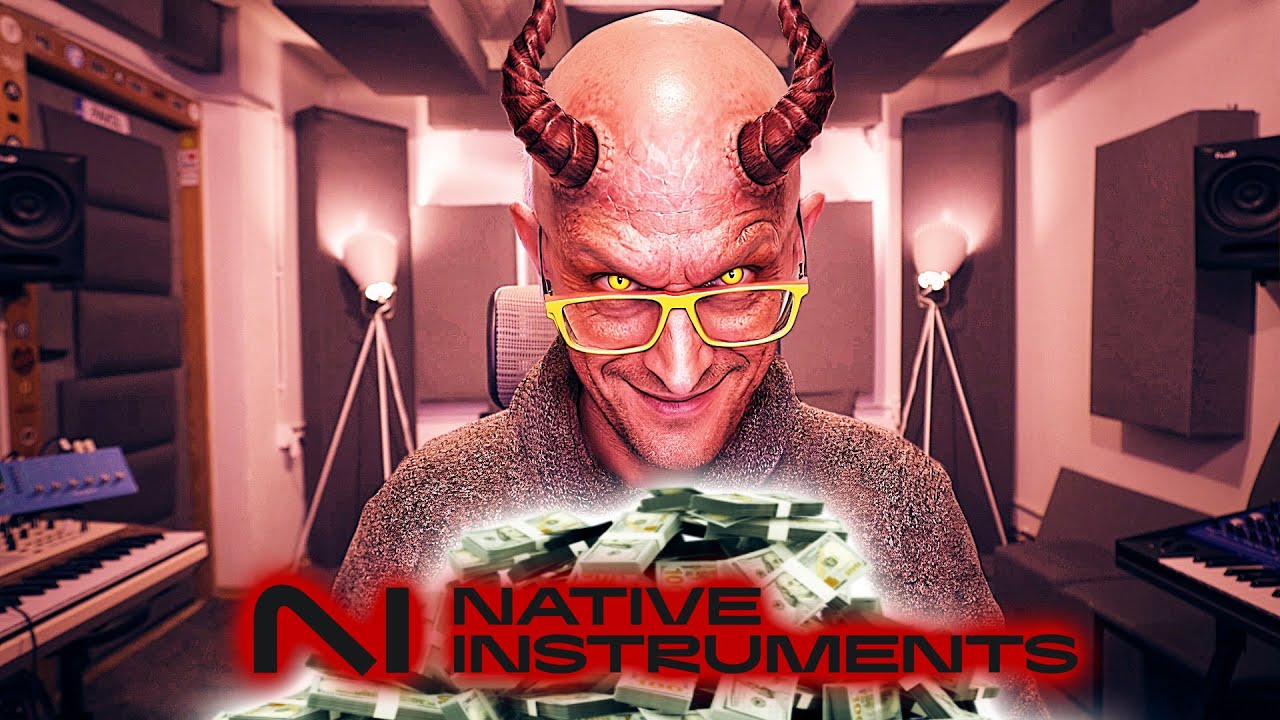
The video, hosted by Paul from his studio in Warsaw, Poland, addresses the recent financial troubles of Native Instruments, a well-known music technology company. Paul revisits the topic after receiving numerous comments on his previous video, focusing on the company’s acquisition by Francisco Partners, a private equity fund, in 2021. He expresses concern that this acquisition and the practices of private equity firms may be at the root of Native Instruments’ current insolvency proceedings in Germany. Paul sets out to explain how private equity can sometimes harm companies, drawing on his own recent research and a range of critical articles about the industry.
Paul outlines the typical private equity strategy: a fund raises money from wealthy investors, uses that capital (often supplemented by large loans) to buy companies, and then loads those companies with debt. The assets of the acquired company serve as collateral for the loans. In the case of Native Instruments, Francisco Partners reportedly used a leveraged buyout, taking on significant debt to finance the acquisition and subsequent investments, such as purchasing other audio software companies. The fund and its managers can extract value through dividends, management fees, and payouts, sometimes recouping their investment quickly.
The problem, Paul explains, is that if the acquired company cannot service its debt, it may be pushed into insolvency or bankruptcy. The private equity fund itself is not liable for the debt—the company’s assets are used to pay creditors, and if those are insufficient, the government may step in to manage the fallout. This process can leave employees and former owners with nothing, while the private equity fund and its investors may have already profited. Paul emphasizes that this scenario is legal, exploiting loopholes in financial and corporate law, and is not unique to Francisco Partners or Native Instruments.
Paul is careful to clarify that he is not accusing Francisco Partners of intentionally destroying Native Instruments, but rather highlighting a broader pattern seen in some private equity transactions. He notes that not all private equity deals are predatory, and some portfolio companies under Francisco Partners, like Glorious PC Gaming and NZXT, appear stable and successful. However, he warns that the existence of this legal strategy is concerning, especially for industries like audio technology, where companies may be vulnerable due to market changes or disruptive technologies like AI.
In closing, Paul reflects on the potential long-term impact of aggressive private equity practices combined with the rise of AI, which could further destabilize creative industries. He urges viewers to consider whether these forces could reshape or even harm the future of music technology and the broader audio landscape. Despite these concerns, Paul encourages musicians and creators to continue making music, emphasizing the enduring value of human creativity. He invites discussion and hopes for a positive outcome for both Native Instruments and the industry as a whole.