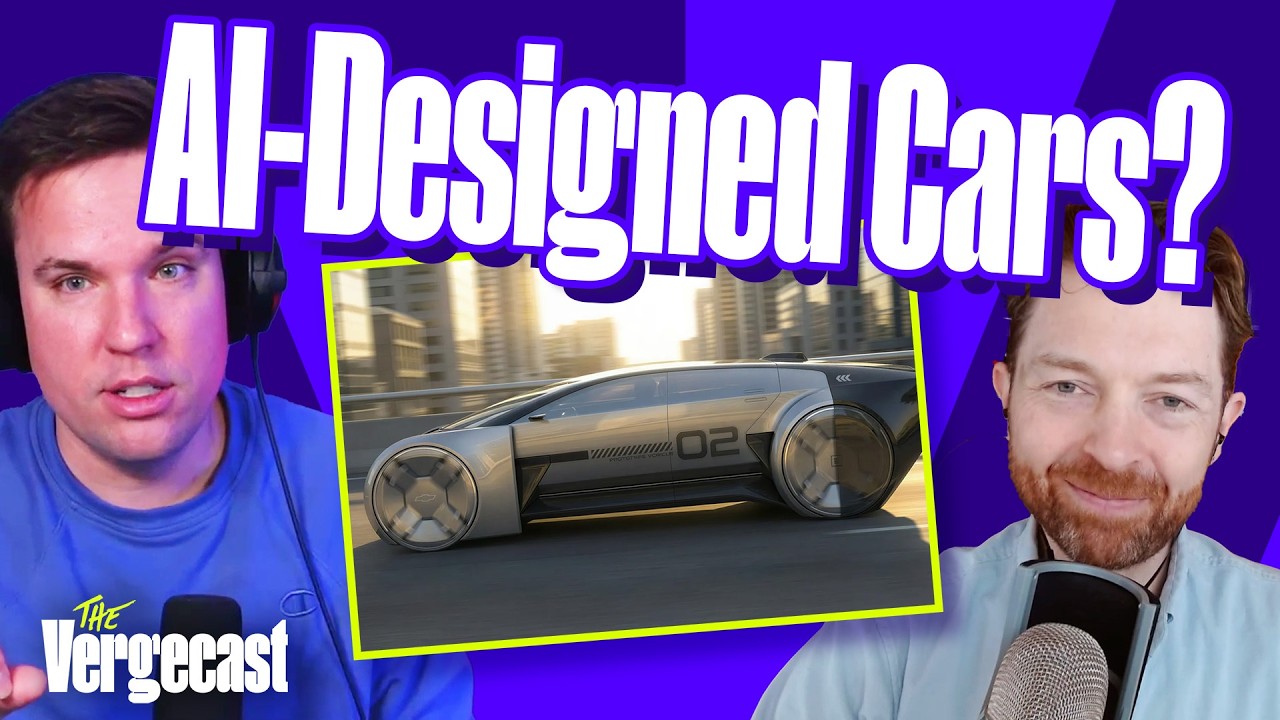
In this episode of The Vergecast, host David Pierce discusses the evolving role of AI in car design and the automotive industry with freelance tech and automotive journalist Tim Stevens. They begin by outlining the traditional car design process, which typically spans five to six years and involves sketches, 3D modeling, clay prototypes, wind tunnel testing, and engineering assessments. Tim highlights how AI is currently being used primarily to accelerate this lengthy process, such as converting sketches into 3D models rapidly and enhancing computational fluid dynamics simulations, thereby potentially reducing development time from six years to around three.
The conversation then shifts to the balance between art and science in car design. While AI can automate many technical and repetitive tasks, there remains a significant creative element, especially in physical modeling and aesthetic decisions. Tim expresses concern about how automation might impact the entry-level roles that help train new designers, potentially disrupting the pipeline of fresh talent entering the industry. They also discuss the increasing importance of software in modern vehicles, noting that cars are becoming “software-defined vehicles,” which introduces new challenges in development, cybersecurity, and regulatory compliance where AI can assist.
Tim and David also touch on the Slate Truck, a minimalist, customizable electric truck that aims to appeal to DIY enthusiasts. Despite financial backing and plans for production, the truck faces challenges due to changing market conditions, reduced federal incentives, and competition from more fully featured electric trucks. The discussion highlights how shifts in the automotive landscape and consumer preferences continue to influence product viability and innovation.
The episode then transitions to a broader AI industry update with Verge’s senior AI reporter Hayden Field. They discuss the competition between AI coding tools Claude Code and OpenAI’s Codex, noting Claude Code’s current lead but Codex’s growing presence. Hayden explains the strategic shift in AI development from chatbot-centric models toward more practical, task-oriented applications, emphasizing the business-to-business focus of AI tools. They also examine OpenAI’s current challenges, including public perception and internal dynamics, and the evolving discourse around AI’s societal impact, particularly regarding job displacement and economic inequality.
Finally, Hayden addresses regulatory and ethical considerations surrounding AI, including the Pentagon’s recent deals with major AI companies excluding Anthropic, and the deployment of specialized cybersecurity AI models like Mythos. They critique the fading concept of Artificial General Intelligence (AGI) as a vague and increasingly obsolete idea, advocating instead for focusing on the tangible, present-day effects of AI technology. The episode closes with a listener question about whether AI-driven layoffs are justified by actual productivity gains, with Hayden suggesting that while AI can boost efficiency, the reality often involves overwork and cyclical hiring patterns rather than straightforward cost savings.