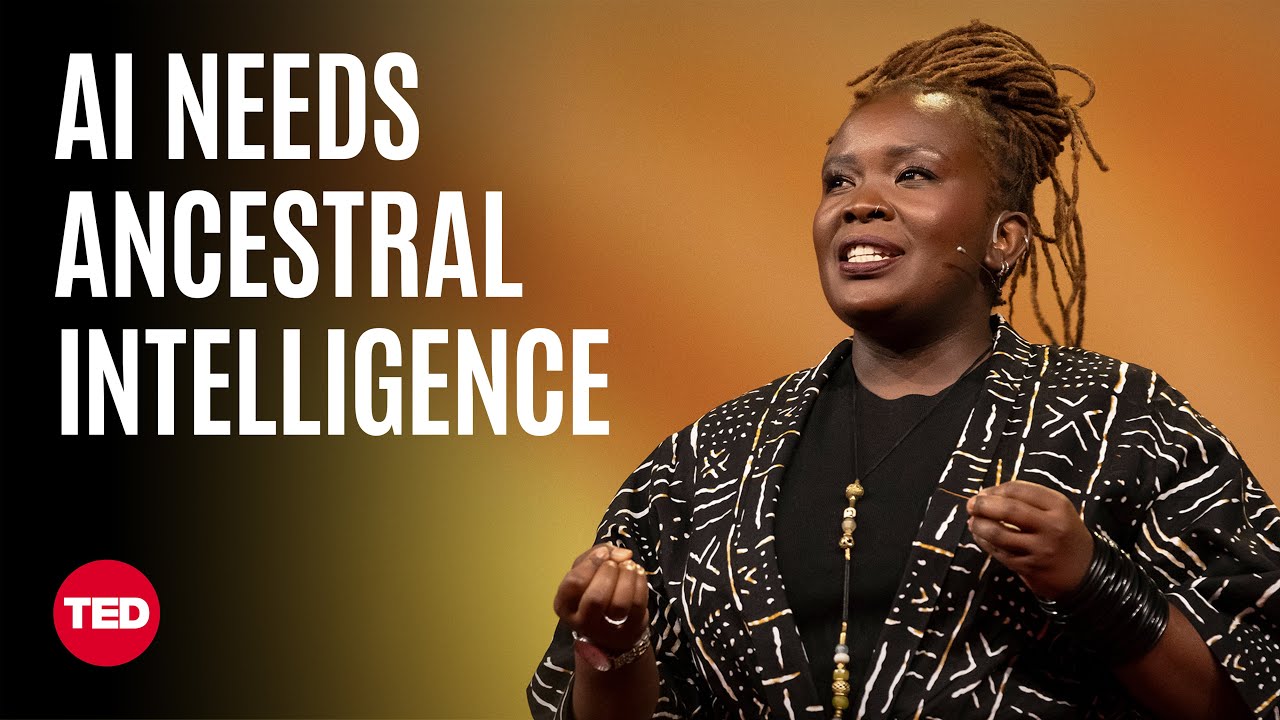
Nanjira Sambuli’s TED talk explores what the African savanna and ancestral wisdom can teach us about the development and governance of artificial intelligence (AI). She begins by referencing African proverbs, particularly the saying, “When elephants fight, it’s the grass that suffers,” to illustrate how power struggles between nations and corporations (the elephants) often harm ordinary people and communities (the grass). Sambuli argues that Africa is frequently caught in the middle of these global competitions, especially as its resources and people become central to powering the intelligent age.
She introduces the concept of ubuntu (or utu), a Bantu value system that emphasizes interconnectedness: “I am because you are.” Ubuntu extends beyond human relationships to include our connection with nature and the cosmos. Sambuli suggests that this philosophy should guide the development of technologies like AI, ensuring they benefit all of humanity and the environment, rather than serving only the interests of the powerful.
Sambuli highlights how African approaches to AI and data governance are informed by ubuntu. Rather than treating data as a mere resource to be exploited, as in the phrase “data is the new oil,” African frameworks emphasize data justice, meaningful participation, informed consent, and community ownership. This approach ensures that marginalized groups, such as rural women with unique agricultural knowledge, are represented and visible in data systems and technological solutions.
She provides examples of “ubuntech” in action, such as the development of lightweight African language models by initiatives like Lelapa AI, which are inspired by nature and designed to be efficient and accessible. The Inkuba language model, for instance, is small but powerful, outperforming larger models in certain tasks. Sambuli also mentions Masakhane, a collaborative AI research community spanning over 30 African countries, which uses a participatory approach to language technology and recognizes all contributors in its research outputs.
In closing, Sambuli argues that these African-led approaches to AI—rooted in ancestral intelligence and ubuntu—offer an alternative path that asserts agency, preserves Indigenous wisdom, and contributes to the global commons. She draws a parallel to the savanna ecosystem, where elephants, when acting in harmony with their environment, help sustain biodiversity. Sambuli urges the audience to pay attention to the “grass beneath your feet,” reminding us that our collective future depends on inclusive, relational, and sustainable approaches to technology.