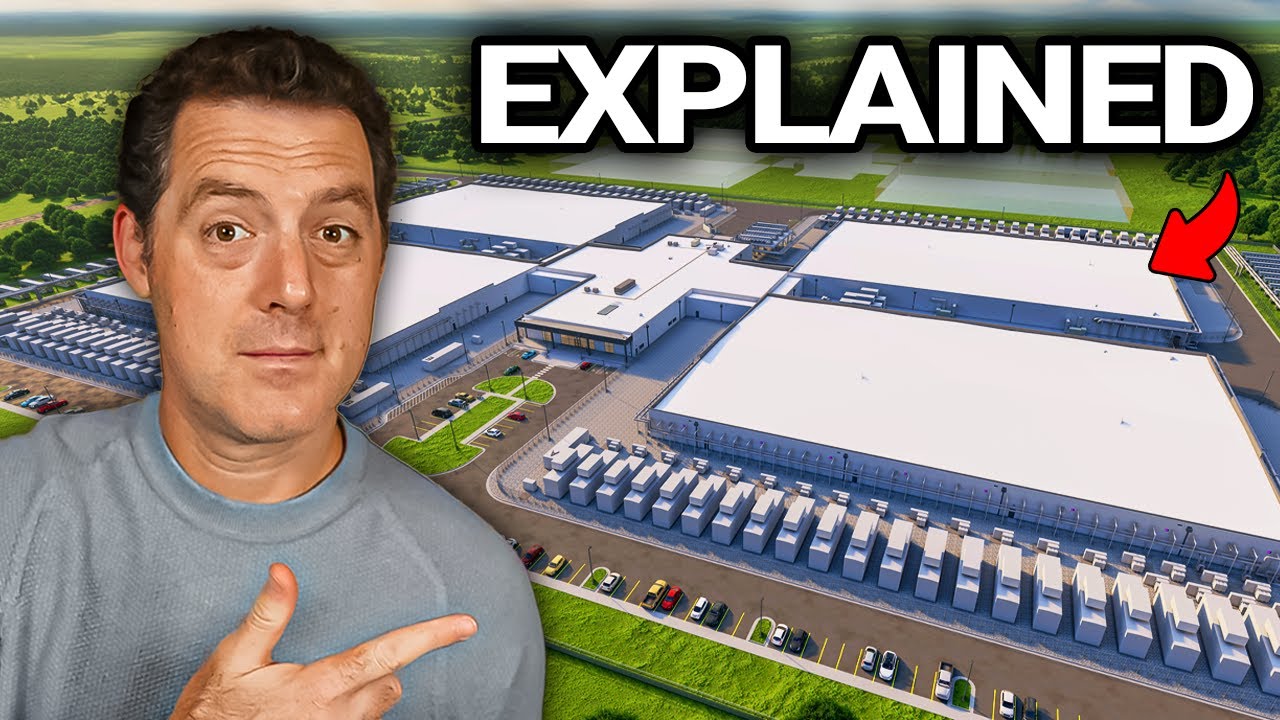
The video explains what data centers are and how they serve as the backbone for AI technologies like ChatGPT. Data centers are massive warehouses filled with rows of servers, GPUs, CPUs, storage arrays, power systems, and cooling infrastructure. These facilities are essentially factories for computation, managing and serving data for various applications. The recent surge in AI development has led to a massive investment in building AI-optimized data centers, with companies like OpenAI, Oracle, Nvidia, and others investing trillions of dollars to support the growing demand for AI infrastructure.
Data centers operate with extremely high-density computing racks that consume vast amounts of electricity and generate significant heat. To manage this, data centers employ advanced cooling techniques, including direct liquid cooling, which is more efficient than traditional air cooling. The power consumption of AI workloads is substantially higher than traditional computing tasks, with AI models requiring continuous, high-intensity computation for both training and inference. This has led to a rapid expansion of data center capacity and a corresponding increase in electricity demand, which is projected to grow significantly in the coming years.
Building a data center is a complex and lengthy process that involves site selection, design, permitting, construction, and commissioning, often taking 18 to 30 months. These facilities are highly secure, with strict physical and digital protections to prevent unauthorized access. Data centers are strategically located based on factors such as power availability, water resources, climate, and local policies. Northern Virginia currently leads as the largest data center market, but other regions like Phoenix, Chicago, Oregon, and Ohio are emerging as key hubs due to their favorable conditions.
Power reliability is critical for data centers, which maintain large diesel generators as emergency backups, though these are rarely used due to their pollution concerns. Operators are exploring alternative backup solutions such as grid-based batteries, on-site gas turbines, hydrogen, and potentially nuclear energy in the future. Transparency in water and power usage is increasingly important, with some data centers reusing waste heat for district heating and adopting closed-loop cooling systems to minimize water consumption. The goal is to balance the massive resource demands of data centers with environmental sustainability and community impact.
The major players in the data center industry are hyperscalers like Amazon, Microsoft, Google, Oracle, and Meta, who operate multiple massive facilities worldwide. These companies are investing tens of billions of dollars annually to expand their AI infrastructure. The video also dispels common myths, clarifying that data centers do not cause blackouts, diesel generators are only for emergencies, and water usage varies widely depending on design and location. Ultimately, data centers are the physical foundation of the AI revolution, relying on concrete, copper, silicon chips, water, and electricity to power the future of technology.