In his talk, Theo Browne reflects on the rapid evolution of AI models and how they have transformed software development. He traces his personal journey through different AI model eras, starting with Sonnet 3.5, which marked a significant improvement in completing multi-step tasks, followed by Opus 45 that enabled longer-running tasks without losing context, and finally Mythos, which introduced orchestration capabilities allowing models to manage and verify complex workflows autonomously. Browne emphasizes that these advancements mean developers must push the boundaries of what they build, moving beyond incremental improvements to leverage the full potential of AI.
Browne challenges the software development community to rethink long-held conventions and habits that no longer serve them. He draws parallels to the evolution of iOS design, where Apple shifted from skeuomorphic designs mimicking physical objects to more functional, minimalist interfaces. Similarly, developers are still clinging to outdated tools, workflows, and mindsets—such as rigid language preferences, reluctance to delete code, and overvaluing legacy practices—that hinder progress. He encourages embracing change and questioning why certain practices exist, urging developers to let go of identity tied to specific languages or tools and to adopt more flexible, efficient approaches.
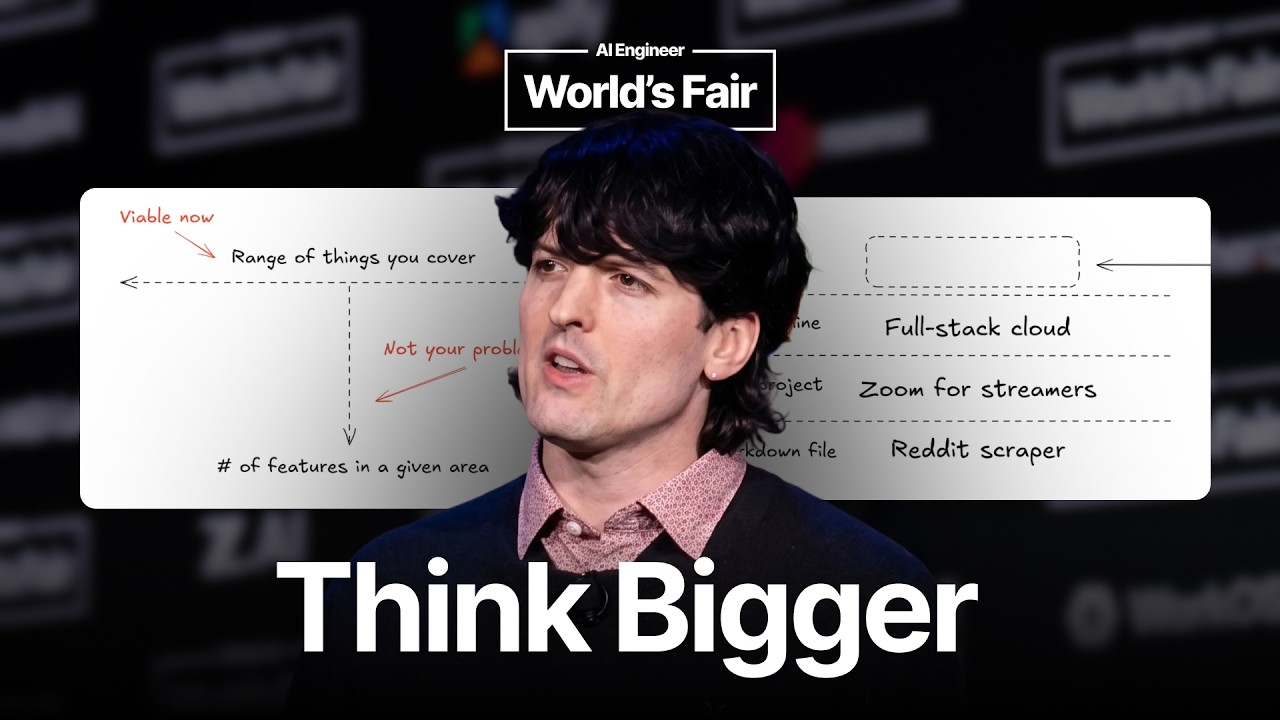
He then shares examples of projects he has built or is working on, illustrating how the tiers of software development have shifted due to AI advancements. What used to be considered a startup can now be a side project, and many products at the event could be as simple as a markdown file powered by AI to execute complex tasks. This shift highlights how AI lowers the barrier to building sophisticated software, enabling individuals and small teams to accomplish what previously required large organizations. Browne points out that the traditional categories of project scale are becoming blurred, and the definition of what is “too big” to build is evolving.
Browne explores the concept of software scope in terms of range and depth, using companies like Vercel and AWS as examples. Vercel offers deep features in a narrow domain, while AWS covers a broad range of services. Historically, startups had to focus on depth within a niche because competing with giants on range was impossible. However, with AI, it is now feasible to build across a broader range quickly, enabling products to cover more ground and empower users to extend functionality themselves. This shift opens new opportunities for innovation and competition, even against established platforms like Slack or Salesforce.
In conclusion, Browne calls on developers to think bigger and embrace the new possibilities AI offers. He suggests it is time to challenge industry giants by building platforms that span wider ranges of functionality and to rethink what is achievable. The talk ends on an optimistic note, encouraging the audience to push beyond traditional limits, experiment boldly, and redefine the future of software development with AI as a powerful enabler.