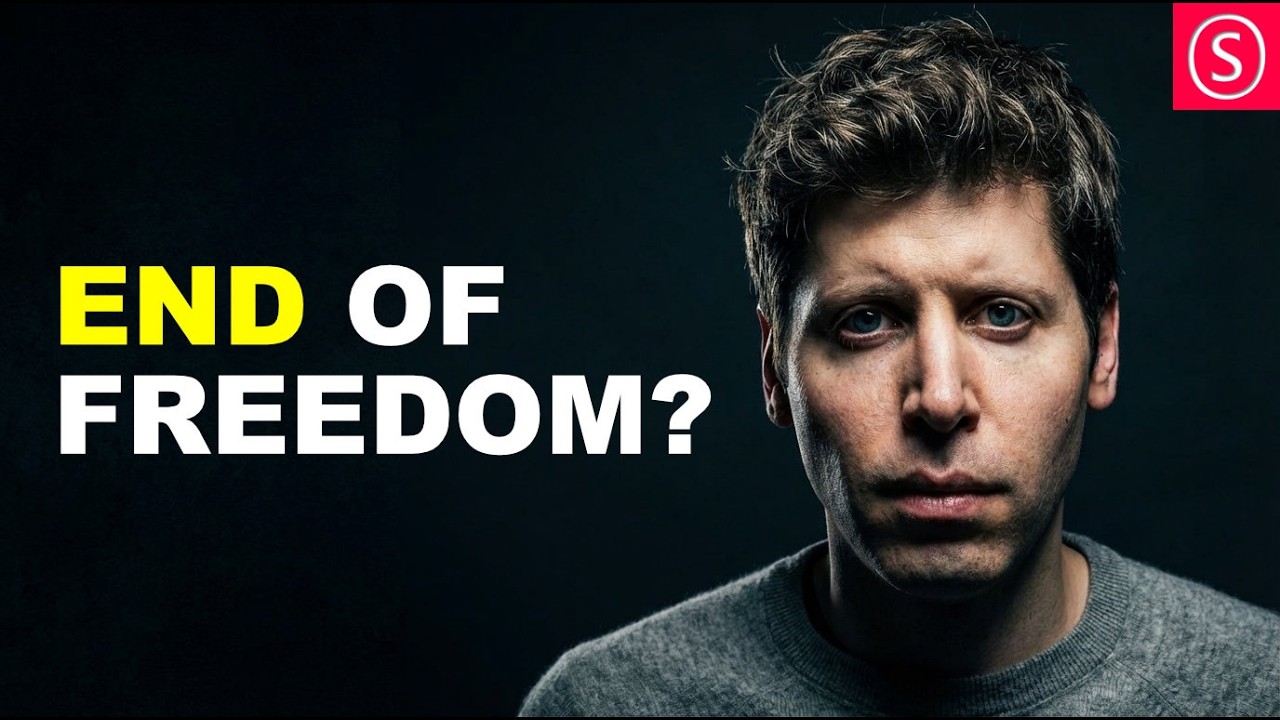
The video explores the profound question of whether artificial intelligence (AI) challenges human freedom and the existence of free will. The speaker emphasizes the centrality of freedom in society, highlighting its presence in fundamental rights like freedom of speech, democracy, and individualism. They share a personal connection to the topic, explaining how their life and career choices—such as studying arts and philosophy and pursuing YouTube—are rooted in the desire for creative and personal freedom. The speaker uses the symbolism of wearing a Hawaiian shirt to represent their independence from societal expectations.
Delving into the nature of freedom and free will, the speaker examines the concept of an infinite universe. In such a universe, every possible version of a person and every choice they could make would exist an unlimited number of times. This raises philosophical questions about individuality and the authenticity of our choices—are we truly unique, or just one of countless identical copies playing out predetermined scripts? The speaker uses analogies like bike lock combinations and dice rolls to illustrate how limited combinations can repeat, even in a vast or infinite context.
The discussion then shifts to the scientific perspective on causality and determinism. From a materialist viewpoint, every action is a reaction to prior events, suggesting that free will might be an illusion. However, the speaker argues that even if outcomes repeat, each instance can still be considered a free choice, much like individual dice rolls that happen to land on the same number. The infinite universe, therefore, not only allows for freedom of choice but also promotes infinite variations of every possible outcome.
The video also addresses the nature of time, referencing Einstein’s theory of relativity and the block universe concept. In this view, past, present, and future all exist simultaneously, and time is experienced differently depending on one’s perspective. The speaker explains how this is not just theoretical but has practical implications, such as the need to correct for time shifts in GPS satellites. In a block universe, free will seems impossible because everything is already set, but the speaker questions whether the “loaf of bread” (the universe) could change, which would require a second dimension of time.
Finally, the speaker connects these philosophical and scientific ideas back to AI. They explain that AI models, like large language models, operate in a kind of superposition, where all possible outputs exist until a specific input determines the outcome. This mirrors the many-worlds interpretation of quantum mechanics, where every possibility plays out in parallel. The speaker suggests that, in this sense, AI could either support or undermine human free will, depending on how we interpret its capabilities and our relationship to it. The video ends by inviting viewers to reflect on whether AI enhances or diminishes our freedom and free will.