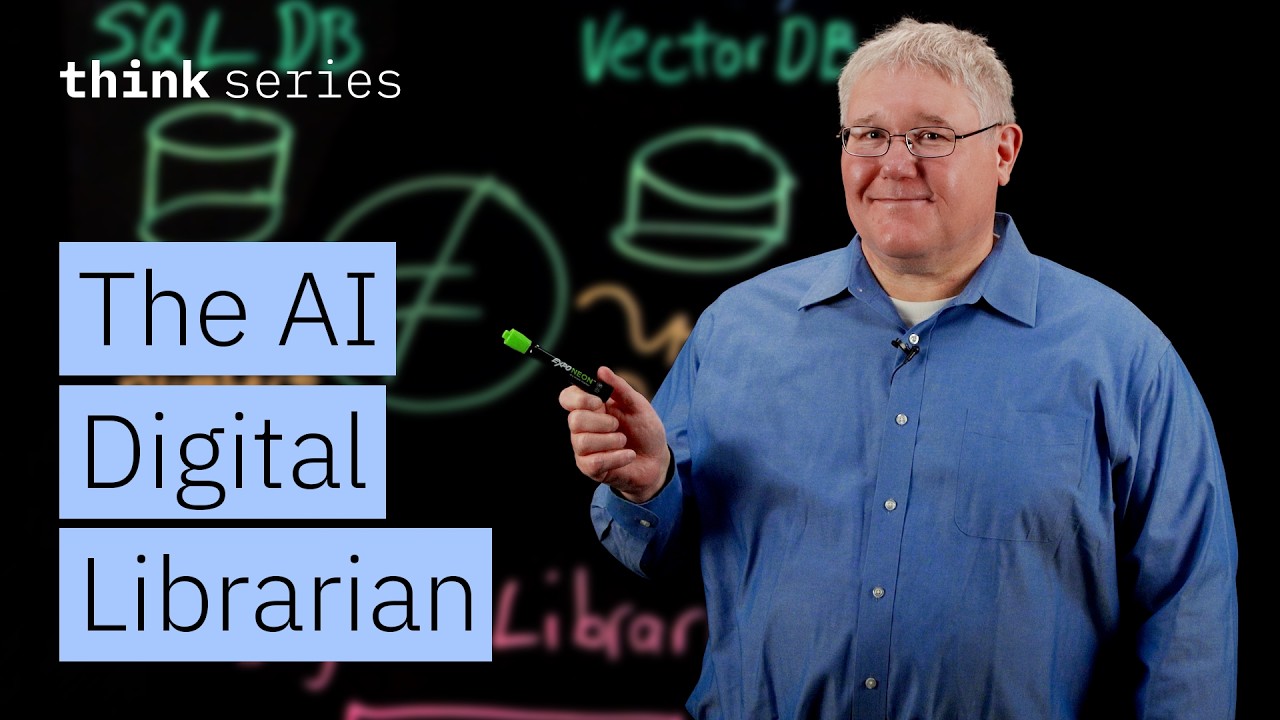
The video begins by illustrating a common frustrating scenario at a pharmacy where a prescription is denied coverage by insurance, but neither the patient nor the pharmacy technician knows why. The core issue is that the answer is split between two disconnected systems: the patient’s prescription data and denial status stored in an SQL database, and the detailed insurance policy rules and explanations buried in lengthy PDF documents stored in a vector database. This disconnect between the “what” (hard data) and the “why” (contextual information) creates confusion and inefficiency.
The problem is widespread across industries where structured data (the “what”) is stored in traditional databases like SQL, while unstructured data (the “why”) such as documents, presentations, and web content is stored separately, often in vector databases. Until recently, bridging this gap was difficult, but the rise of generative AI offers new possibilities. The video proposes the concept of a “digital librarian AI agent” that can seamlessly integrate these two data worlds by knowing when to query SQL databases for precise facts and when to perform semantic searches in vector databases for contextual explanations.
To build such a digital librarian agent, the video outlines six key steps the AI must perform: first, read and understand the user’s question; second, determine which parts of the question require answers from the SQL database (the “what”) and which require information from the vector database (the “why”); third, construct the appropriate queries for each database; fourth, execute these queries; fifth, compile the results from both sources; and finally, sixth, provide a coherent, grounded answer to the original question.
The tools involved in this process include large language models (LLMs) for understanding the question, constructing queries, and synthesizing answers, as well as programming tools like Python to execute queries and reformat data. The example given is a question about whether a drug is covered by insurance (the “what”) and why it is or isn’t covered (the “why”). The digital librarian agent formulates an SQL query to retrieve coverage status and a semantic search query to extract the relevant policy explanation from the vector database, then combines these insights to deliver a comprehensive response.
In conclusion, the video highlights how connecting structured SQL data with unstructured vector data through an AI agent transforms fragmented, frustrating experiences into streamlined, insightful interactions. This approach moves beyond simple data retrieval to delivering meaningful answers, effectively turning isolated data silos into a dynamic reasoning engine that operates at the speed of business needs.