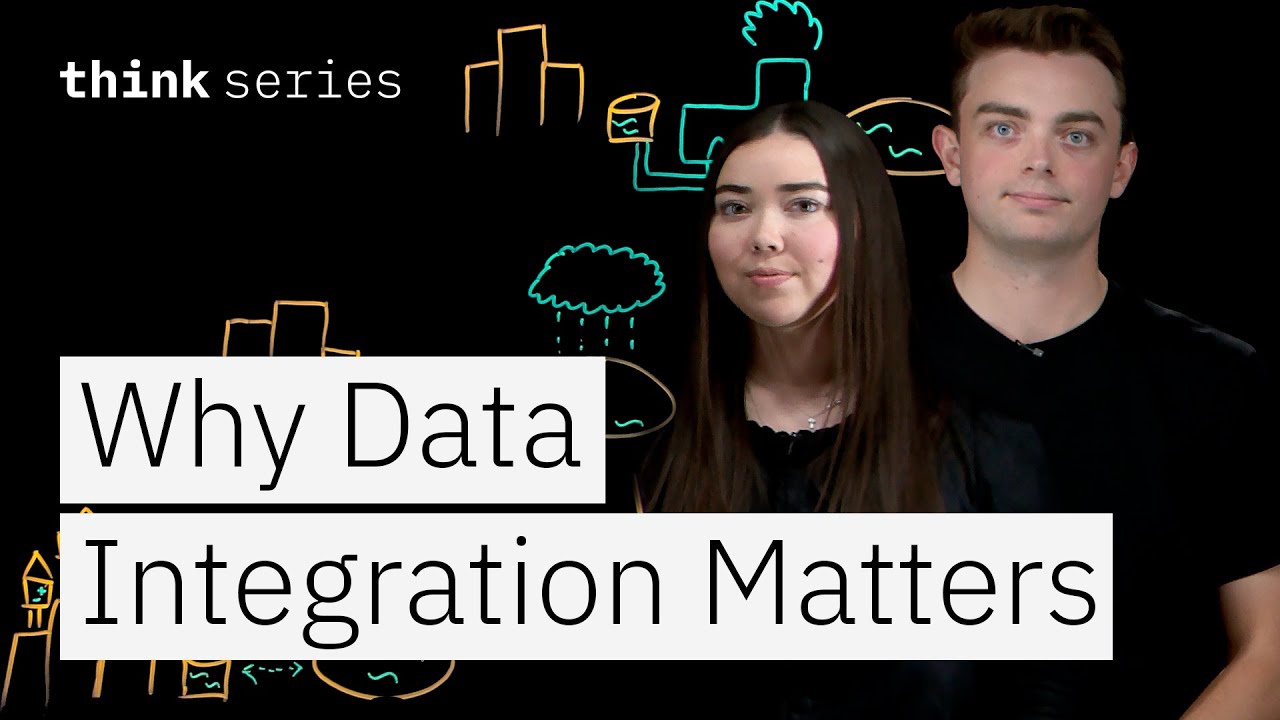
The video uses the analogy of a city’s water system to explain the concept of data integration in organizations. Just as a city requires pipes, treatment plants, and pumps to deliver clean water where it’s needed, businesses need data integration to move clean, usable data between sources and targets. Data integration involves transferring data accurately, securely, and on time, while cleansing it along the way. As organizations scale, the complexity of managing different data sources—such as cloud databases, on-premises systems, and APIs—increases, necessitating various integration styles tailored to specific use cases.
One common data integration style is batch processing, also known as ETL (extract, transform, load). Batch jobs move large volumes of complex data on a schedule, such as nightly transfers. This process is likened to sending a large amount of water from a source through a treatment plant before delivering it to consumers. Batch integration is particularly useful for cloud data migrations, where data needs to be cleaned and optimized before entering sensitive cloud systems, helping to reduce costs and improve efficiency. It applies to both structured data, like database rows and columns, and unstructured data, such as documents and images, especially in AI-related use cases.
Real-time streaming is another integration style that processes data continuously as it flows in from sources like sensors or event systems. This approach allows organizations to react instantly to new information, similar to having a constant flow of fresh water filtered and delivered immediately. Streaming is ideal for use cases requiring immediate response, such as fraud detection and cybersecurity, where continuous monitoring and instant analysis are critical to catching anomalies and threats as they occur.
Data replication focuses on creating near real-time copies of data across systems to ensure high availability, disaster recovery, and improved insights. Using techniques like change data capture (CDC), replication detects changes in source systems and updates target systems accordingly. The analogy here is a city’s water towers holding local copies of water from a central reservoir, ensuring fast and reliable access. Replication keeps data consistent and up to date across different locations, supporting business continuity and operational efficiency.
Finally, the video highlights the importance of data observability, which involves continuously monitoring data pipelines—whether batch, streaming, or replication—for issues such as breaks, schema changes, delays, or quality problems. Observability acts like a smart water meter, detecting leaks or pressure drops and alerting teams before problems impact users. Together, batch processing, streaming, replication, and observability form a comprehensive data integration ecosystem that enables organizations to build resilient, scalable, and reliable data systems, turning messy inputs into clean, actionable data that powers the entire business.