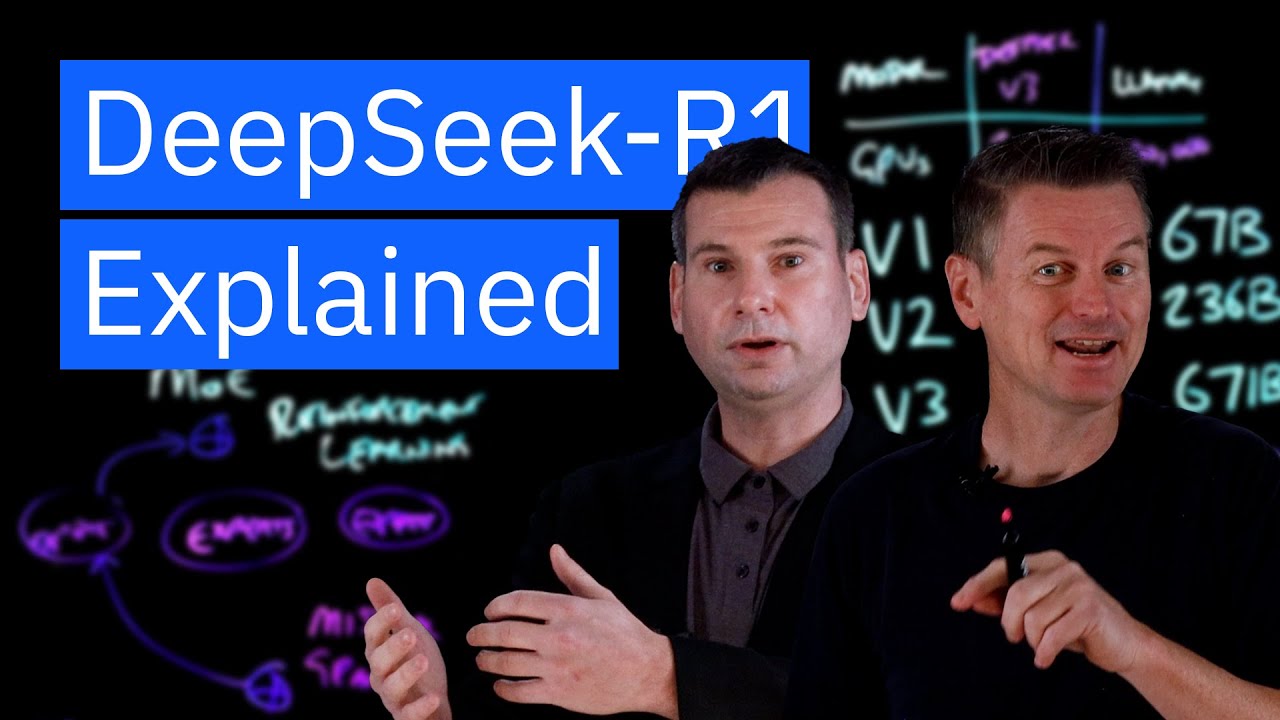
DeepSeek is a Chinese AI startup that has launched an open-source model called DeepSeek R1, which excels in reasoning tasks and is significantly cheaper to operate than competitors, costing about 96% less. The model utilizes a “chain of thought” process and combines reinforcement learning with supervised fine-tuning, making it efficient and capable of explaining its reasoning, thus positioning it as a strong player in the AI landscape.
DeepSeek is a new AI startup from China that has gained significant attention by releasing an open-source model called DeepSeek R1, which has reportedly surpassed the performance of leading models like OpenAI’s own reasoning model, o1. DeepSeek R1 is designed specifically for reasoning tasks, utilizing a process called “chain of thought” to break down complex problems into manageable steps before arriving at an answer. This model is not only competitive in performance but also significantly cheaper to run, costing approximately 96% less than its competitors.
The development of DeepSeek R1 is part of a broader evolution of models from the company, starting with DeepSeek version one, which was a traditional transformer model. Subsequent versions introduced novel features such as multi-headed attention and a mixture of experts (MoE) architecture, which enhanced performance and efficiency. By the time DeepSeek R1-Zero was released, the company had incorporated reinforcement learning techniques to improve the model’s reasoning capabilities further.
DeepSeek R1 builds on the foundation laid by its predecessors, combining reinforcement learning with supervised fine-tuning to achieve high performance on various benchmarks. This model is designed to not only provide answers but also to explain the reasoning behind them, making it a valuable tool for tasks that require complex problem-solving skills. The model’s ability to perform well with fewer resources is a significant advantage in the competitive AI landscape.
One of the key factors contributing to DeepSeek’s efficiency is its use of a fraction of the specialized Nvidia chips compared to its American counterparts. For instance, while DeepSeek requires only 2,000 GPUs to train its models, competitors like Meta use over 100,000 GPUs for similar tasks. This efficiency is achieved through the MoE architecture, which activates only the necessary sub-networks for a given task, reducing computational costs during both training and inference.
Overall, DeepSeek R1 represents a significant advancement in AI reasoning models, combining cost-effectiveness with high performance. The model’s innovative approach to problem-solving and its ability to explain its reasoning processes position it as a strong contender in the rapidly evolving AI landscape. As the demand for advanced reasoning capabilities in AI continues to grow, DeepSeek’s developments could play a crucial role in shaping the future of AI technology.