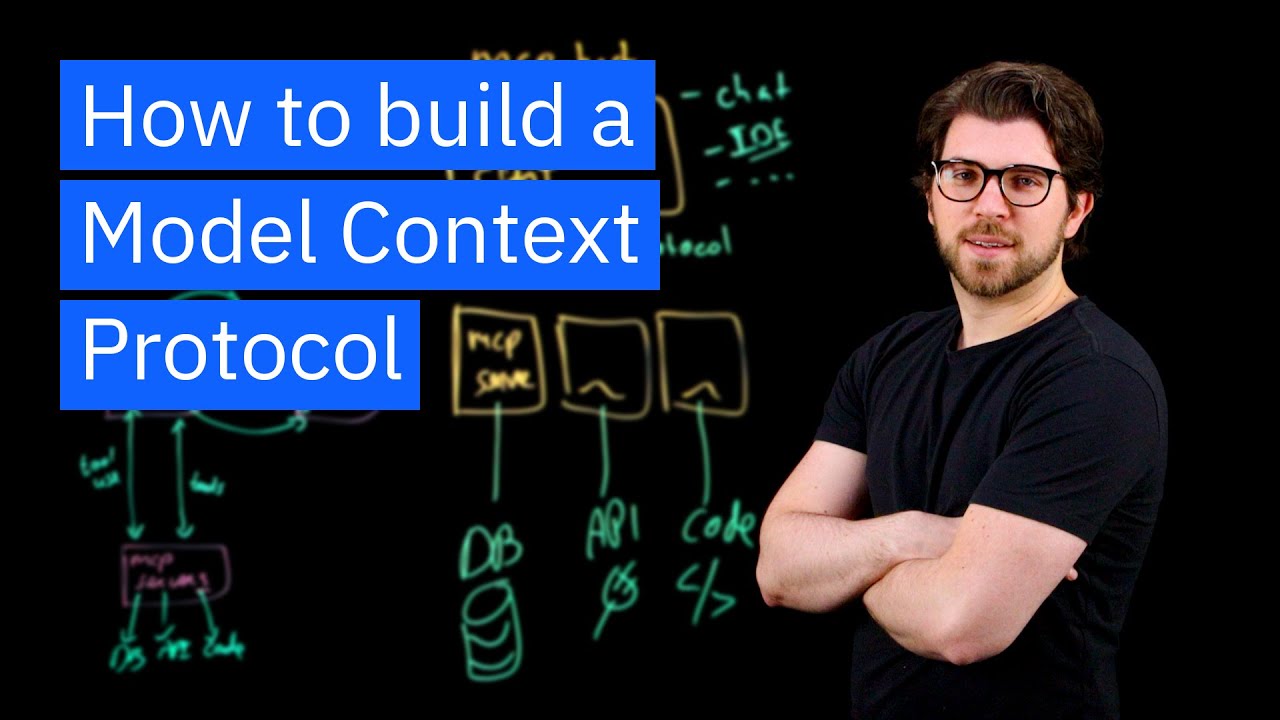
The video introduces the Model Context Protocol (MCP), an open-source standard that enables AI agents to integrate seamlessly with various data sources, including databases and APIs, through a structured interaction between hosts, clients, and servers. It illustrates how MCP facilitates user queries in applications like chat apps by allowing AI agents to access and utilize diverse tools for processing information and delivering results.
The video introduces the Model Context Protocol (MCP), an open-source standard designed to facilitate the integration of AI agents with various data sources, including databases and APIs. MCP consists of several key components: the host, the client, and the server. The MCP host can be an application like a chat app or a code assistant within an Integrated Development Environment (IDE), and it connects to one or more MCP servers through the MCP protocol, which serves as a transport layer.
The MCP host includes an MCP client, which interacts with the user and requests tools from the MCP server. The server can connect to different types of data sources, such as relational databases, NoSQL databases, APIs, or even local files. This flexibility allows developers to build AI agents that can access a wide range of information and functionalities, making MCP particularly useful for applications like code assistants.
In a practical example, the video illustrates how MCP operates within a chat application. When a user asks a question, such as inquiring about the weather or customer counts, the MCP host retrieves available tools from the MCP server. The server identifies which tools are accessible and communicates this information back to the MCP host, which then interacts with a large language model (LLM) to process the user’s query.
Once the LLM determines the appropriate tools to use, the MCP host makes calls to the relevant MCP servers to execute the necessary actions, whether that involves querying a database, calling an API, or running local code. The MCP server processes these requests and returns the results, which are then sent back to the LLM for final output to the user.
The video concludes by encouraging developers to consider adopting the MCP protocol for their AI agent projects. It emphasizes that even if one is not directly building agents, understanding MCP can be beneficial, as clients may be developing such agents. The video invites viewers to like and subscribe for more content related to AI and technology.