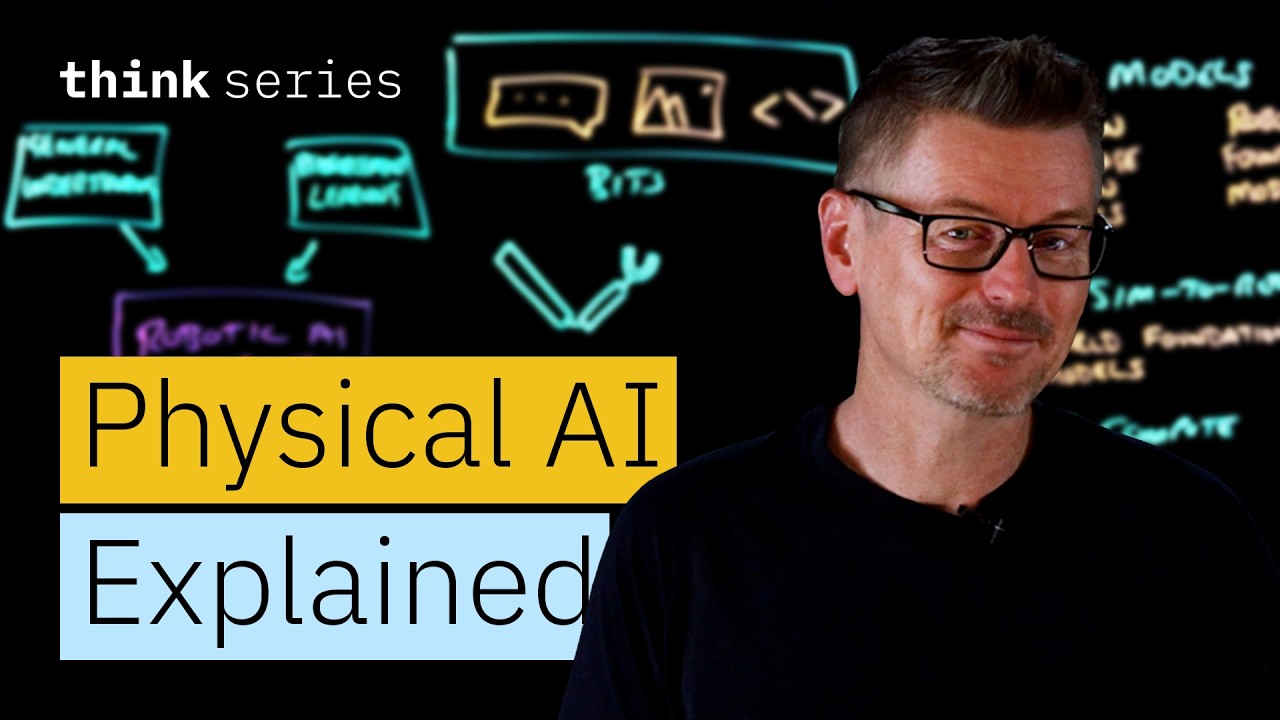
Physical AI refers to artificial intelligence systems that operate in the physical world, interacting with and adapting to their environment through perception, reasoning, and action. Unlike most AI today, which exists digitally in the form of chatbots, image generators, or code assistants, physical AI bridges the gap between digital intelligence and tangible, real-world applications. This includes robots, smart factories, autonomous vehicles, and energy grids that can optimize themselves, all of which exist in the realm of atoms rather than just bits.
Historically, robots operated based on rigid, rule-based programming, performing repetitive tasks in controlled environments, such as robotic arms on automotive assembly lines. These machines were precise but limited, only capable of executing pre-defined instructions. The advent of robotic AI agents equipped with language models and reinforcement learning has transformed this landscape. These agents possess a broader understanding of the world and can learn specialized skills through trial and error, enabling them to adapt to new and dynamic situations beyond their initial programming.
The surge in interest around physical AI is driven by breakthroughs in several key areas. Vision-language-action (VLA) models now allow robots to perceive, reason, and act in novel scenarios, overcoming previous limitations where robots could see and act but not reason effectively. Additionally, large-scale foundation models trained on extensive datasets provide general knowledge about physics and object manipulation, and these models are openly accessible. Advances in generating physics-aware synthetic training data help bridge the sim-to-real gap, enabling robots trained in simulation to perform reliably in the unpredictable real world. Finally, improvements in computational efficiency allow for processing massive amounts of data much faster than before.
Training physical AI involves creating detailed simulated environments that replicate real-world conditions, including robots, objects, workspaces, and varying factors like lighting and friction. This domain randomization introduces variability to help the AI generalize better. Reinforcement learning is then applied, where the robot learns through trial and error, receiving rewards for successful actions. Once the robot achieves a high success rate in simulation, it is deployed in the real world, where it inevitably encounters unforeseen challenges. Real-world data is collected and fed back into the simulation to refine the model, creating a continuous feedback loop that narrows the sim-to-real gap.
Overall, physical AI is transitioning from theoretical research to practical deployment due to the convergence of advanced models, realistic simulations, and powerful computing resources. This evolution enables AI systems to move beyond digital confines and operate effectively in the physical world, transforming industries such as manufacturing, logistics, and transportation. As physical AI continues to develop, it promises to augment and automate complex tasks in real environments, marking a significant step forward in the integration of AI with everyday life.