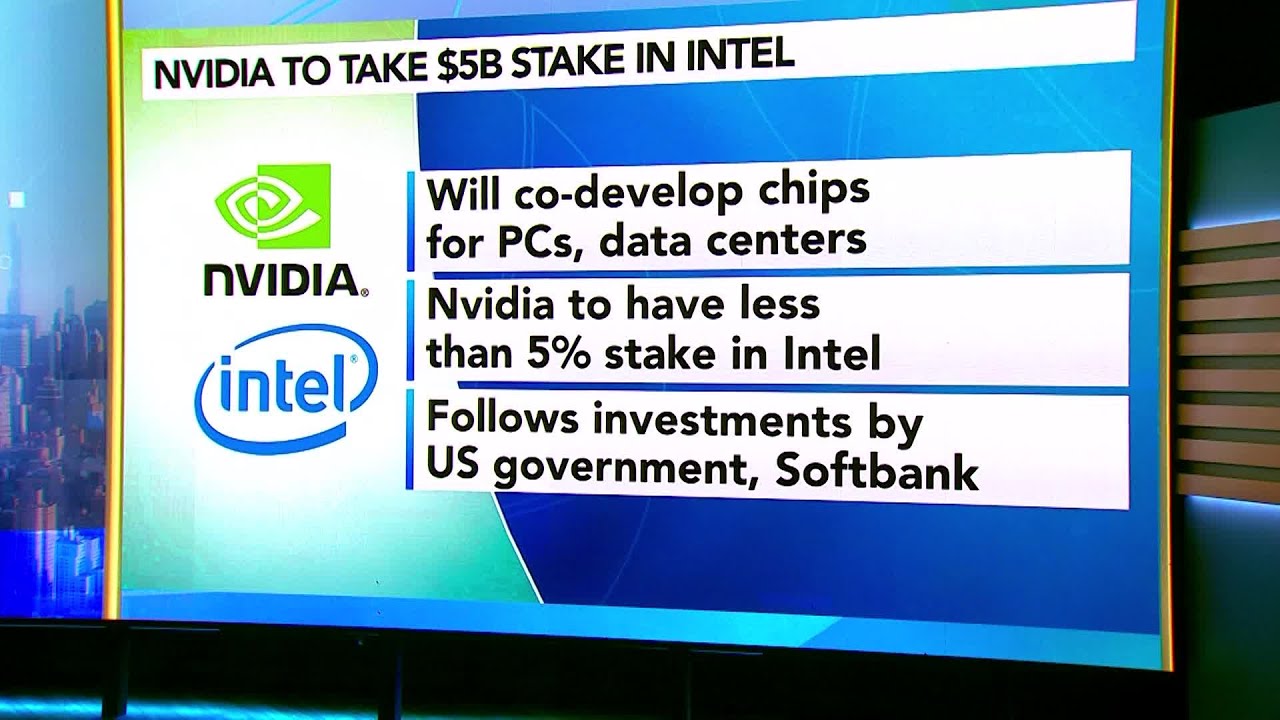
Nvidia benefits from its deal with Intel by building goodwill with the US administration, meeting customer demands for x86 integration, and demonstrating collaborative behavior in the data center market, while the partnership focuses on product integration rather than manufacturing. Meanwhile, Intel gains financial support and strategic positioning to strengthen its product business amid geopolitical complexities, maintaining its crucial role in the semiconductor ecosystem.
The video discusses the benefits Nvidia gains from its partnership deal with Intel. While the deal is clearly advantageous for Intel, Nvidia also reaps significant rewards. Firstly, Nvidia builds goodwill with the US administration by supporting Intel, which is seen as a crucial player in maintaining advanced semiconductor manufacturing capabilities within the United States. This aligns with the administration’s priority to keep the US at the forefront of global technology.
Secondly, Nvidia responds to the demands of its large client base by enabling the integration of x86 Intel chips within Nvidia’s massive computing clusters. Many of Nvidia’s customers prefer having x86 architecture in their systems, and this partnership allows Nvidia to meet that need effectively. Thirdly, Nvidia benefits from demonstrating that it is not abusing its dominant position in the data center market. By partnering with Intel and providing access to its GPU clusters, Nvidia shows a willingness to collaborate and share resources, which is positive for its reputation.
The discussion clarifies that the deal currently does not involve Intel’s foundry business or manufacturing processes. It remains uncertain whether the chips will be produced by Intel or TSMC, as Intel is still a major client of TSMC. The partnership focuses primarily on integrating Intel’s x86 chips with Nvidia’s high-speed interconnect technology, rather than on chip manufacturing. This distinction is important as it highlights that the collaboration is about product integration rather than foundry competition.
From Intel’s perspective, the deal is part of a broader strategy under its new CEO to regain leadership in its product business and strengthen its financial position. The partnership brings in cash injections from the US government, Nvidia, SoftBank, and potentially others, which helps Intel rebuild its balance sheet after heavy investments in manufacturing capacity. A strong product business and financial health are essential for Intel’s success both as a chip designer and manufacturer.
Finally, the video touches on the geopolitical implications, particularly China’s view of Intel amid ongoing trade tensions. Intel has historically been somewhat protected due to its entrenched ecosystem and the difficulty of migrating critical workloads away from x86 architecture. As Intel strengthens its position, it may become a more significant target, but damaging Intel would be costly and complicated for China. Thus, Intel remains a vital and somewhat insulated player in the global semiconductor landscape.