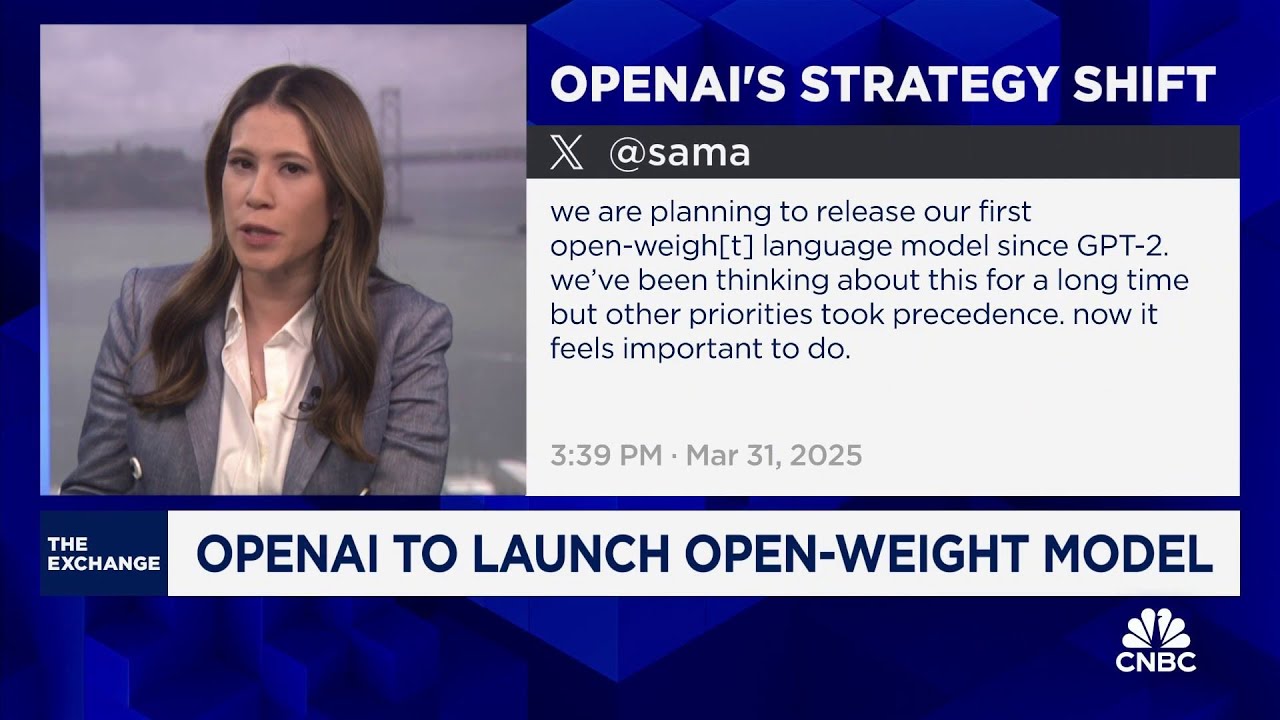
OpenAI is making headlines with its latest funding round, which has reached record levels, but the more significant development may be a shift in its strategic approach. CEO Sam Altman announced plans to release a new open weight model in the coming months, indicating that OpenAI is entering the open-source arena. This move could potentially reshape both OpenAI’s business model and the broader AI industry. The specifics of the model being released are crucial; if it is a smaller, less advanced model, it may be a strategic concession in response to competitors. However, if it is a more advanced model like ChatGPT 4.5, it could signify a fundamental change in OpenAI’s competitive strategy.
The potential release of an open-source model could serve multiple strategic purposes for OpenAI. Firstly, it could counter Elon Musk’s criticisms that OpenAI has deviated from its original mission. Secondly, it would put pressure on other open-source players, such as Meta and Mistral, to enhance their offerings. Thirdly, it could help OpenAI reconnect with the developer community, which has increasingly gravitated towards open ecosystems. An optimized open model could also lower API costs, making OpenAI more competitive in the enterprise sector. Lastly, the geopolitical implications of such a move are significant, as it could reinforce OpenAI’s leadership in responsible AI development and potentially attract support from the U.S. government.
One of the main concerns surrounding open-source models is monetization. However, with OpenAI’s substantial funding of $40 billion and a user base of 500 million weekly users, the company is in a position to adopt a long-term strategy. This financial backing allows OpenAI to explore open-source options without immediate pressure to generate revenue from them. Users currently paying for subscriptions may wonder how an open-source model would affect their experience, but it is suggested that they would still have access to various models regardless of the open-source developments.
The discussion raises questions about the competitive landscape if OpenAI were to release a more advanced model as open source. If a model like ChatGPT 4.5 were made available to the public, it could diminish OpenAI’s competitive edge, as other companies could leverage the algorithm to create similar or improved products. This concern makes it less likely that OpenAI would open-source its most advanced models, as doing so could undermine its subscription revenue model.
Ultimately, while the prospect of an open-source model is intriguing, it is likely that OpenAI will opt to release a smaller, less advanced model. This approach would still have implications for enterprise users, who may seek to fine-tune the model for their specific needs. The debate continues about the importance of model versions for everyday users versus enterprise clients, but it appears that most casual users may not be as concerned about which model they are using, as long as it meets their needs effectively.