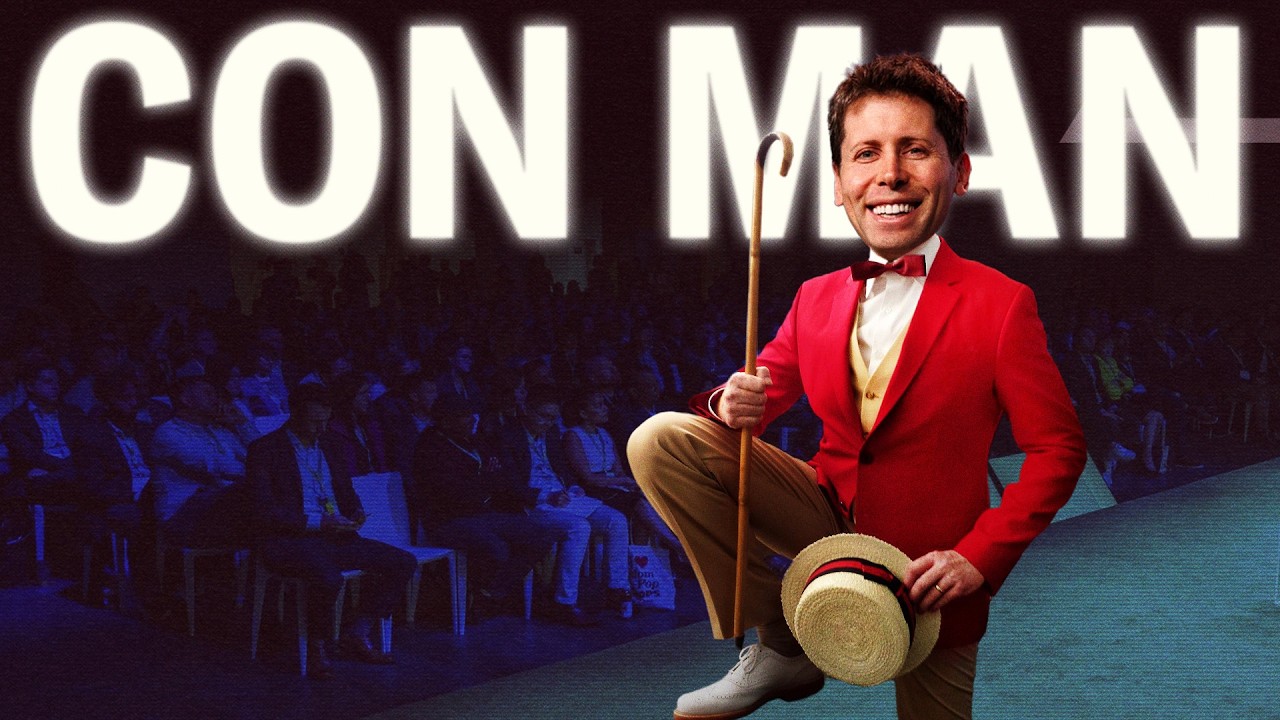
The video critically examines Sam Altman, the CEO of OpenAI, and the ambitious promises he has made regarding the future of artificial intelligence. Altman and OpenAI have committed to spending over $1 trillion on AI infrastructure in the next eight years, despite generating only around $13 billion annually in recurring revenue. The industry, led by Altman, claims that once AI reaches a certain level of intelligence, it will solve major global problems such as the housing crisis, cancer, poverty, climate change, and more. However, this vision requires society to entrust Altman and OpenAI with vast amounts of data, resources, and infrastructure, essentially putting all of humanity’s “eggs in one basket.”
Altman’s track record raises questions about whether he can be trusted with such responsibility. His early company, Loopt, claimed to have a large user base but actually had very few users, and the company was sold in a deal that benefited venture capitalists rather than the product’s users. Altman later gained significant influence as president of Y Combinator and started a venture capital firm, Hydrazine Capital, which invested heavily in YC companies despite promises not to cross-invest. These incidents suggest a pattern of overpromising and underdelivering, often accompanied by a “just trust me” attitude.
OpenAI was initially launched as a nonprofit with lofty goals to prioritize humanity’s best interests and avoid concentrating power. However, it transitioned to a for-profit model, attracting massive investments from companies like Microsoft and Nvidia, which OpenAI then spends on their products, creating a circular flow of money. Altman himself claims to have no equity in OpenAI and takes a modest salary, but he is heavily invested in companies that supply the infrastructure OpenAI needs, such as AI networking equipment and nuclear energy startups. This interconnected web of investments raises concerns about conflicts of interest and profit motives behind the AI revolution.
The video also highlights Altman’s controversial deal with Reddit, allowing OpenAI to scrape vast amounts of user data without adequately compensating the Reddit community, despite earlier promises to share value with users. Additionally, Altman’s Worldcoin project aims to create a global cryptocurrency tied to biometric identity verification, requiring universal adoption to function. This project exemplifies Altman’s pattern of asking society to surrender personal data and identity in exchange for future promises, reinforcing the theme of centralized control and dependency on his vision.
Finally, the video points out that the entire AI economy is heavily dependent on government support and taxpayer money, with OpenAI’s CFO acknowledging that public funds are crucial to sustaining the project. Recent news of OpenAI seeking a $750 billion valuation and negotiating a $10 billion investment from Amazon further illustrates the scale of financial bets being placed on Altman’s vision. Given Altman’s history of broken promises and the enormous risks involved, the video questions whether society should trust him with such a pivotal role in shaping the future or reconsider putting all its eggs in his basket.