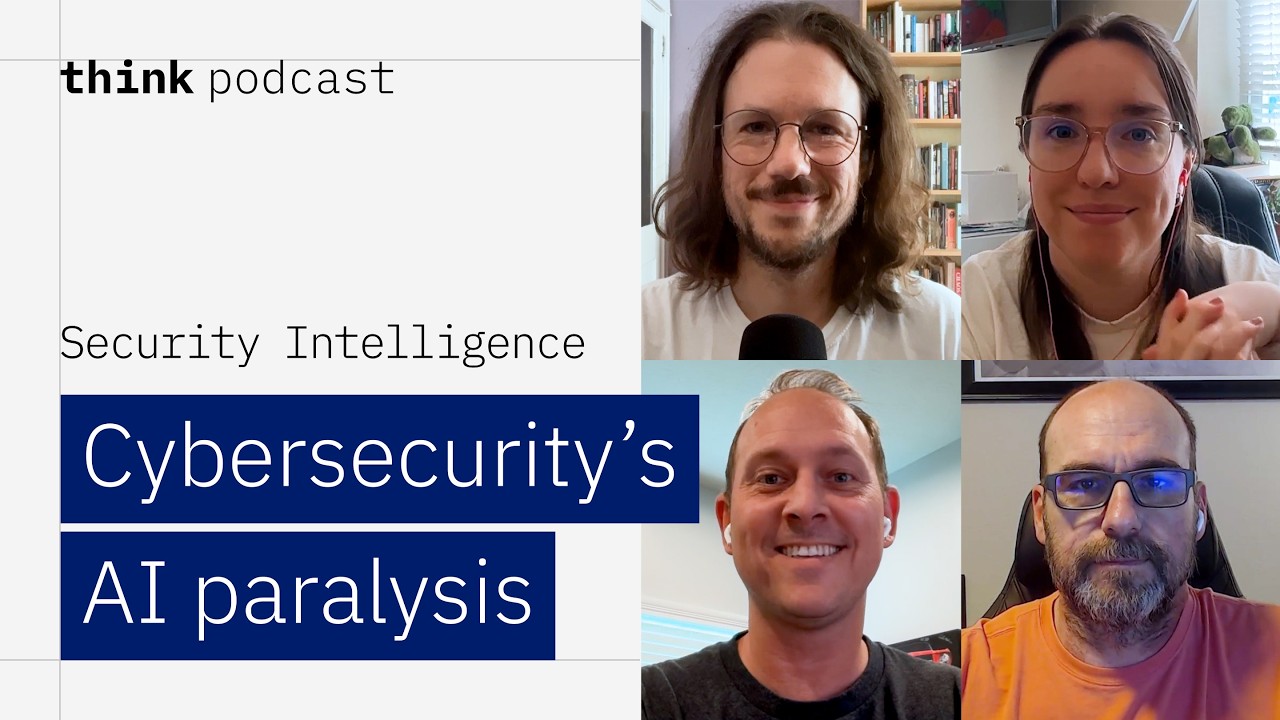
Cybersecurity leaders face uncertainty in adopting AI due to rapid developments and potential risks, but experts recommend starting small by integrating AI into red teams and automating routine tasks to build confidence and improve defenses. While AI shows promise, especially as an assistive tool alongside human oversight, organizations should maintain realistic expectations, focus on iterative learning, and prioritize human-AI collaboration to effectively manage emerging threats and enhance security operations.
Cybersecurity leaders are currently facing significant uncertainty about how to effectively deploy AI within their organizations. Despite having budgets and buy-in, many feel overwhelmed by the rapid pace of AI developments and the multitude of options available. This decision paralysis is compounded by fears around AI replacing jobs and the high stakes associated with making wrong decisions in AI adoption. Panelists emphasize the importance of embracing a “fail fast” mentality, encouraging organizations to start small, learn quickly, and iterate rather than waiting for perfect solutions.
A practical starting point recommended by experts is to integrate AI into red teams and automate repetitive security tasks. Equipping red teams with AI tools allows them to simulate attacker behaviors more effectively and develop stronger defenses. Meanwhile, automating routine Level 1 and Level 2 tasks, such as triaging alerts and vendor risk assessments, can reduce alert fatigue and free up human analysts for more complex work. This approach provides a manageable entry into AI adoption, helping organizations build confidence and gradually expand AI’s role in their security operations.
The discussion also highlighted emerging threats like “ghost jacking,” a sophisticated form of prompt injection where attackers embed malicious commands into trusted system logs or alerts. This technique exploits AI agents that process these logs, potentially compromising security despite traditional defenses working correctly. Panelists agree that addressing such threats requires a renewed focus on identity and access management, limiting agent permissions, and maintaining human oversight to prevent AI agents from executing unauthorized actions. The consensus is that while these challenges are daunting, they are not insurmountable and can be managed by applying established security principles in new ways.
Regarding AI’s effectiveness in vulnerability patching, recent research shows mixed results, with AI-generated patches solving less than half of the tested vulnerabilities and often introducing new issues. Experts note that this performance is comparable to human patching efforts, which are also prone to errors. They suggest that AI is best used as an assistive tool alongside human experts rather than a standalone solution. Over time, AI models tailored to specific codebases and combined with human oversight may improve patch quality, but expectations should remain realistic given AI’s current developmental stage.
Overall, the panelists emphasize that AI in cybersecurity is still in its early “third-grade” phase, capable of handling many tasks well but not yet excelling across the board. Organizations should focus on clear objectives, start with manageable use cases, and maintain human involvement to mitigate risks. By adjusting expectations and adopting iterative learning approaches, security teams can harness AI’s potential while navigating its limitations and evolving threats. The key takeaway is to view AI as a tool to augment human capabilities rather than replace them, fostering a collaborative human-AI security ecosystem.