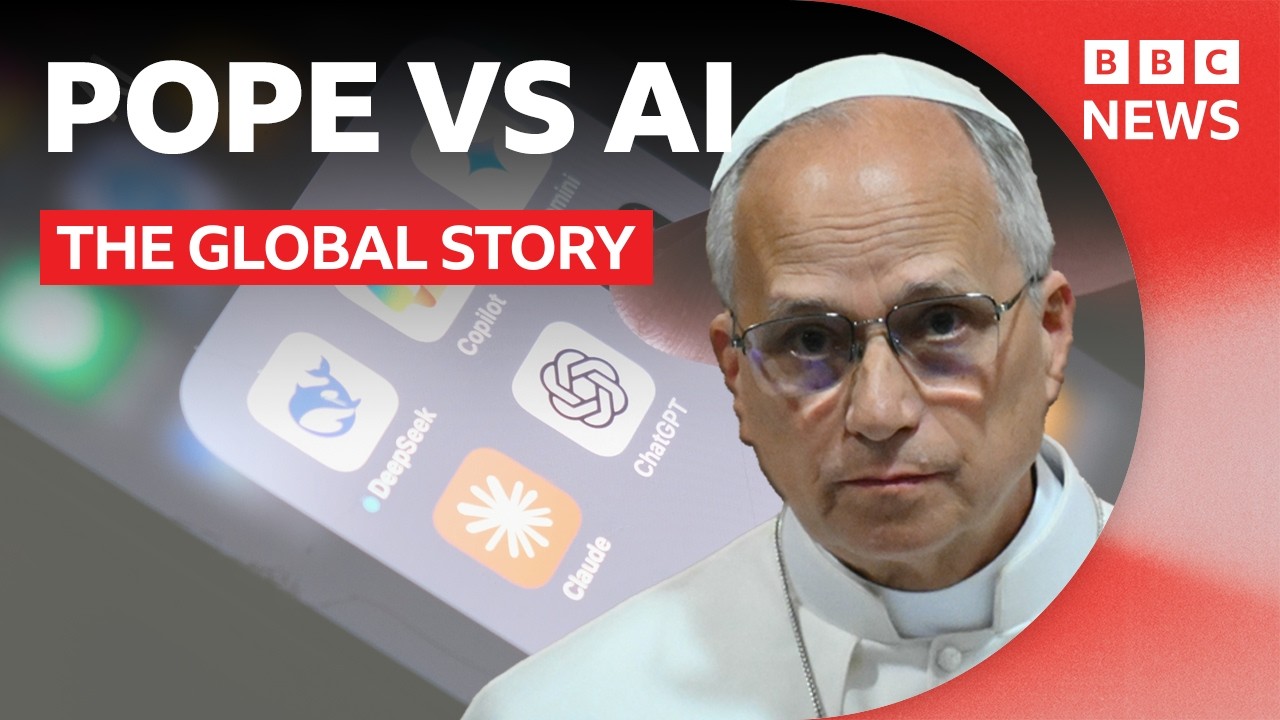
Pope Leo’s recent encyclical issues a strong moral warning about the dangers of AI, urging global leaders to regulate and “disarm” AI technologies to prevent societal harm, inequality, and loss of human dignity. Emphasizing ethical governance, the Pope calls on religious, political, and tech communities to collaborate in ensuring AI development prioritizes humanity over unchecked innovation.
The recent encyclical issued by Pope Leo marks a significant moment in the global conversation about artificial intelligence (AI). An encyclical, traditionally a high-level papal letter addressed to bishops, has evolved under Pope Francis to serve as a message to the entire world on pressing issues. In this case, the Pope’s encyclical focuses heavily on the moral and societal implications of AI, emphasizing the urgent need for regulation and governance to prevent potential disasters. The Pope personally presented the encyclical at the Vatican, an unusual step in modern times, underscoring the importance he places on this issue.
Pope Leo’s message is largely cautionary, highlighting the negative impacts of AI on human life and society. He expressed concerns about AI’s role in warfare, job displacement, and the erosion of what it means to be human. The Pope warned that without proper oversight, AI could exacerbate inequalities and create a new form of digital slavery, where vulnerable populations become powerless commodities. He drew parallels to historical slavery and issued a clear apology for the Catholic Church’s past role, urging that humanity must not repeat such mistakes with AI.
Central to the Pope’s call is the demand that AI be “disarmed,” a deliberately strong term meant to capture attention and awaken global consciences. This metaphorical disarmament refers to the need to control and regulate AI technologies to prevent their misuse and harmful consequences. The Pope’s encyclical is directed not only at religious followers but also at tech leaders and global policymakers, urging them to take responsibility for the ethical development and deployment of AI.
The event also included voices from the tech community, notably Chris Ola, co-founder of the AI company Anthropic, who echoed the Pope’s concerns about the conflicting incentives within AI development. He agreed on the necessity for broader societal involvement—including religious groups, governments, and civil society—in shaping AI’s future. Despite this, the overall tone of the encyclical leans toward caution and skepticism about AI’s current trajectory, signaling a growing resistance to the unchecked AI revolution.
Ultimately, the Pope’s encyclical serves as a powerful moral intervention at a critical juncture in technological advancement. It challenges decision-makers in politics and technology to heed the call for ethical governance and to prioritize human dignity over unchecked innovation. While the impact of this message remains to be seen, it provides a significant ethical framework that could influence how societies approach AI in the years ahead.