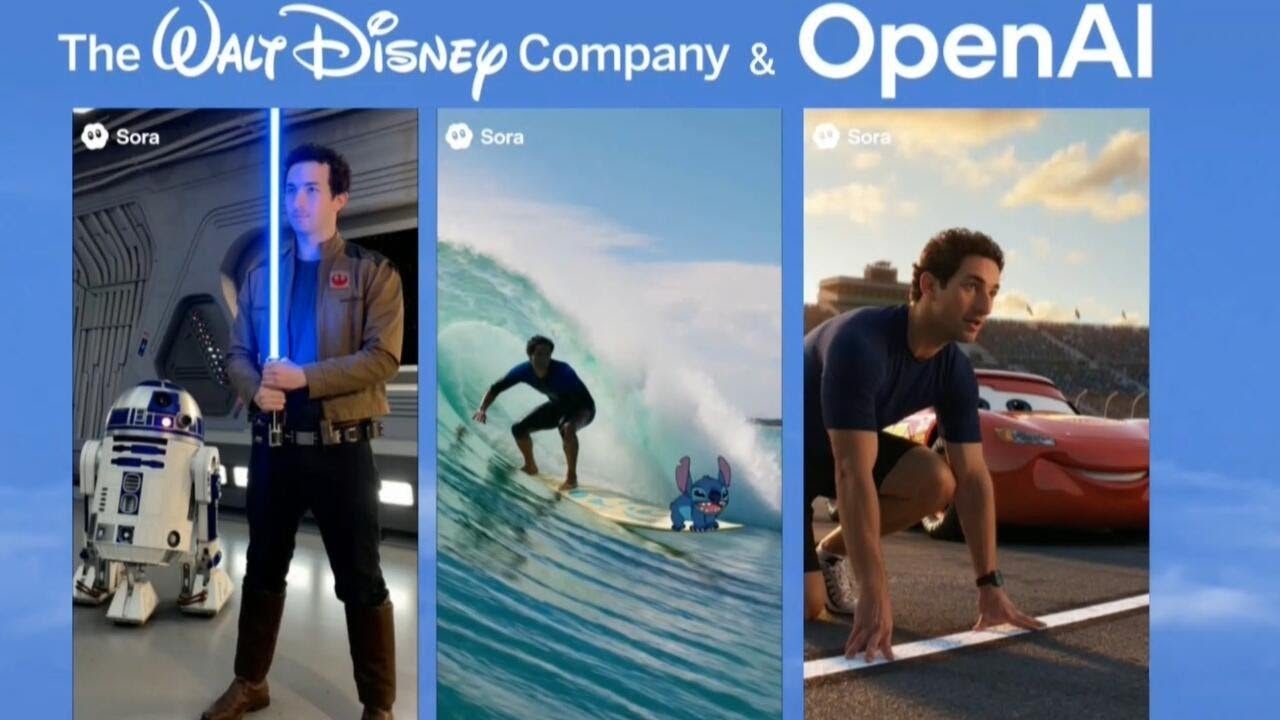
The Walt Disney Company has made a groundbreaking $1 billion investment in OpenAI, marking a significant shift in Hollywood’s approach to artificial intelligence. This partnership allows OpenAI to license over 200 of Disney’s iconic animated and illustrated characters, including Mickey Mouse, Yoda, Cinderella, R2-D2 from Star Wars, and Lightning McQueen from Cars. These characters will be available for users to create short AI-generated videos through OpenAI’s Sora 2 app, which is already revolutionizing content creation with hyperrealistic and imaginative video capabilities.
The Sora 2 app, launched in September, enables users to produce entirely AI-generated content, such as interviews and creative scenarios, showcasing the potential of AI in entertainment production. For example, the video demonstrated an AI-generated interview with OpenAI CEO Sam Altman, highlighting the technology’s ability to simulate realistic interactions. However, this innovation also raises important questions about copyright and intellectual property, especially since AI models are often trained on copyrighted works.
The deal has sparked concern among creative professionals, particularly animators and union representatives. The union representing animators expressed unease, noting that members have never been compensated for the licensing of these characters and will not benefit from user-generated AI content that leverages their creativity and labor. This sentiment reflects broader anxieties within the creative community about the impact of AI on traditional artistic roles and compensation structures.
Shaun Aston, President of the Screen Actors Guild, described the rise of AI in Hollywood as a “tsunami,” emphasizing the overwhelming influx of AI technologies and their applications in the industry. He suggested that while the rapid advancement of AI is challenging, it is inevitable, and both creatives and unions must learn to “surf the wave” and adapt to this new landscape. This perspective underscores the need for the entertainment industry to find a balance between embracing innovation and protecting the rights and livelihoods of creative workers.
Overall, Disney’s partnership with OpenAI represents a major milestone in the integration of AI into mainstream entertainment, blending beloved characters with cutting-edge technology. While it opens exciting new possibilities for content creation, it also highlights ongoing debates about copyright, labor rights, and the future role of human creativity in an AI-driven world. As AI continues to evolve, the industry faces the challenge of navigating these complex issues while harnessing the potential of this transformative technology.