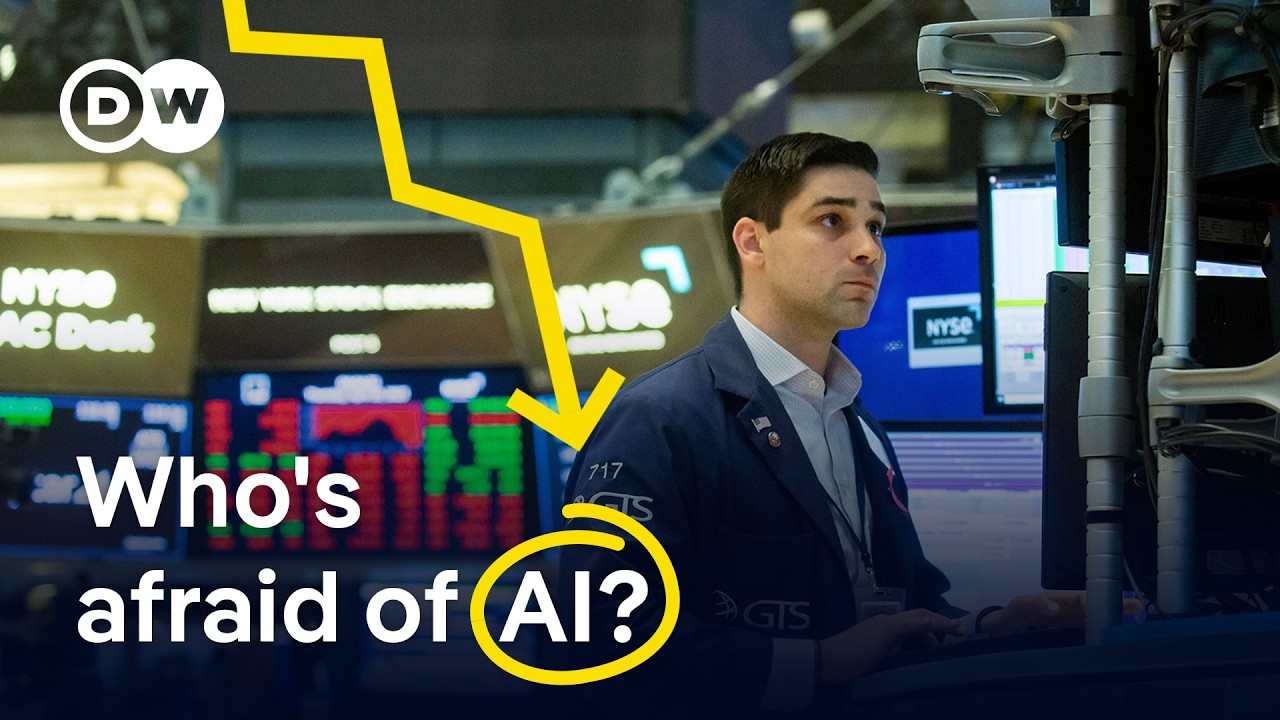
The video discusses recent volatility in the technology and AI markets, particularly focusing on investor reactions to new AI models and updates. February saw significant turbulence, not due to fears of an AI bubble, but rather concerns that new AI tools—especially Anthropic’s Claude model—could disrupt established software companies. Investors responded by selling off shares in sectors they believed were most at risk, such as legal software providers and cybersecurity firms, following the release of AI plugins that threatened to automate or streamline their core services.
Dan Ives, a senior analyst at Wedbush Securities, argues that these fears are overblown and represent the most disconnected trade thesis he has seen in his career. He believes that while some niche companies may be affected, entrenched software giants like Salesforce, ServiceNow, and Oracle are unlikely to be displaced by AI models like Claude. Ives emphasizes that the real value lies in the data these companies possess, and that AI will ultimately serve as a catalyst for their growth rather than a threat.
The video also references a research report from Catrini Research, which contributed to market panic by predicting dire outcomes such as unemployment rising to 10% by 2028 due to AI. This report, along with updates from Claude, led to significant market losses for companies like IBM, which experienced its worst one-day loss in 26 years. Ives dismisses the report’s predictions as dystopian and unrealistic, comparing them to outlandish personal claims about future achievements. He points out that historically, technological innovation has created more jobs than it has destroyed.
Despite the current market jitters, Ives maintains that the fears are largely unfounded and that the market is experiencing what he calls an “AI ghost trade”—investors reacting to perceived threats that are not grounded in reality. He predicts that as the true impact of AI becomes clearer, tech stocks will rebound strongly, creating opportunities for savvy investors. He advises diversification, recommending investments in semiconductors, software, cybersecurity, infrastructure, and energy to capture the broader benefits of AI advancements.
Finally, the discussion touches on concerns that AI could disrupt payment systems and major credit card providers through innovations like stablecoins and personal AI agents. Ives remains skeptical, arguing that such disruption is unlikely in the near term. He concludes that while market scares will continue, the underlying fundamentals of AI and tech remain strong, and the current panic presents opportunities rather than existential threats to established players.