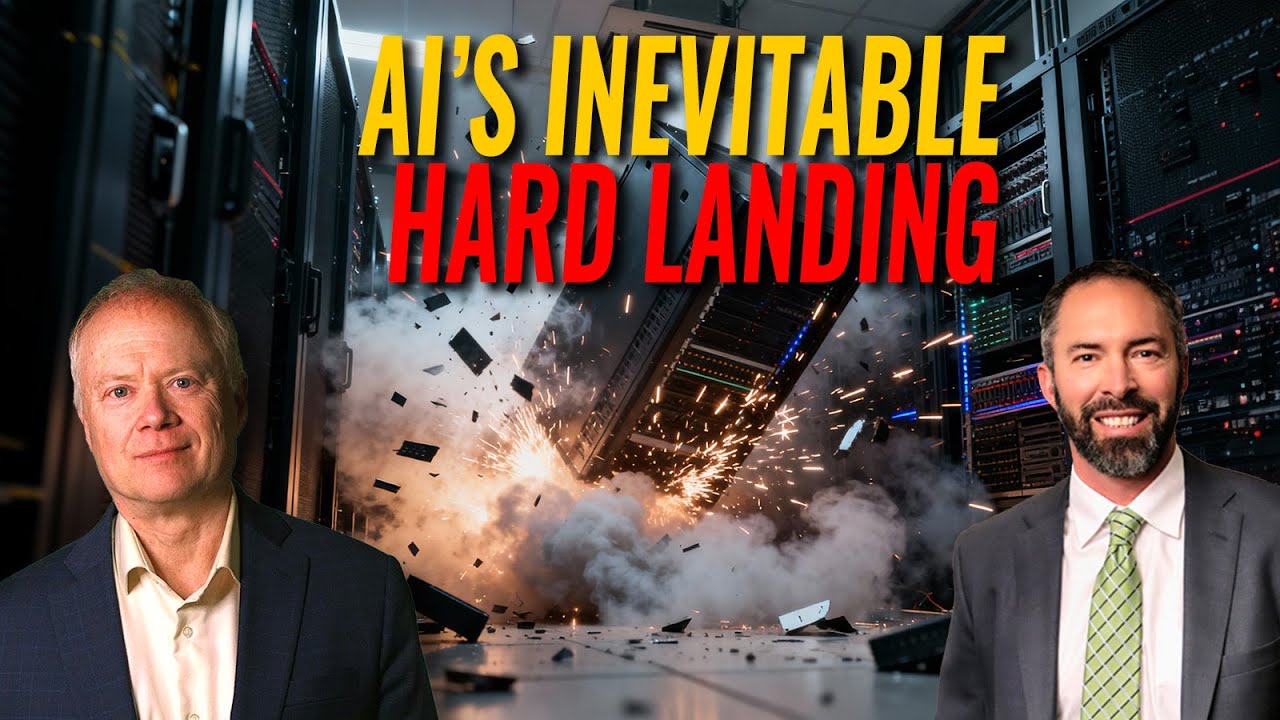
The video features a detailed discussion between Chris Martinson and Paul Ker of Kiker Wealth Management about the current state and potential fallout of the AI bubble, alongside broader economic and political concerns. They begin by drawing parallels between the AI hype and previous speculative bubbles, such as the dot-com bubble and real estate booms, emphasizing that while AI may indeed transform industries, the current valuations and business models often lack sustainable profitability. They highlight CoreWeave, a company heavily invested in AI infrastructure, as an example where accounting practices and debt levels raise red flags, suggesting the bubble may be nearing a rapid end.
A significant part of the conversation focuses on the overbuilding of AI data centers and infrastructure, likened to the “dark fiber” overbuild during the dot-com era. They discuss how some data centers remain unpowered due to utility constraints, particularly in California, and how massive projects like Fairmy’s 11-gigawatt data center in Texas struggle to find tenants. This overcapacity, combined with high capital expenditures and technological obsolescence, raises concerns about the sustainability of the AI infrastructure boom. Despite these issues, companies like Nvidia continue to ramp up production, reflecting a “double down” mentality reminiscent of past bubbles.
The hosts also delve into the socio-political implications of current economic policies, particularly focusing on the perceived abandonment of younger generations. They critique political stances that devalue domestic talent in favor of foreign workers and highlight the high unemployment rates among young Americans. This generational disconnect, coupled with political divisions and economic inequality, threatens the social and political cohesion necessary for ambitious national economic strategies. The discussion underscores the importance of mentorship, emotional resilience, and problem-solving skills for future generations to navigate these challenges.
From an investment perspective, Martinson and Ker caution against passive, buy-and-hold strategies in an overvalued market dominated by a few mega-cap tech stocks. They stress the importance of active management, risk control, and diversification, noting Warren Buffett’s recent accumulation of cash as a signal of caution. They advocate for a balanced approach that prepares for potential market downturns while remaining engaged, emphasizing that timing the market perfectly is impossible but managing risk prudently is essential. They also highlight the growing opportunity in undervalued value stocks and precious metals like silver, which face supply constraints amid rising industrial demand.
Finally, the conversation touches on broader economic themes, including the potential for deflationary pressures in the housing market due to overbuilding and demographic shifts, and the likelihood of continued government stimulus and monetary easing to prop up markets. They warn that such policies may ultimately lead to severe currency debasement and inflation, reinforcing the case for holding precious metals as a hedge. Throughout, the hosts emphasize the need for humility, discipline, and courage in financial decision-making, encouraging investors to prepare for a challenging economic environment while focusing on long-term resilience and intergenerational responsibility.