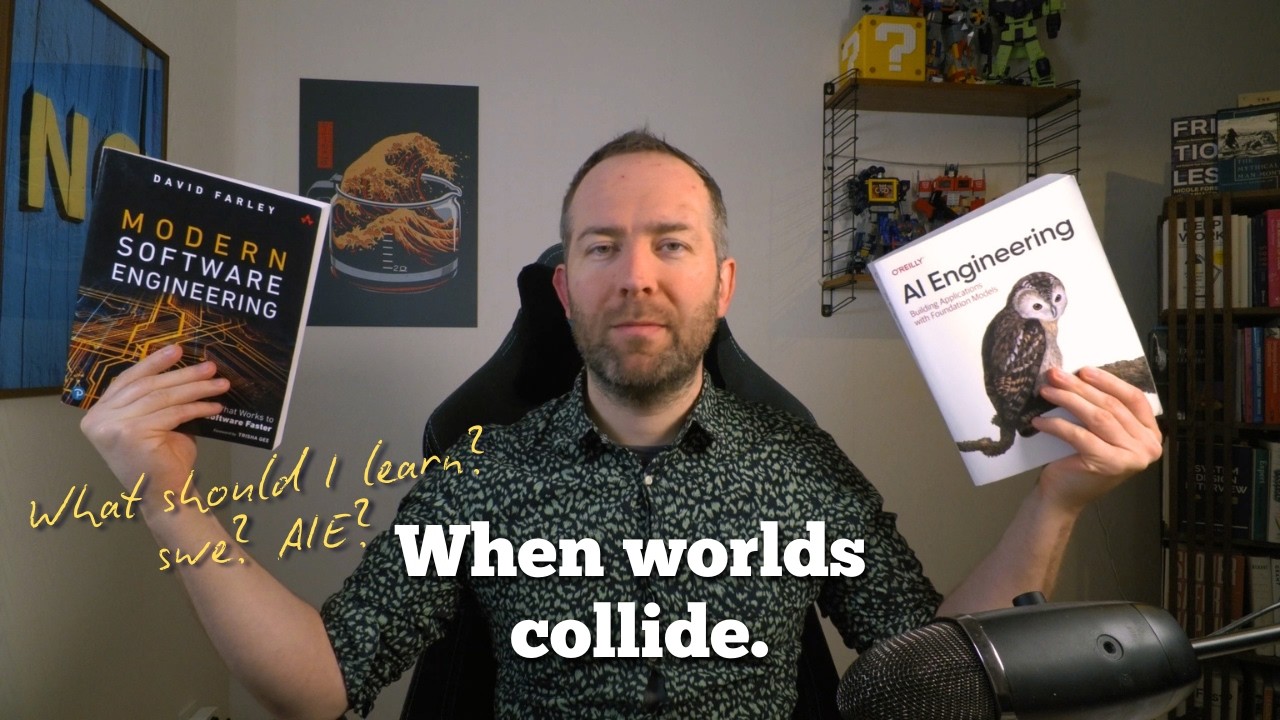
The video explores the evolving intersection between traditional software engineering and the emerging field of AI engineering, emphasizing that mastering both is essential for modern engineers. The presenter uses a metaphor comparing traditional software engineering to deterministic “von Neumann” computers, where operations are predictable and consistent, while AI engineering involves working with large language models (LLMs) that are nondeterministic and probabilistic. This duality represents two distinct “computers” or paradigms that engineers must understand and integrate to stay relevant in the rapidly changing tech landscape.
Traditional software engineering remains crucial, focusing on system design, programming, code quality, version control, test automation, and security. Although some coding skills have diminished in relative value, understanding good code practices and software architecture is still vital. On the other hand, AI engineering encompasses working with LLMs as operating systems, involving skills like context engineering, harness engineering, and evaluation (evals) of AI outputs. The field is rapidly advancing, with multi-agent systems and complex agent topologies becoming increasingly important, requiring engineers to develop new competencies beyond classical software development.
The presenter shares practical examples from their own projects to illustrate how these two worlds converge. One project is an Obsidian vault plugin that uses semantic search powered by AI, blending traditional software components like databases and APIs with AI-driven features such as natural language understanding. Another project is a personal news feed aggregator that collects data from various sources (YouTube, Spotify, bookmarks) using traditional scripting and software engineering principles, while employing AI to prioritize and summarize content. These examples highlight the necessity of combining software engineering rigor with AI engineering creativity to build effective hybrid applications.
The video also delves into the development process, showcasing how the presenter uses AI tools like Claude to assist in coding, testing, and managing integrations. They emphasize the importance of security practices, such as protecting API keys from prompt injection attacks, and the value of maintaining version-controlled specifications and plans. The presenter advocates for a modular, skill-based approach to AI integration, where discrete “skills” or agents handle specific tasks, enabling scalable and maintainable AI-enhanced software systems.
In conclusion, the presenter encourages engineers to become versatile generalists who are fluent in both traditional software engineering and AI engineering. As software increasingly incorporates AI components, understanding both domains is critical for future success. They invite viewers to reflect on their own position within these fields and share their experiences, underscoring the importance of continuous learning and adaptation in this hybrid engineering landscape. The video serves as both a call to action and a practical guide for those looking to navigate and thrive at the intersection of these two dynamic disciplines.