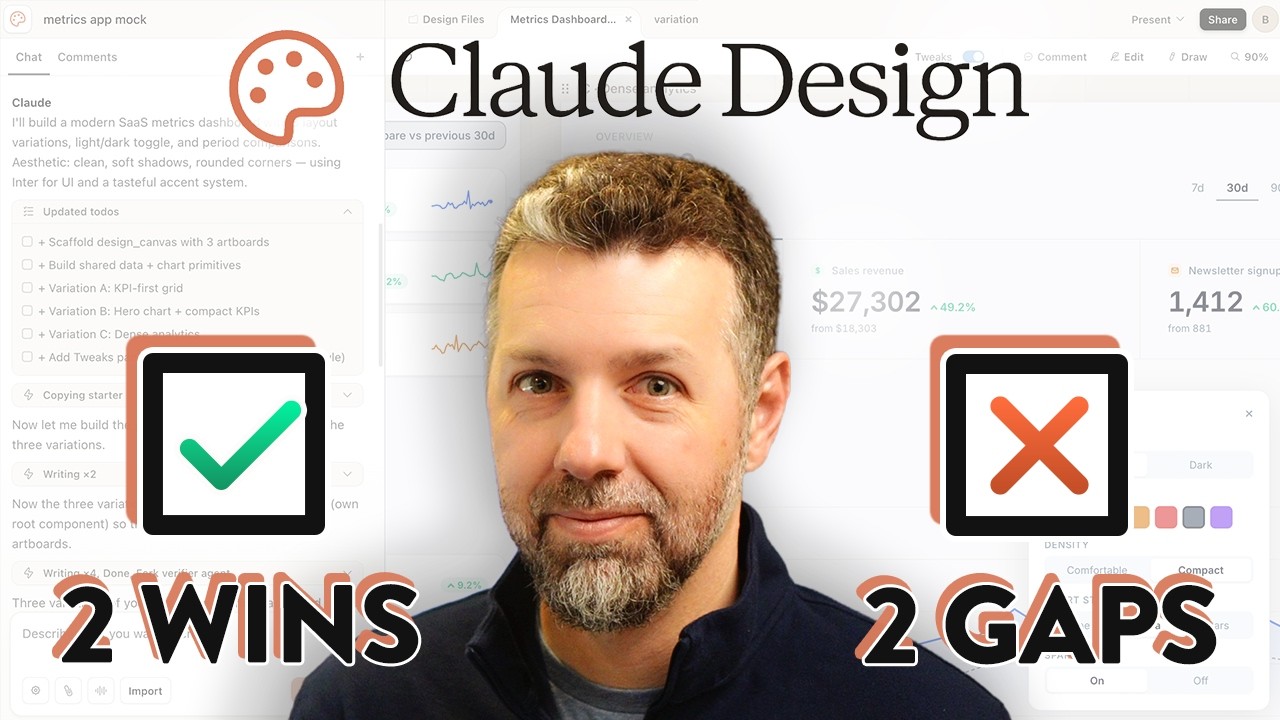
The video explores where Claude Design fits into the real-world workflow of building products for customers. The presenter begins by testing Claude Design’s capability to create a high-fidelity prototype of a t-shirt marketplace. While impressed by the visual output and some functional front-end elements, he finds the handoff to actual development problematic. The design-to-code transition lacks clear integration with existing codebases, tech stacks, or development plans, making it difficult to incorporate Claude Design outputs directly into production workflows.
Next, the presenter examines Claude Design’s ability to generate design systems by linking it to an existing GitHub repository. Although Claude Design can extract styles, colors, and typography from the codebase, the integration remains superficial. The generated design system is not seamlessly connected to the live code, and exporting designs for development still feels disjointed. Instead, the presenter prefers managing design systems within his own custom backend and documentation, which are tightly integrated into his development process and help maintain consistency and reduce design drift.
Despite these limitations, Claude Design shines in the early ideation and shaping phases of product development. The tool allows users to quickly visualize and iterate on rough concepts, such as a metrics dashboard app, without needing advanced design skills or time-consuming tools like Figma. By exporting visual mock-ups and using Claude’s conversational AI, the presenter demonstrates how Claude Design can facilitate collaborative planning, scope definition, and product specification before coding begins, making it a valuable asset for product architects and builders new to the design process.
The presenter also highlights two practical use cases where Claude Design excels: creating on-brand marketing assets like animations and slide decks. By defining a simplified design system focused on typography and brand colors, Claude Design can produce high-quality, visually consistent animations and presentation materials. These outputs are especially useful for content creators and speakers who need polished visuals aligned with their brand identity but do not require direct integration with application codebases.
In conclusion, Claude Design is not yet a comprehensive tool for taking a product from idea to production-ready code, nor does it serve as a design layer tightly integrated with existing development workflows. However, it offers significant breakthroughs in early-stage visual ideation and marketing asset creation. The presenter encourages viewers to use Claude Design as a visual planning tool and for generating branded content, while relying on more integrated approaches like Claude Code and custom documentation for production development. He also teases a follow-up video focused on running the shaping phase effectively, emphasizing that human skill remains essential in guiding AI-driven product design.