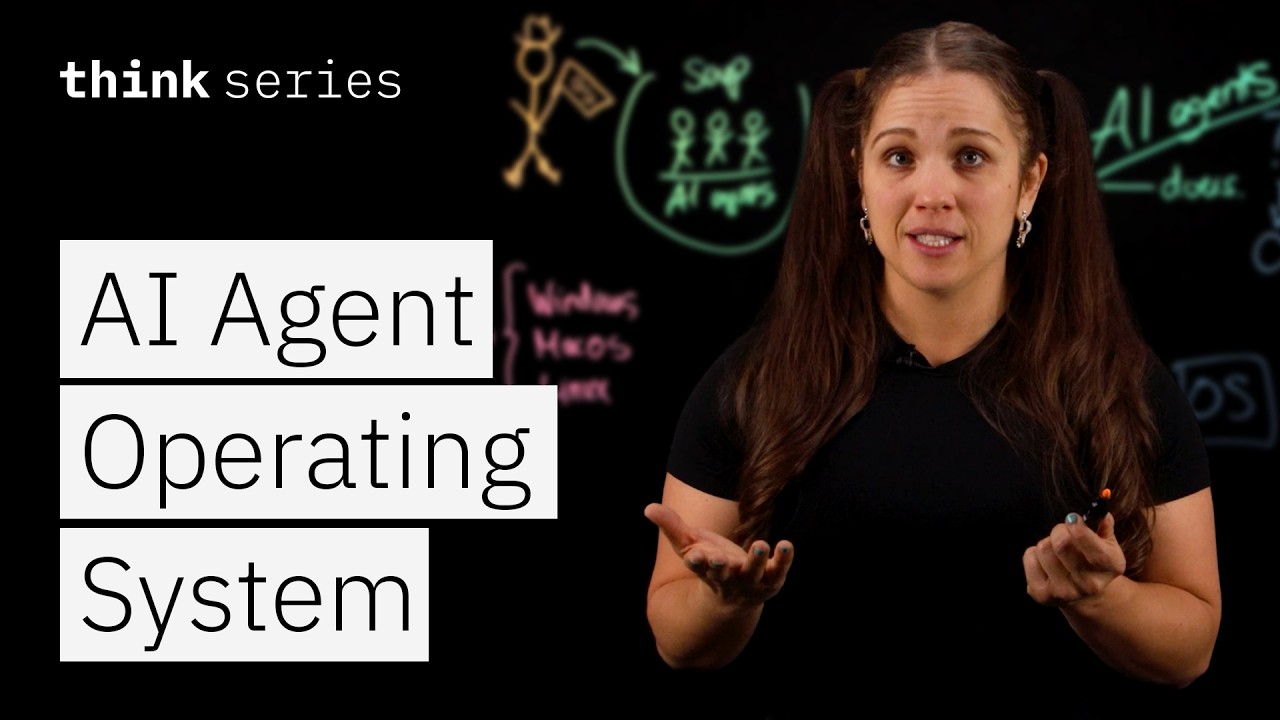
The video begins by highlighting a current problem with AI agents: although they can perform complex tasks like booking flights or writing code, they lack memory and awareness of their past actions. This is likened to giving a genius goldfish control over important operations, leading to chaos and inefficiency. To address this, the video introduces the concept of an operating system specifically designed for AI agents, which would provide the necessary structure and management to coordinate their activities effectively.
An operating system on a computer manages resources, schedules tasks, controls access, and ensures different applications work together smoothly. The video draws an analogy to a school without a principal, where chaos reigns until a principal arrives to organize schedules, assign classrooms, and maintain order. Similarly, AI agents need a “principal” or an operating system to manage their interactions, memory, and access to tools, preventing them from acting like unsupervised toddlers who forget their tasks and misuse resources.
The core of the agent operating system is described as a three-layer structure: the AI agents themselves at the top, the operating system kernel in the middle, and the underlying infrastructure at the bottom. The kernel acts as the principal’s office, managing key functions such as scheduling tasks, managing memory, controlling tool access, verifying identities, ensuring observability, and enforcing guardrails. These components work together to prioritize urgent tasks, provide agents with memory, sandbox tool usage, authenticate actions, log activities, and enforce rules to prevent errors or misuse.
Each component of the agent operating system is explained with practical examples. The scheduler prioritizes tasks so urgent customer interactions are handled promptly. The memory manager allows agents to remember past interactions, improving continuity. The tool manager safely controls access to external tools and resources. The identity manager ensures secure and authorized actions. Observability provides a detailed audit trail for troubleshooting, and guardrails enforce policies and human oversight to maintain safety and compliance.
In conclusion, the video stresses that AI agents are already being deployed in real-world scenarios involving critical decisions and sensitive data. Without a dedicated operating system, these agents remain unreliable and inefficient, akin to a city without traffic lights. Implementing an agent operating system is essential for scaling AI systems safely and effectively, transforming AI agents from fragile experiments into trustworthy infrastructure. The video ends by posing the question of who will take on the role of the principal in this new era of AI agents.