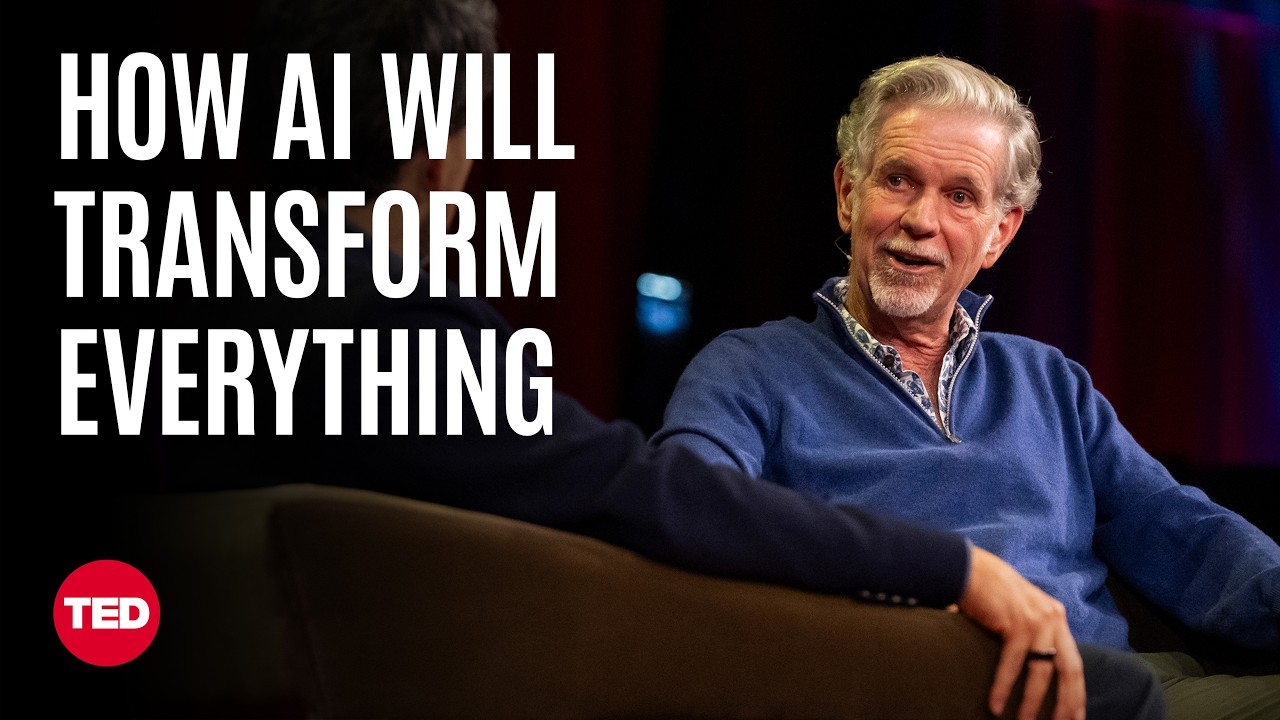
Reed Hastings, co-founder of Netflix and an active education philanthropist, discusses his long-term efforts to improve education outcomes, particularly in the U.S., through investments in edtech and organizations like Khan Academy. Despite significant financial input over 25 years, he acknowledges the persistent challenges in education, emphasizing that the core issue lies in the traditional model of mass education where students are taught at the same pace, leading to many being either left behind or bored. Hastings draws an analogy to the industrial revolution, explaining how replacing centralized steam engines with individual electric motors revolutionized factories, suggesting that individualized education powered by AI could similarly transform learning.
Hastings advocates for individualized tutoring as the key to dramatically improving educational outcomes. He references a study by Bloom from 40 years ago that showed the effectiveness of one-on-one tutoring and notes ongoing research aiming to scale this approach. While acknowledging concerns about screen time and distractions, he differentiates between harmful internet use and the potential benefits of technology-assisted individualized learning. He envisions AI eventually approximating or surpassing human tutors, making personalized education accessible and scalable globally, especially in under-resourced areas.
Regarding the role of human teachers, Hastings foresees a shift rather than elimination. He believes teachers will move away from traditional “sage on the stage” roles focused on delivering information and instead concentrate on social-emotional learning, citizenship, and interpersonal skills—areas where human interaction remains crucial. This transformation aligns with educational philosophies promoting active learning and differentiated instruction. Technology would handle individualized content delivery, freeing teachers to foster social skills and values, thus enhancing the overall educational experience.
Hastings also shares insights from his involvement with Anthropic, an AI research company focused on developing safe and beneficial AI technologies. He highlights the company’s mission to navigate the challenges of AI advancement responsibly, balancing rapid innovation with caution to maximize positive societal impacts such as breakthroughs in healthcare and energy. Hastings notes the broader economic and organizational shifts AI is driving, comparing it to the internet revolution but on a much larger scale, affecting industries, governments, and global economies.
Finally, Hastings addresses concerns about AI’s impact on jobs and society. He acknowledges the potential for rapid disruption but points to historical precedents where technological advances eventually created new opportunities despite initial dislocations. He emphasizes the uncertainty around AI’s pace of progress and its societal effects but remains optimistic about managing these changes through thoughtful policies. Hastings suggests that increased productivity and economic growth from AI could generate substantial public revenues, which, if wisely managed through mechanisms like sovereign wealth funds, could support a more equitable and prosperous future, mitigating risks of political polarization and social unrest.