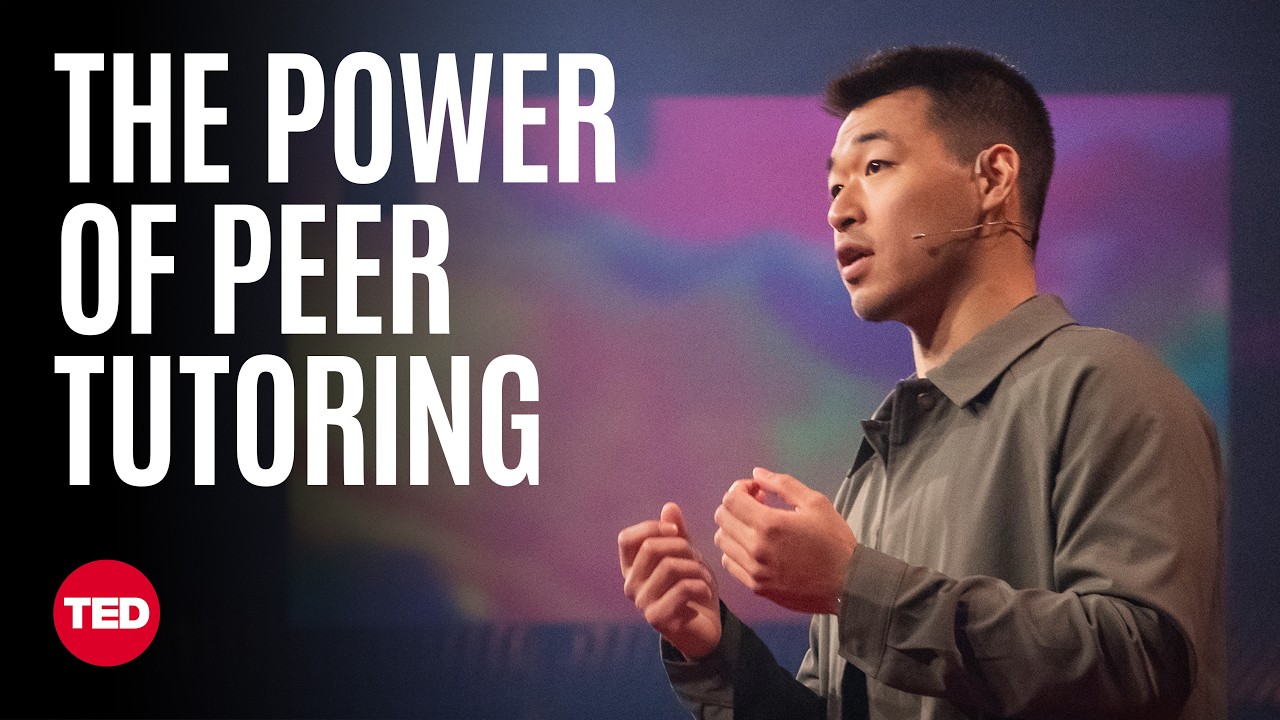
In his TED talk, Matt Wu argues that while AI can enhance education through personalized tutoring and study plans, it cannot replace the vital human connections, empathy, and inspiration provided by teachers and peer tutors. He highlights the power of peer tutoring to build confidence, foster understanding, and scale personalized support globally, emphasizing that nurturing authentic human relationships is essential for a compassionate and effective educational future alongside AI.
In the TED talk “Why AI Will Never Replace a Great Teacher,” Matt Wu highlights the transformative impact of AI on education, noting how it can tutor students in complex subjects and create personalized study plans. Despite these advancements, Wu emphasizes that students often credit their success to human connections rather than technology. He stresses the importance of investing not only in AI tools but also in fostering meaningful relationships between students and teachers, mentors, and peers who inspire belief and resilience.
Wu introduces the concept of peer tutoring, where students teach each other, reinforcing their own learning while providing personalized support. Through his nonprofit, Schoolhouse, Wu has connected nearly 200,000 students worldwide for free tutoring sessions via Zoom. He shares the story of Carl, an adult learner who overcame his fear of algebra with the help of a teenage tutor, Sachin. This example illustrates how human connection and encouragement can rebuild confidence and change life trajectories in ways AI alone cannot.
Beyond academic support, Wu discusses how peer tutoring fosters empathy and understanding among students with differing perspectives. He describes a program called Dialogues, where students from different countries engage in unscripted conversations on complex social issues. These exchanges encourage active listening and broaden perspectives, highlighting that education is not just about knowledge transfer but also about cultivating the ability to understand and respect diverse viewpoints—a deeply human aspect of learning.
Wu reflects on his own tutoring experience in college, where the goal was to instill belief in students alongside academic skills. He acknowledges the challenges of scaling such personalized support but points out that peer tutoring can overcome these barriers by leveraging students as both learners and tutors. This scalable model allows for continuous, global learning opportunities and helps address tutor shortages by empowering students to teach once they master material themselves.
Finally, Wu underscores the enduring value of human skills like care, collaboration, and communication in an AI-driven world. He shares the story of Emanuel, a peer tutor whose contributions enhanced his college applications and inspired him to pursue an education startup. Wu concludes that while AI may optimize productivity, building a better society requires nurturing authentic human connections and skills. These human elements are essential for navigating the AI revolution in education and creating a more connected, capable, and compassionate future.