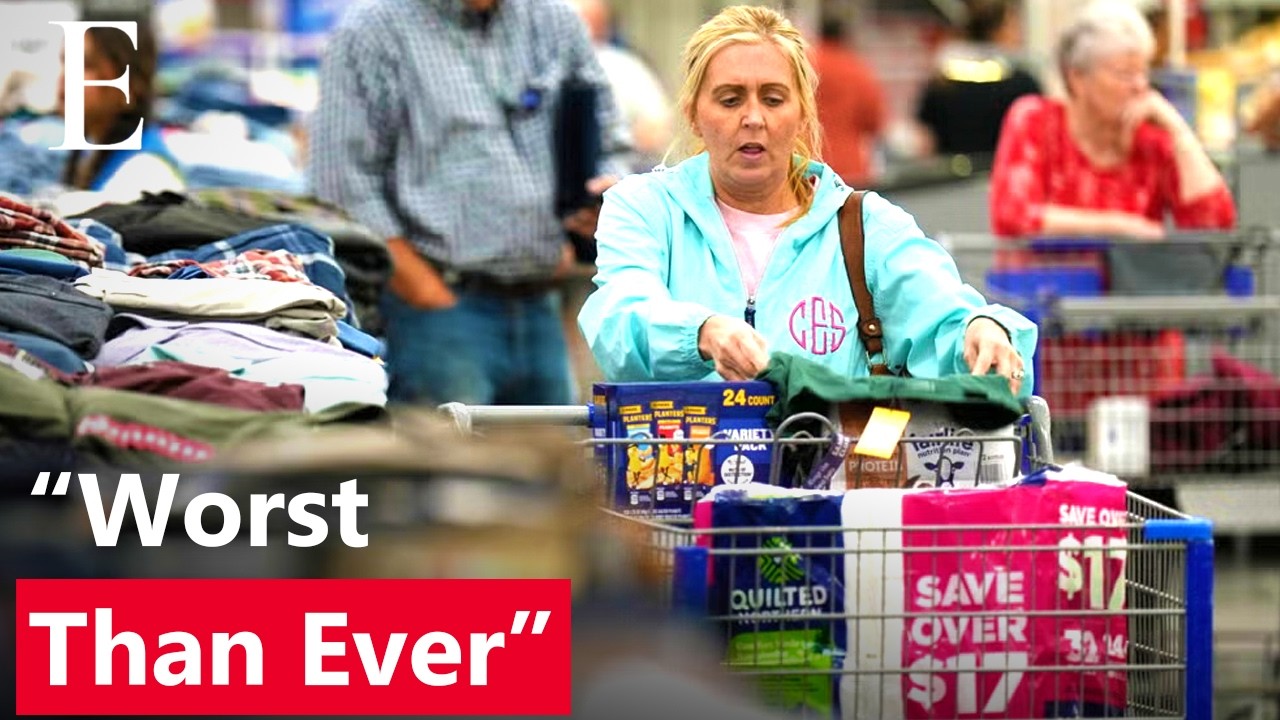
The United States is currently facing a severe economic crisis marked by declining consumer confidence and worsening financial conditions for many households. According to the University of Michigan’s consumer sentiment report, morale is near historic lows, with 55% of Americans struggling to make ends meet and six out of ten consumers feeling their financial situation is deteriorating. This widespread pessimism is fueled by persistent inflation, the lingering effects of government shutdowns, and global conflicts that have disrupted markets and increased living costs.
One major factor contributing to the crisis is the sharp rise in energy prices, particularly gasoline, which has surged by 25% due to geopolitical tensions involving the US, Israel, and Iran. The increased cost of fuel has a cascading effect on transportation and goods distribution, driving up prices across various sectors. Food prices have also risen significantly, by about 12%, partly due to tariffs on imported goods, forcing many families to cut back on essential purchases and adjust their diets to cope with higher expenses.
Wage stagnation exacerbates the financial strain on American families, as incomes have only grown by around 3-4% annually, failing to keep pace with inflation and rising living costs. This gap forces many workers to rely on credit cards and take on multiple jobs to cover basic needs. The economic uncertainty has also led to reduced consumer spending, which negatively impacts small businesses; over 150,000 small businesses have reported lower incomes in 2026, limiting their growth and stability.
Government policies have been widely perceived as ineffective in addressing the crisis, with only 20% of Americans expressing confidence in governmental actions. The government shutdowns have further strained households, especially government employees who have faced delayed paychecks. This lack of trust and visible progress contributes to the overall sense of instability and economic pessimism among the population, influencing spending habits and economic behavior.
The crisis also affects transportation and travel, with airlines reducing flights and increasing ticket prices by 18% due to higher fuel costs. Flight cancellations and operational disruptions have led many travelers to cut back on travel, further dampening economic activity. Overall, the combination of rising costs, stagnant wages, geopolitical tensions, and ineffective policy responses has created a challenging environment for American families and businesses, with uncertainty and declining confidence likely to persist without clear solutions.