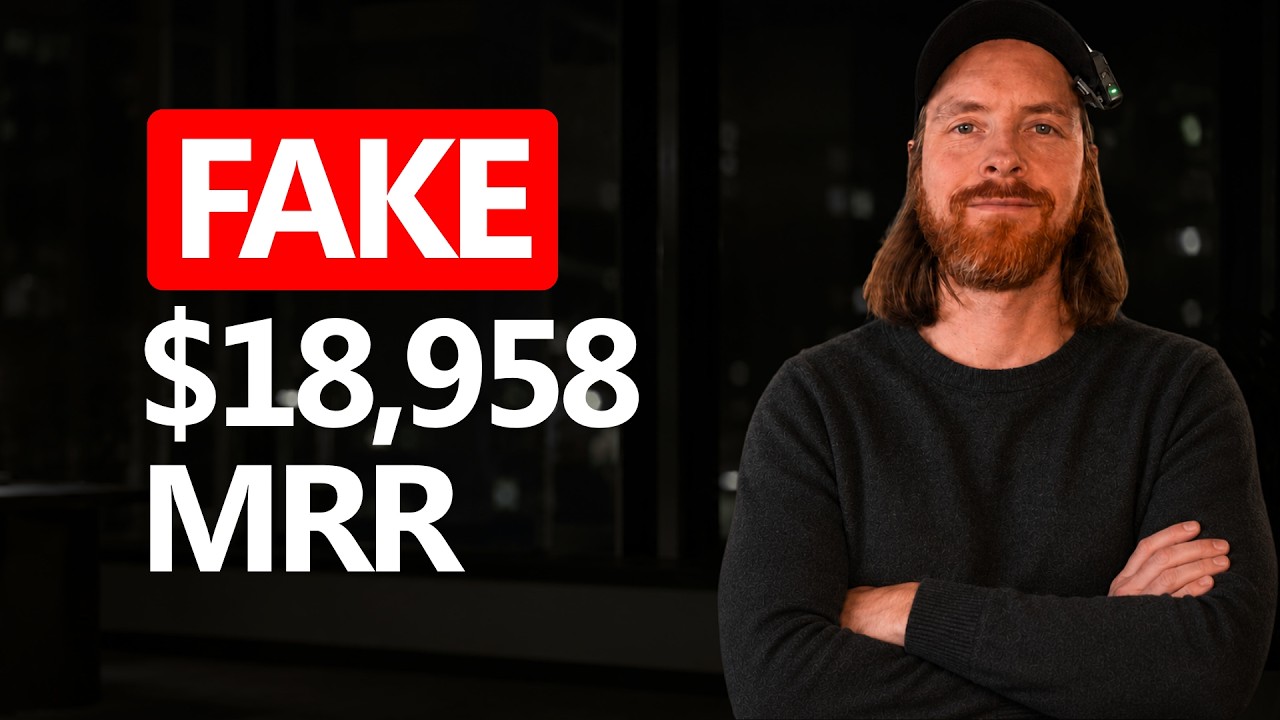
The video documents an experiment where the creator sets out to build a fake SaaS (Software as a Service) startup using AI tools to explore how profitable and effective such ventures can be, especially given the recent surge in AI-driven projects online. The creator notes the prevalence of posts claiming rapid growth and success in SaaS businesses, often backed by AI, but suspects many of these claims are fabricated. The goal is to test this phenomenon by creating a convincing but fake SaaS product, complete with a landing page, demo video, and marketing campaign, primarily using AI agents and automation.
The project involves building a slick landing page for a fictional quant betting startup called Moxquant, designed to generate FOMO (fear of missing out) through a waiting list. The creator uses various AI tools such as Claude Code, ChatGPT for images, and Hyperframes for video creation, alongside web development frameworks like Next.js and hosting on Vercel. The process includes designing a logo, setting up a database for the waiting list, and creating a demo video that simulates a trading dashboard connected to live data streams, all within a couple of hours.
Throughout the build, the creator iterates on the design and functionality, improving the landing page and demo video to make the fake product appear more legitimate and engaging. The demo video showcases a simulated trading experience with real-time data, enhancing the illusion of a working product. The landing page includes a call to action to join the waiting list, which is connected to a Neon SQL database, allowing the collection of interested users’ information.
After launching the site and posting on social media platform X (formerly Twitter), the creator observes early engagement, including views, likes, and even a sign-up on the waiting list within less than two hours. This quick traction demonstrates how easily AI-powered fake SaaS projects can generate interest and appear credible with minimal effort. The creator also discusses plans to automate further marketing posts and expand the campaign to platforms like Reddit, highlighting the potential scale and impact of such experiments.
In conclusion, the video serves as a cautionary tale about the rise of AI-generated fake SaaS startups that can quickly create hype and collect user data without offering real products. The creator emphasizes the ease and speed with which these projects can be built using AI tools and warns viewers not to trust all online success stories blindly. The experiment will be followed up with another video to share the final results and reflections, and the creator plans to take down the fake site and delete the waiting list after the experiment concludes.