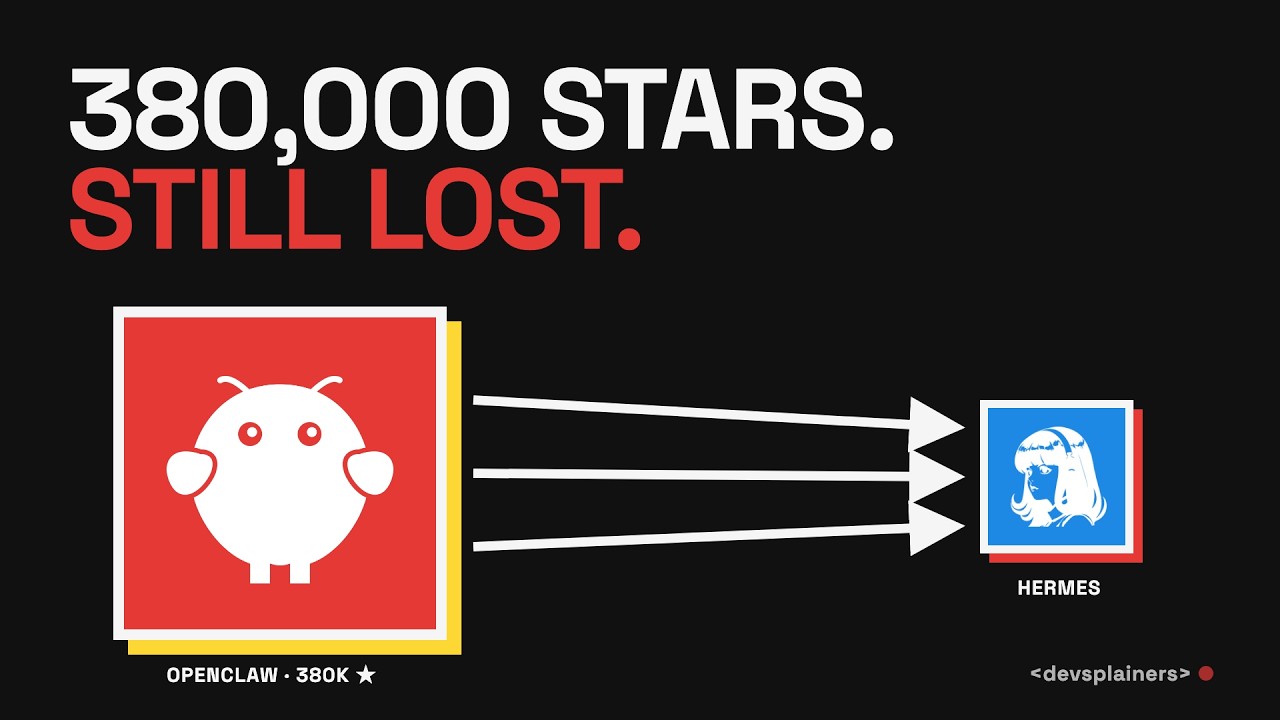
In May, Hermes Agent overtook OpenClaw as the leading personal AI agent runtime on OpenRouter, processing 224 billion tokens daily compared to OpenClaw’s 186 billion. Both tools are AI agents that users install on their own servers, offering persistent memory, shell access, and integration with platforms like WhatsApp. Despite OpenClaw’s rapid rise and popularity—garnering 380,000 GitHub stars and significant attention—it suffered from frequent crashes, security vulnerabilities, and problematic updates that frustrated its user base, prompting many to switch to Hermes.
OpenClaw began as a weekend project in late 2025 and quickly gained traction, attracting bids from major companies like Meta and OpenAI. However, its rapid growth was marred by serious security issues, including remote code execution vulnerabilities, numerous CVEs, and a marketplace flooded with malicious skills that installed malware. Additionally, thousands of OpenClaw instances were found exposed online with insecure credentials, and frequent updates often broke users’ setups, leading to widespread dissatisfaction and a mass exodus.
In contrast, Hermes Agent, developed by Nanos Research—a lab with deep expertise in open-weight AI models—launched in early 2026 with a focus on self-improvement and stability. Unlike OpenClaw, which centers on messaging with an embedded agent, Hermes is fundamentally an agent that adds messaging capabilities. It autonomously documents completed tasks as reusable skills and manages these skills to prevent decay. Hermes also offers a migration tool to import OpenClaw setups, signaling its intent to capture OpenClaw’s user base. However, some users criticize Hermes for overly optimistic self-assessments and memory management issues, which can degrade custom skills over time.
Security and transparency remain concerns for both platforms. Hermes faced backlash when it was discovered that its default web search routed queries to a third-party company without disclosure, and the project’s leadership was criticized for poor issue moderation and possible astroturfing. Both agents rely heavily on operating system-level security, with minimal internal safeguards against malicious behavior. Despite these issues, dedicated users have built complex, reliable setups with Hermes, running numerous scheduled tasks and skills that manage sensitive data locally without external exposure.
Looking ahead, the landscape for personal AI agents is evolving as major platforms like OpenAI, Anthropic, and Google integrate similar capabilities directly into their offerings. However, independent runtimes like Hermes and OpenClaw maintain advantages in openness, model agnosticism, and user control. Investors are backing these runtimes, with Hermes’ parent company valued highly. For users willing to manage their own systems and accept the risks, personal agent runtimes offer a unique and powerful experience today, with Hermes currently providing a more reliable and user-friendly option than OpenClaw.