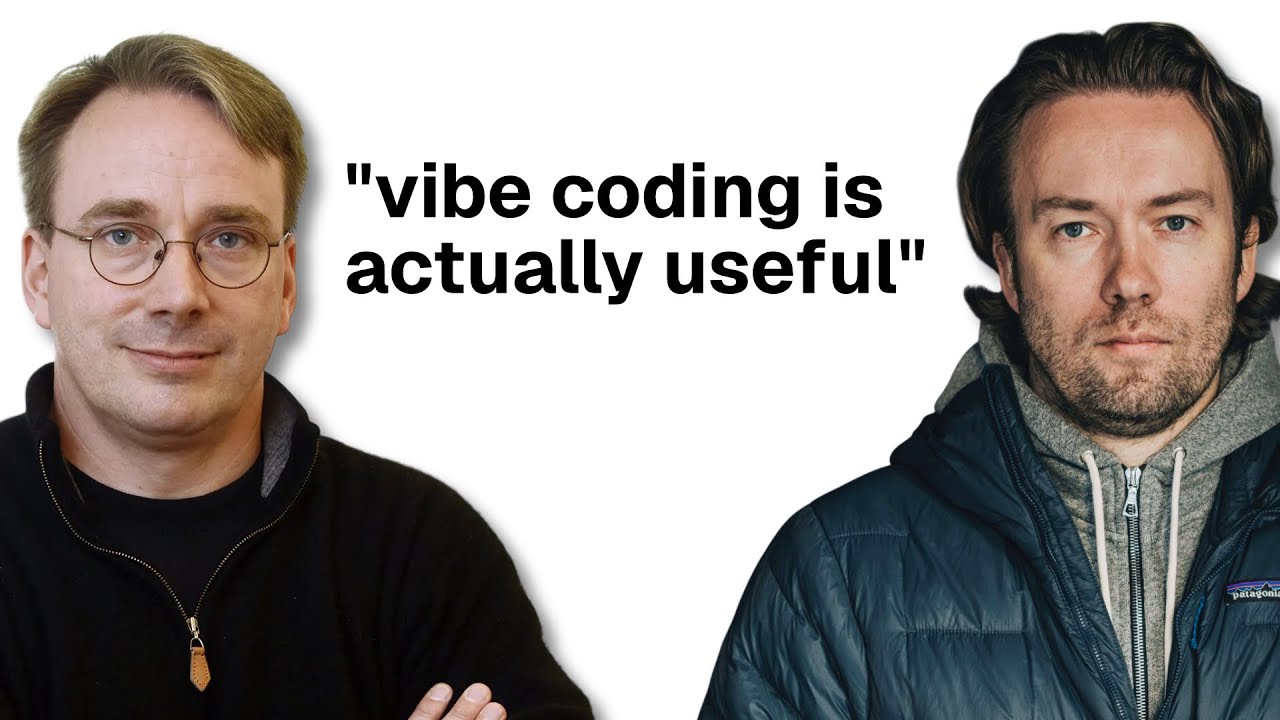
The video explores why prominent senior developers like DHH (David Heinemeier Hansson, creator of Rails) and Linus Torvalds (creator of Linux) are now embracing AI coding tools, a trend previously associated mostly with junior developers. The speaker notes a recent surge in highly skilled engineers adopting AI agents for real, production-level work, not just for learning or minor tasks. This shift is significant because these developers have historically been meticulous about their craft, and their endorsement signals a paradigm change in how AI is perceived in software development.
A key insight discussed is that senior engineers are actually more likely than juniors to accept AI-generated code. This is attributed to their ability to write clearer prompts, decompose work into manageable units, and quickly verify correctness based on experience. The video references a post by Eric from Cursor, which highlights that seniors’ strong priors and clarity make them more effective at leveraging AI agents, while juniors often lack the verification skills to confidently accept AI output.
The speaker delves into the evolving skill set required for modern software development. While traditional metrics focused on individual coding capability, the most valuable skills now are clarity in communication, delegation, and orchestration—skills that are essential for managing both human teams and AI agents. As developers progress from junior to senior and staff roles, their value increasingly comes from their ability to break down work, delegate tasks, and coordinate efforts, rather than just writing code themselves.
Examples are given of how senior developers are using AI in practice. DHH has promoted AI agents to a central role in his workflow, using them for everything from bug fixes to major features. Linus Torvalds, while cautious about using AI for critical code, has used AI-generated code for less important tasks, such as creating visualizations in Python, a language he’s less familiar with. Other senior developers, like the creator of Redis, have replaced complex dependencies with AI-generated code, thoroughly reviewing and testing the results.
The video concludes by arguing that the future of software engineering will require all developers to improve their communication, delegation, and orchestration skills, as these are crucial for effectively managing AI agents. The speaker suggests that resistance to AI coding tools often comes from those who haven’t developed these skills, rather than a lack of technical capability. Ultimately, the adoption of AI in coding is seen as an opportunity for developers to level up their managerial and communication abilities, making them more effective and capable of tackling larger, more complex projects.