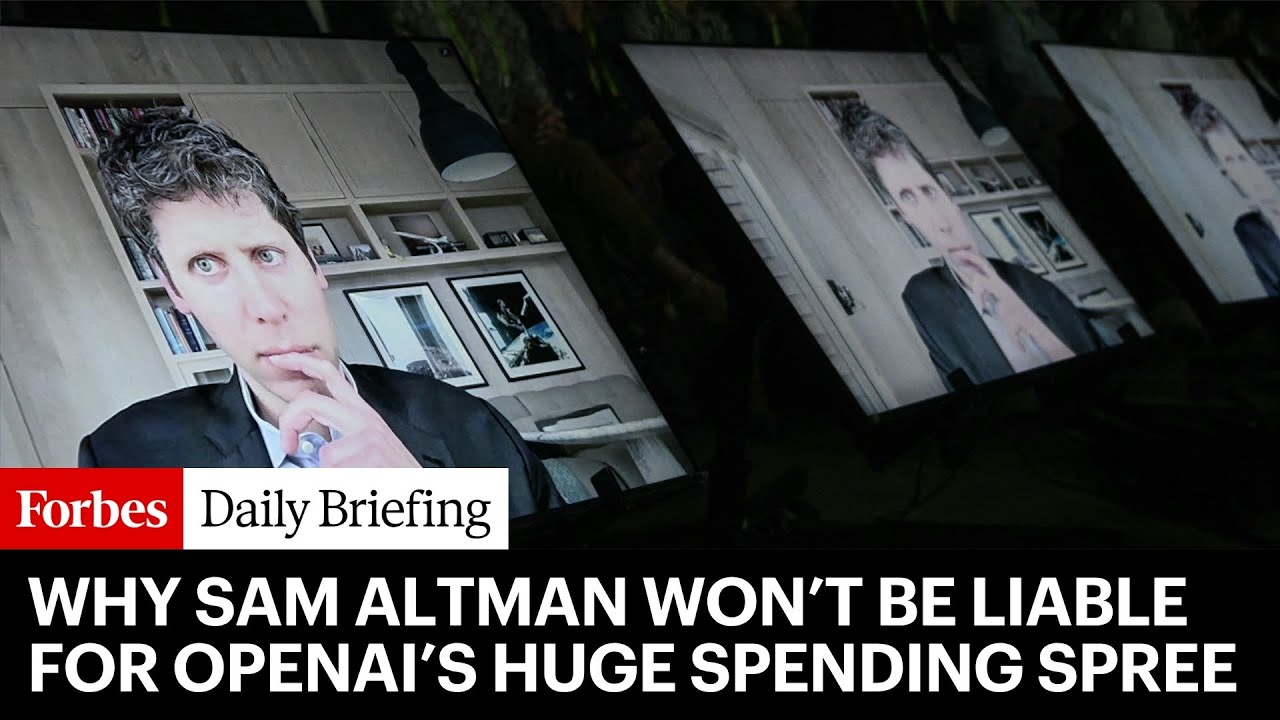
OpenAI CEO Sam Altman has been aggressively announcing multi-billion dollar deals with major tech companies such as Oracle, Nvidia, Microsoft, AMD, Broadcom, and Amazon. These agreements collectively commit OpenAI to spending an astonishing $1.4 trillion on data centers over the coming years. This figure is particularly striking given OpenAI’s projected annual revenue of $20 billion for this year, raising concerns about the company’s ability to fulfill these financial commitments and what might happen if it cannot.
At a recent event, OpenAI’s CFO Sarah Friar hinted that the government might act as a backstop for the company’s obligations, though she later retracted this statement. Sam Altman himself addressed the issue on social media, stating that if OpenAI fails to meet its commitments, the company should be allowed to fail, and the market—not the government—should handle the fallout. He acknowledged that the odds of success do not look great at the moment, emphasizing that other companies would continue their work regardless of OpenAI’s fate.
Industry experts have weighed in on the situation, highlighting the enormous gap between OpenAI’s current revenue projections and the scale of its compute commitments. Tomas Tongus of Theory Ventures estimated that OpenAI’s revenue would need to reach $577 billion by 2029 to meet these commitments, a nearly 2900% increase from current projections. However, analysts like Gil Lura from D.A. Davidson suggest that OpenAI may only pay for and use a portion of the compute capacity it has booked, leading to contract renegotiations with partners who would prefer some business rather than none.
The contracts OpenAI has signed are complex and often include clauses that allow for adjustments based on performance milestones, market conditions, and external constraints such as power supply and chip availability. For example, OpenAI’s deal with AMD involves purchasing up to 6 gigawatts of chips valued at around $90 billion, but this is contingent on both OpenAI’s performance and AMD’s share price. Additionally, some contracts, like the $22.4 billion agreement with CoreWeave, can be terminated by either party for cause, such as delays, providing OpenAI with potential exit options.
A key point raised by experts is that Sam Altman himself does not have a financial stake in OpenAI and will not have one even after its restructuring as a public benefit corporation. This means he faces little personal financial risk despite the massive commitments he is making on behalf of the company. Corporate governance scholars warn that this lack of personal financial exposure could lead to risky decision-making without accountability. They note that while visionary leaders are often given leeway, it remains unclear who will bear the consequences if OpenAI’s ambitious plans fail.