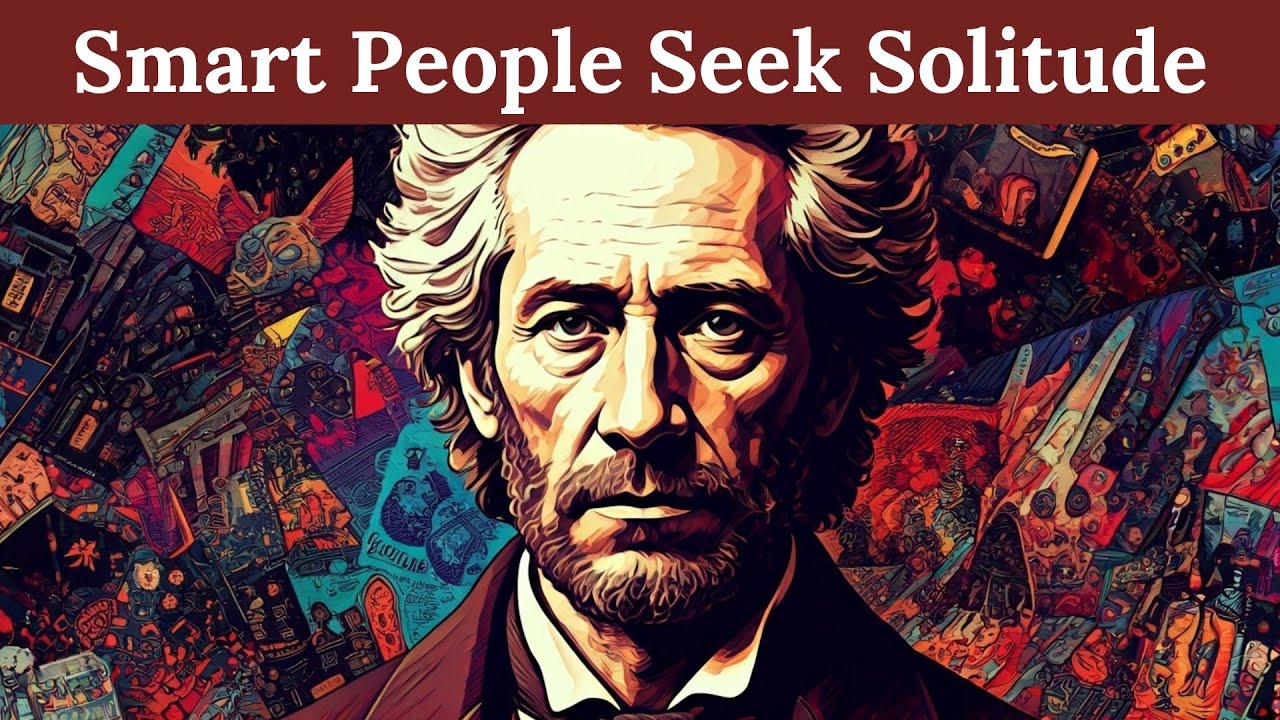
Arthur Schopenhauer, a notable 19th-century German philosopher, is renowned for his profound insights into human nature and existence. His seminal work, “The World as Will and Representation,” delves into the concepts of reality, suffering, and the driving force behind all life—the human will. Schopenhauer’s philosophy presents a rather bleak view of the world, suggesting that an insatiable and irrational will is at the core of human suffering and dissatisfaction. Despite the pessimistic tone, his ideas resonate with many modern individuals who find solace in solitude and introspection.
Schopenhauer’s perspective on intelligence diverges from conventional views that equate it with knowledge accumulation or societal success. He posits that true intelligence is linked to introspection, critical thinking, and a willingness to question superficial social norms. Highly intelligent individuals often perceive the hollowness of small talk and shallow relationships, leading them to withdraw from conventional social settings. This heightened awareness can render ordinary social interactions unfulfilling, prompting a preference for solitude where deeper reflection can occur.
Central to Schopenhauer’s philosophy is the concept of the will, an irrational force driving human desires and actions. He argues that this relentless will traps individuals in a cycle of desire and disappointment. Intelligent people, being more attuned to this cycle, often find fleeting social pleasures unsatisfactory. Instead, they seek refuge in solitude, which allows them to escape the chaos of societal demands and engage in meaningful self-reflection, ultimately leading to a more profound sense of fulfillment.
Schopenhauer emphasizes that solitude is not a punishment but a sanctuary for self-discovery. In solitude, individuals can confront their authentic selves without societal pressures, facilitating genuine inner peace. He asserts that intelligent individuals thrive in solitude, using it as a fertile ground for creativity and intellectual exploration. Historical evidence supports this notion, as many great thinkers and artists attribute their achievements to time spent alone, away from social distractions.
In today’s fast-paced, hyperconnected world, Schopenhauer’s ideas on solitude are increasingly relevant. Modern society often equates social success with happiness, pressuring individuals to maintain active social lives, which can lead to burnout and a sense of isolation. Schopenhauer’s philosophy encourages a reevaluation of solitude, advocating for it as a restorative practice rather than a sign of inadequacy. By embracing solitude, individuals can foster self-awareness, creativity, and inner peace, ultimately leading to a more meaningful and fulfilling life.