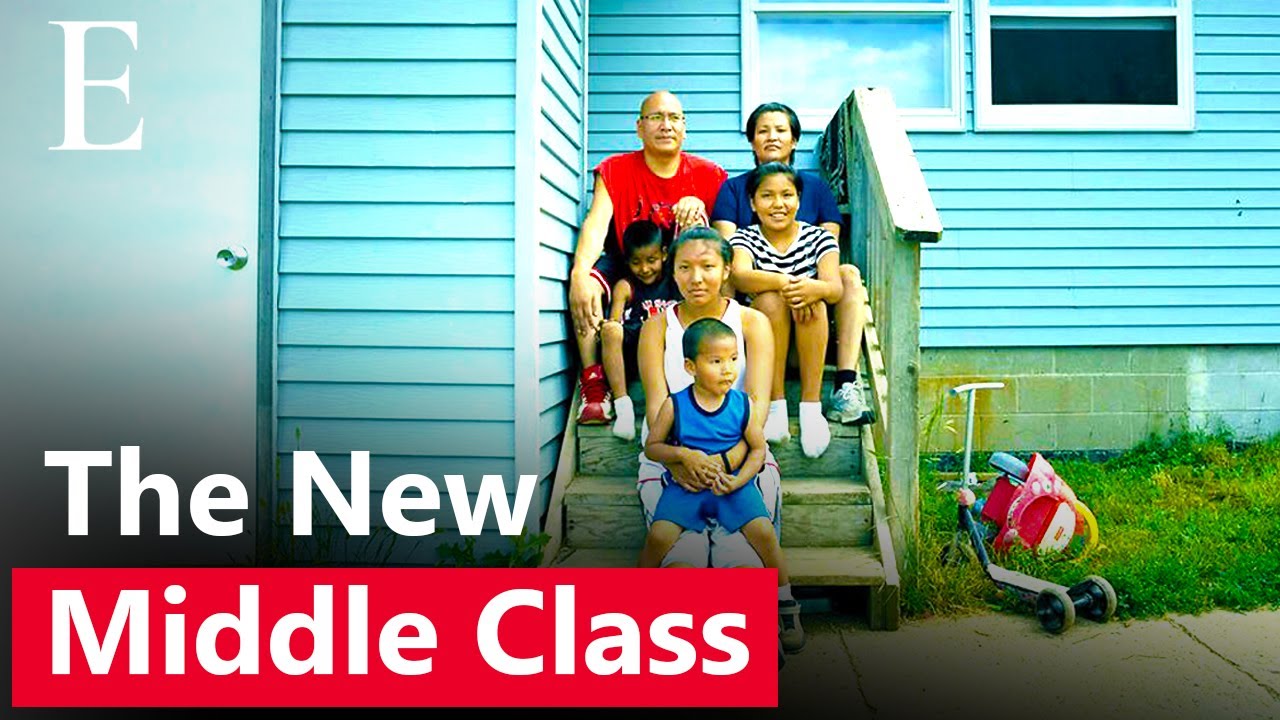
The American middle class, once a symbol of financial stability and the promise of upward mobility, is shrinking and facing unprecedented challenges. Once the majority, the middle class now comprises only about half of American adults, down from 61% in 1971. This decline is evident across the country, from major cities to small towns, and has led to growing concerns about whether the middle class can once again drive national prosperity. The erosion of the middle class is not just a matter of numbers but also of changing perceptions and realities about what it means to be middle class in the United States.
A key factor in this transformation is the increasing economic pressure on middle-income families. While family incomes have risen only modestly over the past two decades, the costs of essential services such as health insurance, housing, and education have soared. For example, health insurance costs have increased by 155%, housing by 56%, and college education by 43%, while incomes have only grown by 20%. As a result, many families who technically fall within the middle-income bracket struggle to afford basic expenses and are unable to handle unexpected financial shocks.
Generational shifts have further complicated the situation. Millennials, for instance, are less likely to belong to middle-income households compared to baby boomers at the same age. Even households earning over $100,000 a year often find themselves financially strained due to high taxes, insurance premiums, student loans, and the overall cost of living. Debt has become a pervasive issue, with total household debt reaching record highs and credit card and student loan debt continuing to climb. Many Americans now live paycheck to paycheck, and a significant portion report difficulty paying bills or managing debt.
Homeownership, once a cornerstone of the American dream, has become increasingly unattainable for many. Rising property costs, insurance premiums, and maintenance expenses have led some homeowners to regret their purchases, while others are unable to enter the housing market at all. The sense of being trapped in a cycle of debt and financial insecurity is widespread, with more people taking on second jobs and young adults moving back in with their parents out of necessity. These trends highlight the growing instability and uncertainty facing the middle class.
The decline of the middle class has profound implications for American society and the future of the American dream. The promise of upward mobility and a better life for future generations is under threat, with many fearing that their children will not achieve the same standard of living. Addressing the root causes of middle-class precarity—such as wage stagnation, rising costs, and mounting debt—will require collective action and policy solutions aimed at restoring equity and opportunity. The transformation of the middle class reflects broader economic and social changes, making its future a central issue for the nation.